The Acrylic Engineering Guide: 22 Ideas for Flawless Modern Kitchen Cabinets
Traditional wooden kitchen cabinets have completely dominated residential interior design for centuries, offering rustic warmth and classic profiles. However, for homeowners who crave a highly engineered, ultra-modern, and fiercely contemporary aesthetic, wood simply cannot deliver the required flawless perfection. Enter acrylic kitchen cabinets. Acrylic is a highly durable, non-toxic, synthetic plastic polymer that produces an incredibly smooth, completely seamless surface. Unlike painted wood, which reveals tiny brush strokes and wood grain imperfections, acrylic cabinets offer a completely flawless, manufactured perfection that instantly elevates a kitchen into a high-end, European-style luxury space. Whether you desire a blindingly bright, mirror-like gloss or a deeply sophisticated, velvety matte finish, acrylic is the ultimate material for contemporary architectural design.
However, acrylic is not a miracle material without flaws. Designing a kitchen entirely around acrylic cabinetry requires a rigorous understanding of light reflection, manufacturing quality, and strict daily maintenance. If you choose the wrong finish for a high-traffic house with young children, you will spend your entire life wiping oily fingerprints off your expensive cabinets. To guarantee your success, we have completely abandoned the standard, randomized list format. Instead, this article is structured as The Acrylic Engineering Guide, breaking down exactly twenty-two ideas into four highly technical categories: The Finish Selection, The Color Science, Architectural Pairings, and Maintenance Realities. By adhering to this strict, analytical framework, complete with reflectivity tables and manufacturing checklists, you will flawlessly execute the ultimate modern acrylic kitchen.
Category 1: The Finish Selection
Acrylic is famous for its extreme finishes. You must decide whether to maximize light with a high-gloss mirror finish or absorb light with a sophisticated ultra-matte shell. This single decision dictates the entire emotional temperature of the room.
The High-Gloss Space Expander
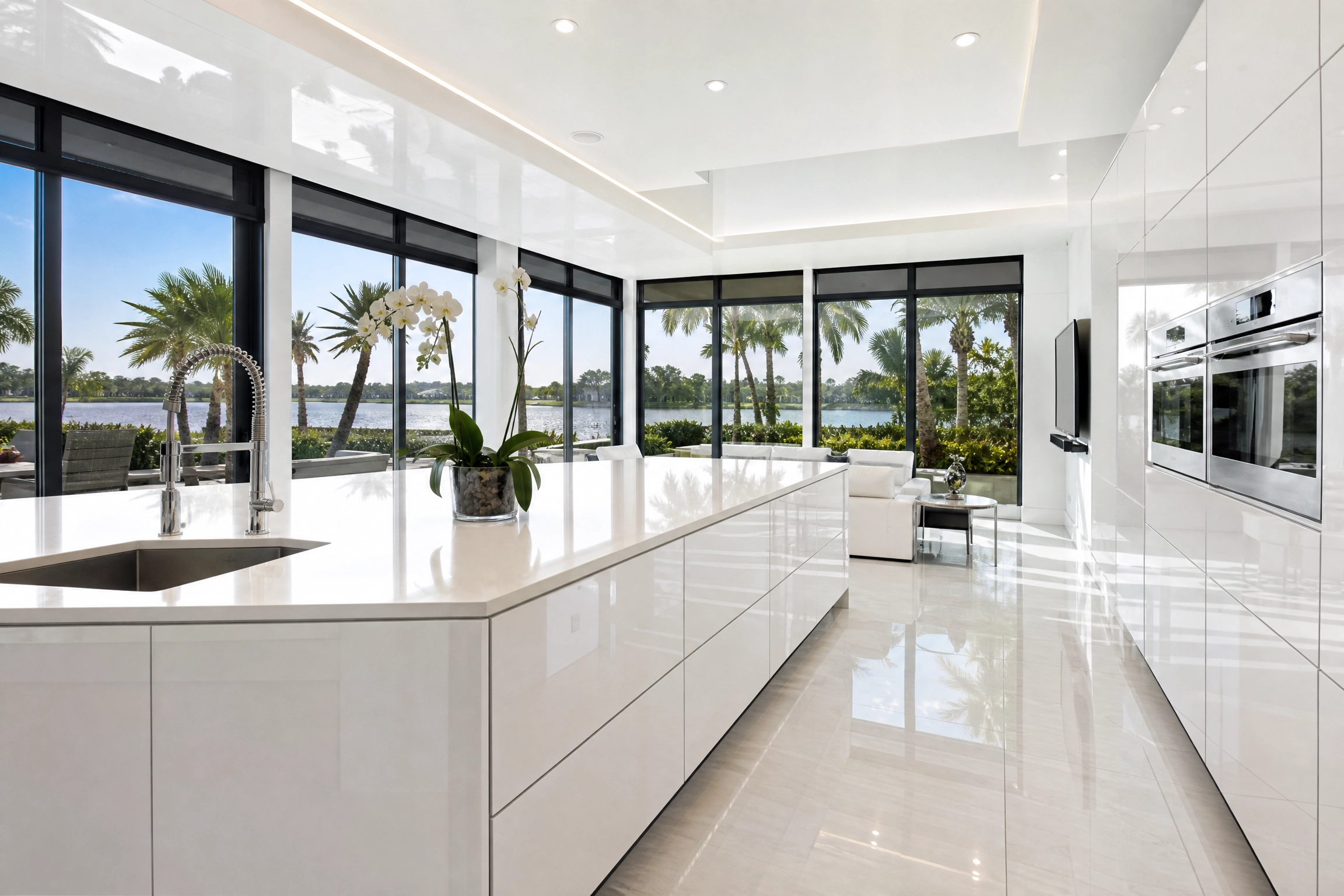
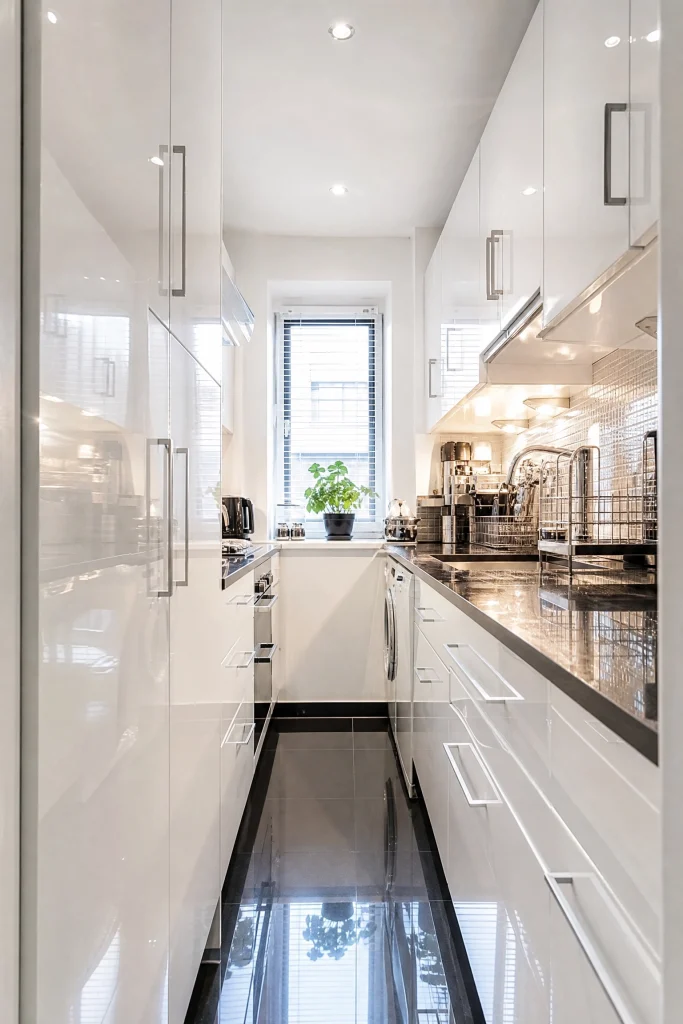
If you are renovating an incredibly tiny, cramped kitchen that completely lacks natural sunlight, installing stark white, high-gloss acrylic cabinets is a brilliant architectural survival tactic. The glossy acrylic acts exactly like a massive series of mirrors, violently reflecting both natural and artificial light around the dark room. This intense light reflection creates a massive optical illusion, tricking the human eye into believing the tight space is significantly wider and infinitely taller than it actually is. It completely eliminates claustrophobia and makes the kitchen feel incredibly airy, highly energized, and deeply modern.
| Kitchen Size | Gloss Level Recommendation | Expected Visual Result |
| Tiny Galley Kitchen | Ultra High-Gloss | Massive perceived expansion, highly bright |
| Medium Standard | Medium Gloss | Balanced reflection, energetic |
| Massive Open Concept | Matte or Mixed | Gloss everywhere will cause severe visual fatigue |
Reality Check: High-gloss acrylic aggressively magnifies every single oily fingerprint and water splash; you must keep a microfiber cloth nearby and wipe the lower cabinets constantly if you have young children.
The Velvety Ultra-Matte Cocoon
For massive, sun-drenched open-concept kitchens, installing ultra-matte acrylic cabinets provides an incredibly sophisticated, highly tailored aesthetic. Unlike high-gloss, which bounces light chaotically, matte acrylic aggressively absorbs ambient light. This creates a deeply soothing, velvety visual texture that feels incredibly expensive and highly bespoke. The complete lack of glare ensures the cabinet color remains perfectly pure and strictly consistent from every single viewing angle, regardless of the time of day. This finish is heavily favored by high-end Italian design houses.
Matte Acrylic Benefits:
- Significantly hides oily fingerprints and smudges better than high-gloss.
- Prevents blinding glare from bright South-facing windows.
- Creates a deeply sophisticated, calm, and grounded emotional atmosphere.
Pro Move: You must pair matte acrylic cabinets with highly textured, rough stone backsplashes to provide necessary visual tension, otherwise the flat paint will look incredibly heavy and boring.

The Strategic Mixed-Finish Method
If you are completely torn between the brilliant light reflection of high-gloss and the sophisticated fingerprint resistance of ultra-matte, the strategic mixed-finish method is the ultimate designer compromise. You must install high-gloss acrylic strictly on the upper wall cabinets, allowing them to brilliantly reflect the ceiling lights and make the room feel tall. Simultaneously, you must install ultra-matte acrylic strictly on the lower base cabinets, where dirty hands, splashing water, and muddy pets cause the most daily damage. This brilliant architectural split provides the exact functional benefits of both materials.
Designer Advice: If you mix finishes, you must keep the cabinets the exact same monochromatic color; mixing glossy white uppers with matte blue lowers creates far too much chaotic visual tension.

Metallic Flecked Acrylic
For homeowners who want to push the boundaries of extreme modern luxury, sourcing high-gloss acrylic infused with microscopic metallic flecks is a jaw-dropping design choice. Embedded deep within the thick plastic polymer, the tiny metallic particles catch the ambient kitchen lighting, creating a subtle, highly sophisticated sparkling effect that perfectly mimics high-end automotive paint. This highly specialized finish introduces incredible visual depth, ensuring the massive flat slab doors never look cheap or mass-produced.
Lighting Metallic Acrylic:
- You must install under-cabinet LED strip lights directly above the lower cabinets to activate the metallic sparkle.
- Use strictly 4000K neutral white LED bulbs to ensure the metallic flecks sparkle crisply without turning yellow.
- Put the ambient lighting on a dimmer to control the intensity of the sparkle at night.
Heads Up: Metallic acrylic is incredibly expensive and notoriously difficult to perfectly color-match later; you absolutely must order extra replacement doors during the initial renovation in case of future damage.

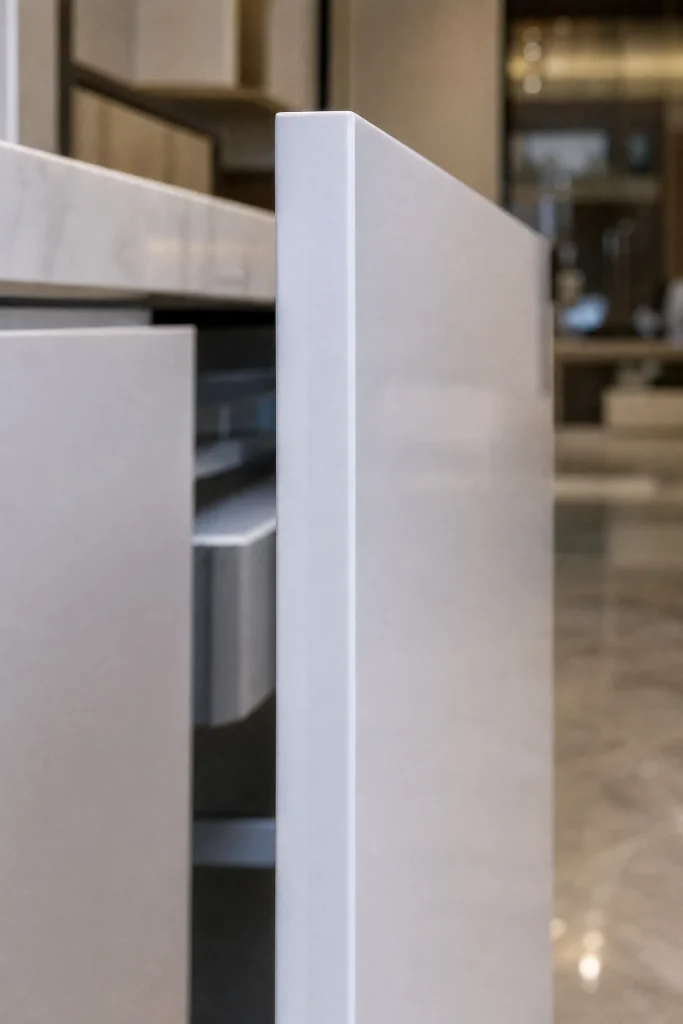
The Seamless Edge-Banded Slab
The primary aesthetic draw of an acrylic cabinet is its flawless, hyper-modern flat slab door. However, if the edges of the door are finished poorly with cheap, visible glue lines, the entire high-end illusion is instantly destroyed. You must explicitly demand that your cabinet manufacturer utilizes laser edge-banding technology. This highly advanced manufacturing process physically melts the acrylic edge tape directly into the cabinet door face, creating a completely seamless, waterproof, invisible transition that looks exactly like a single, solid block of poured plastic.
Quick Tip: Never accept acrylic doors with standard glued PVC edge banding; the glue will inevitably yellow over time and slowly peel away due to the intense steam from your dishwasher.

Category 2: The Color Science
Because acrylic is a synthetic manufactured material, it can be produced in literally any highly saturated color imaginable. You must wield this immense color power incredibly carefully to avoid creating a garish, cartoonish nightmare.
Stark Hospital White
The absolute most popular, universally utilized color for acrylic cabinetry is stark, brilliant hospital white. When combined with a high-gloss finish, pure white acrylic creates an incredibly clinical, fiercely modern aesthetic that looks exactly like a high-end science laboratory or a minimalist art gallery. The stark white perfectly reflects one hundred percent of the light hitting it, making the kitchen feel impeccably clean, highly sterile, and deeply engineered. It serves as the perfect blank architectural canvas to highlight colorful cooking ingredients or a massive, dramatic marble island.
| White Tone | Reflectivity | Emotional Vibe |
| Stark Pure White | Maximum | Fiercely modern, sterile, clinical |
| Warm Cream/Pearl | Moderate | Transitional, slightly softer, elegant |
| Cool Blue-White | High | Icy, harsh, highly energetic |
Pro Move: If you choose stark white acrylic, you must heavily introduce warm natural woods into the kitchen design, such as wooden barstools or a walnut flooring, to prevent the room from feeling terrifyingly cold.

Deep Emerald Green
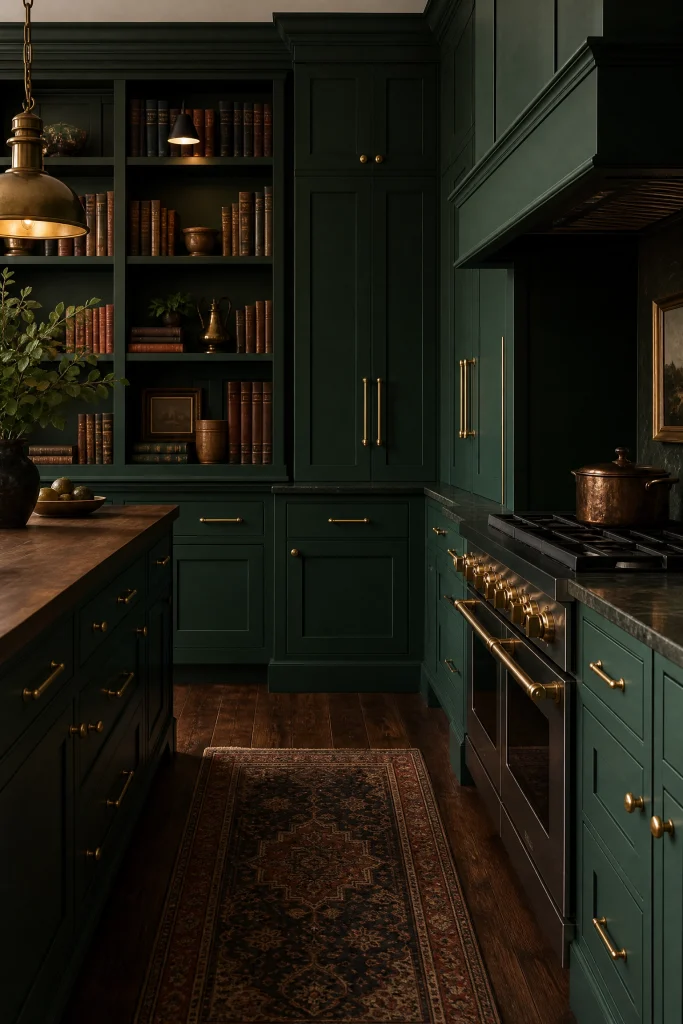
For a highly dramatic, incredibly luxurious design statement, installing ultra-matte acrylic cabinets in a deeply saturated emerald green is a stunning architectural move. The velvety matte finish perfectly enhances the deep, moody jewel tone, making the cabinets look incredibly rich and historically sophisticated despite their modern slab profile. This specific color effortlessly bridges the gap between classic British library aesthetics and ultra-modern European manufacturing. It creates a deeply cocooning, highly grounded environment that pairs flawlessly with heavy brass hardware.
Designer Advice: You must use highly reflective white countertops with dark green cabinets to bounce light upward, preventing the heavy, dark green from turning the kitchen into a depressing black hole.
The Charcoal Grey Anchor
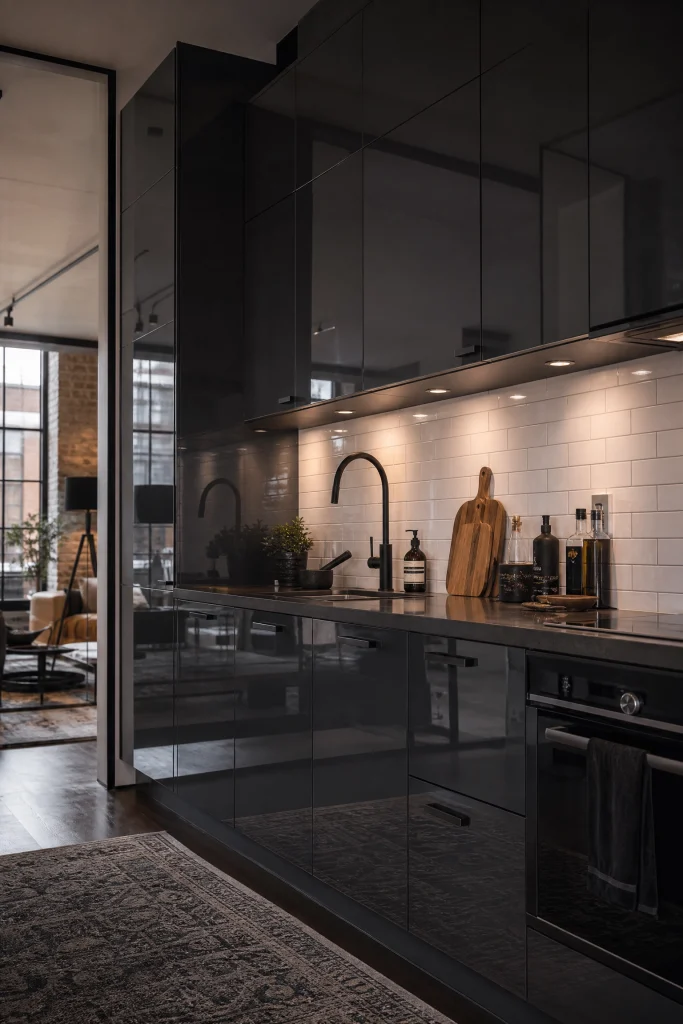
If stark black feels entirely too aggressive but bright white feels far too boring, deeply saturated charcoal grey acrylic provides the absolute perfect neutral anchor. Charcoal grey hides daily dust and dirt significantly better than pure black or pure white, making it a highly pragmatic choice for busy, messy families. When executed in a high-gloss finish, the dark grey acts exactly like a smoked mirror, heavily reflecting the surrounding room in a deeply moody, highly sophisticated manner that screams high-end urban loft design.
Charcoal Grey Pairing Rules:
- Pair dark grey strictly with warm 3000K LED lighting to prevent the grey from looking like a cold, concrete bunker.
- Use crisp white subway tile backsplashes to provide sharp, necessary high-contrast.
- Introduce natural leather barstools to inject vital organic warmth into the cool color palette.
Reality Check: Never pair charcoal grey acrylic with heavily patterned, busy granite countertops; the chaotic speckled stone will violently clash with the sleek, solid modernism of the dark acrylic.
Vibrant Terracotta Orange
For homeowners who completely reject boring neutrals, injecting massive amounts of highly saturated color through terracotta or sunset orange acrylic cabinets is a wildly bold, deeply energetic choice. Because the acrylic surface is completely flat and flawless, the intense color becomes the sole architectural focus of the entire room. This warm, fiery hue aggressively stimulates the appetite and creates a highly joyful, intensely vibrant space. It perfectly mimics the bold, confident color blocking seen in mid-century modern design.
How to Style Bold Orange:
- You must keep all surrounding walls, ceilings, and countertops completely stark white to balance the intense color.
- Utilize completely invisible, edge-profile hardware to prevent metallic jewelry from distracting from the pure color block.
- Keep all small appliances hidden; exposing a red toaster next to orange cabinets creates a terrifying visual clash.
Heads Up: Highly saturated, trendy colors like orange severely limit the resale value of your home; you should only execute this design if you plan to live in the house for the next decade.

The Two-Tone Tuxedo Approach
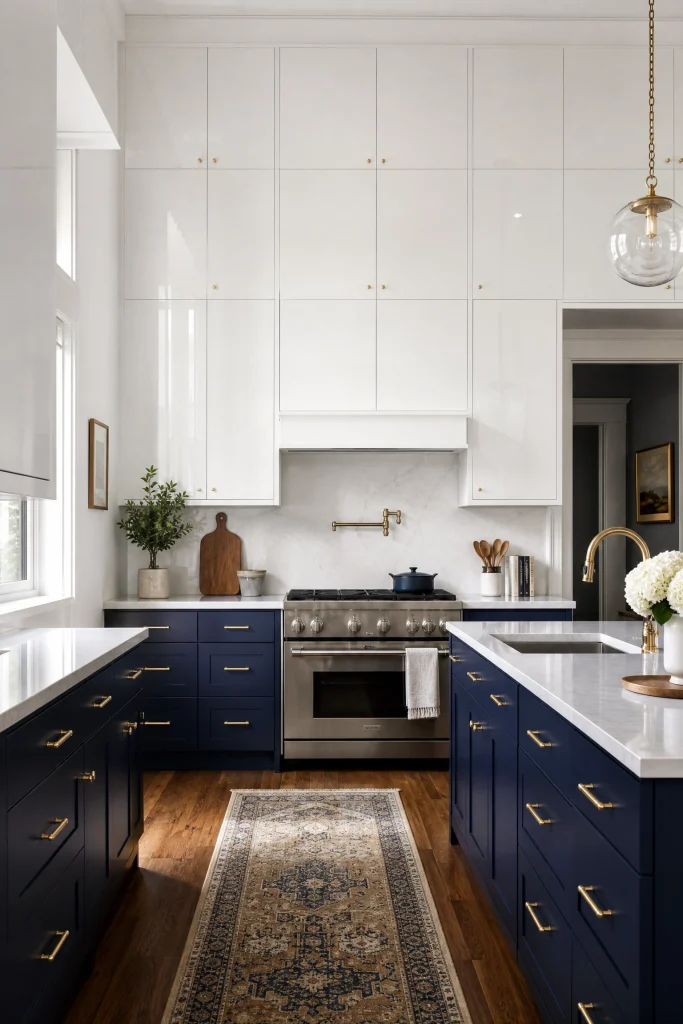
If a kitchen completely enveloped in dark navy or charcoal grey acrylic feels too visually heavy, you must utilize the classic two-tone tuxedo strategy. Install the dark, moody colored acrylic strictly on the lower base cabinets to heavily ground the room. Then, install brilliant white acrylic strictly on the upper wall cabinets. The stark white uppers visually melt into the ceiling, creating an incredible optical illusion that makes the ceiling feel infinitely taller, while the dark lower cabinets hide scuff marks from daily foot traffic.
Quick Tip: To perfectly execute the tuxedo look, the countertop material must be crisp white to seamlessly blend into the upper cabinets, creating a sharp horizontal dividing line across the entire kitchen.
Soft Warm Taupe
If pure white is too stark and grey is too cold, a soft, warm taupe or ‘greige’ acrylic is the ultimate elegant compromise. This deeply sophisticated neutral heavily bridges the gap between classic warmth and modern manufactured perfection. When executed in an ultra-matte finish, the taupe acrylic perfectly mimics the look of painted wood without any of the annoying brush strokes or cracking joints. It provides a deeply calming, highly inviting atmosphere that pairs brilliantly with natural stone and warm wood flooring.
Pro Move: Taupe is a chameleon color that heavily shifts based on lighting; you absolutely must test a physical acrylic sample door in your kitchen to ensure it doesn’t turn pink in the afternoon sun.

Category 3: Architectural Pairings
Acrylic cabinets are incredibly demanding. Because they are so stark, smooth, and modern, they will violently clash with traditional or rustic surrounding architecture if you do not pair them carefully.
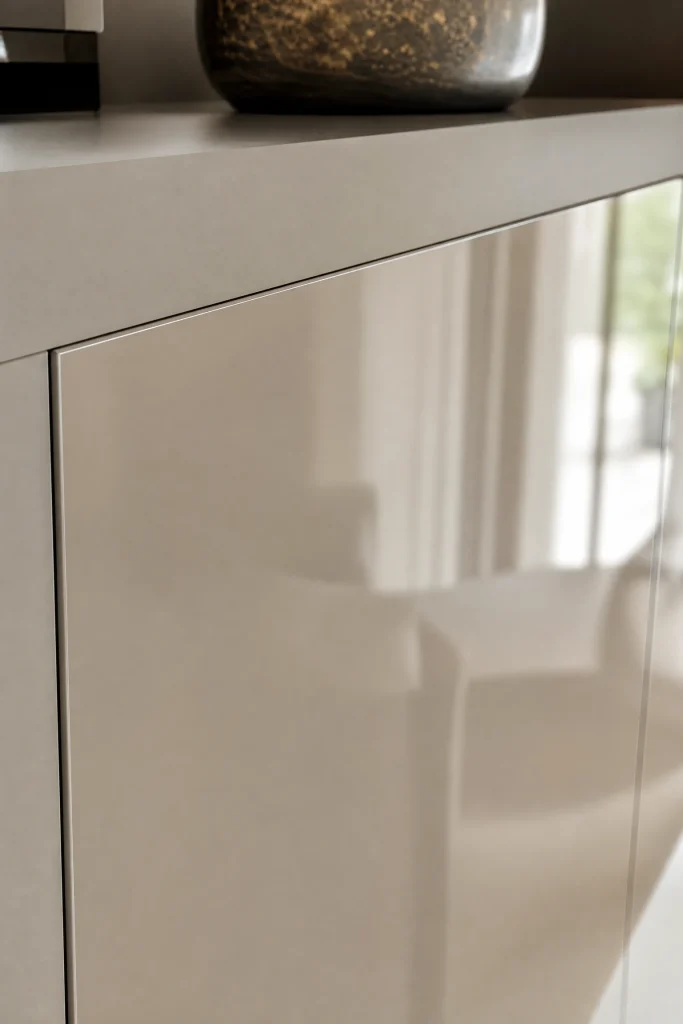
Invisible Edge-Profile Hardware
Slapping highly ornate, traditional brass knobs onto an ultra-modern, high-gloss acrylic slab door is a terrifying architectural disaster. You must respect the minimalist nature of the material by utilizing completely invisible, edge-profile hardware. These sleek metal channels sit completely flush on the top edge of the cabinet door, allowing you to pull the door open without attaching any visible hardware to the front face. This highly rigorous approach ensures the flawless acrylic surface remains completely uninterrupted, maximizing the modern aesthetic and proving extreme design discipline.
| Hardware Style | Visual Interruption | Best Use Case |
| Invisible Edge-Pull | Zero | Hyper-minimalist, high-gloss acrylic |
| Push-to-Open Latches | Zero | Matte acrylic (hands touch the door) |
| Massive Bar Pulls | High (Geometric) | Heavy industrial or massive pantry doors |
Reality Check: Push-to-open latches require you to physically push your dirty, oily fingers directly onto the acrylic face every single time; avoid this hardware entirely if you choose high-gloss acrylic.
The Solid Stone Backsplash
Traditional, tiny mosaic tile backsplashes feature hundreds of chaotic grout lines that violently clash with the smooth, seamless perfection of acrylic cabinets. To maintain a highly tailored, luxurious aesthetic, you must completely abandon tile and install a solid slab of stone that matches your countertops directly onto the wall. A massive, unbroken slab of heavily veined marble or quartz flowing seamlessly from the counter up to the acrylic upper cabinets introduces incredible organic texture while maintaining strict, flawless modern architectural lines.
Slab Backsplash Rules:
- Ensure the stone yard cuts the slab perfectly to ensure the veining matches the countertop exactly.
- You must hire an electrician to relocate all ugly electrical outlets perfectly flush with the new thick stone.
- Use a matte, honed stone finish to heavily contrast against high-gloss acrylic cabinets.
Designer Advice: Never install a highly chaotic, heavily patterned granite slab next to brightly colored acrylic cabinets; the two intense focal points will aggressively fight each other and cause severe visual fatigue.

Warm Walnut Accents
An entire kitchen made strictly of flawless plastic acrylic and cold stone can quickly feel incredibly sterile, mimicking a terrifying hospital operating room. You absolutely must inject massive amounts of vital, organic warmth to balance the engineered materials. Integrating open shelving made from thick, raw walnut directly between the acrylic wall cabinets is the perfect architectural solution. The rough, deeply grained, warm amber wood perfectly offsets the smooth, cold plastic, creating highly necessary tactile tension and deeply cozy residential warmth.
Pro Move: Do not mix cheap, fake wood laminate with highly expensive acrylic; the proximity to the flawless acrylic will instantly expose the fake wood grain, making the entire kitchen look cheap.

Floating Base Cabinets
To completely maximize the ultra-modern, weightless aesthetic of acrylic cabinetry, explicitly instruct your carpenter to install floating base cabinets. By entirely removing the heavy wooden toe-kick touching the floor and instead mounting the base cabinets heavily into the wall studs, the entire kitchen appears to hover magically six inches off the ground. This highly engineered architectural illusion makes the heavy kitchen feel incredibly light, significantly larger, and deeply futuristic. It is the absolute ultimate application for sleek acrylic materials.
Floating Cabinet Execution:
- You must tear out the drywall and heavily reinforce the wooden wall studs before hanging the cabinets.
- Install hidden LED strip lighting perfectly underneath the hovering cabinets to emphasize the floating illusion.
- Ensure your flooring runs completely underneath the cabinets to the back wall, as it will be highly visible.
Heads Up: Floating base cabinets cannot physically support the massive, crushing weight of a thick concrete or heavy marble countertop; you must use a lightweight, thin profile quartz or stainless steel counter.

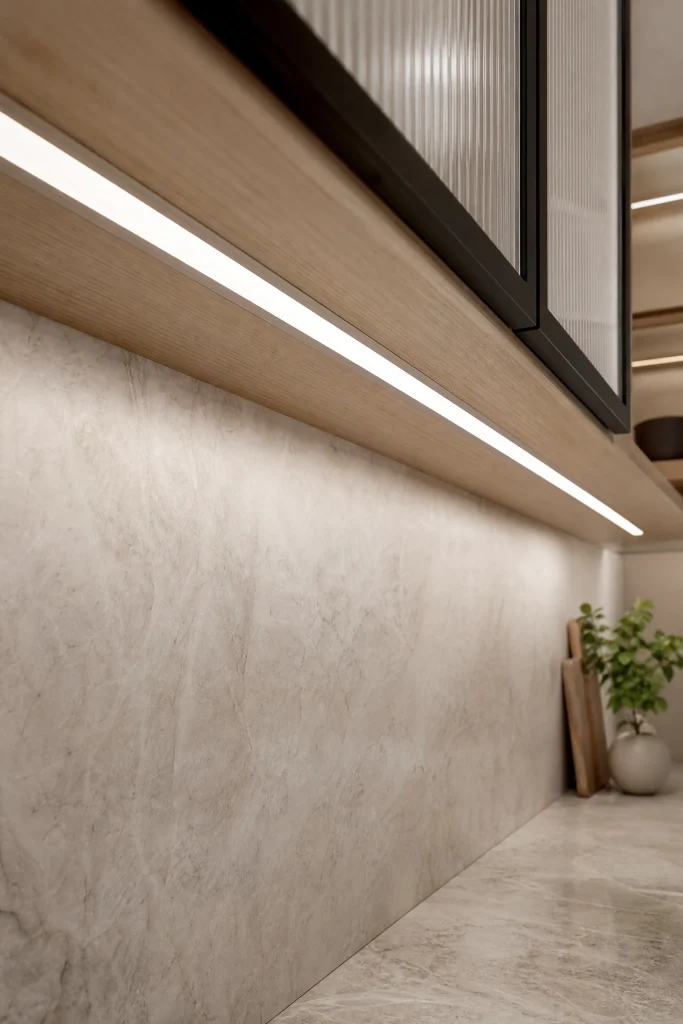
Integrated LED Channel Lighting
Because acrylic cabinets rely entirely on clean, uninterrupted lines, sticking cheap, bulky plastic puck lights underneath them completely ruins the aesthetic. You must have your cabinet maker physically route a deep channel directly into the bottom of the upper cabinets and embed a seamless aluminum LED strip flush with the wood. This highly integrated, completely hidden lighting perfectly washes the backsplash in bright illumination without exposing any ugly wires or bulky fixtures, maintaining the rigorous, flawless modern design.
Quick Tip: Always install a frosted plastic diffuser over the raw LED strip inside the channel; otherwise, the harsh individual LED dots will violently reflect off a high-gloss acrylic lower cabinet.
The Monolithic Island Block
If you utilize acrylic cabinets on the perimeter of your kitchen, treating the center island as a massive, monolithic block of contrasting material creates stunning architectural drama. Instead of matching the island to the acrylic, wrap the entire island—front, back, and sides—in a heavily textured material like fluted dark wood or brushed stainless steel. The stark contrast between the flawless, smooth acrylic perimeter and the heavily textured, monolithic island creates incredible visual tension and firmly anchors the modern room.
Designer Advice: If you build a monolithic island, you must keep the countertops completely free of clutter and small appliances to ensure the massive block looks like a highly curated piece of modern art.

Category 4: Maintenance & Manufacturing Realities
Acrylic is a highly specific chemical material that requires strict, specialized maintenance. If you clean these expensive cabinets incorrectly a single time, you will permanently destroy the flawless finish.
Solid Acrylic vs. Acrylic-Faced MDF
When purchasing acrylic cabinets, you must rigorously understand exactly what you are paying for to avoid getting scammed. Solid acrylic doors are manufactured from a single, thick piece of solid plastic; they are incredibly expensive, completely waterproof, and the color is perfectly consistent throughout. Acrylic-faced doors consist of a very thin sheet of acrylic physically glued onto a cheap MDF (particleboard) core. While significantly cheaper, acrylic-faced doors are highly vulnerable to steam and moisture, which can cause the thin plastic sheet to violently delaminate and peel off the wood.
| Cabinet Type | Durability | Water Resistance | Price Point |
| Solid Acrylic Slab | Indestructible | 100% Waterproof | Extremely High ($$$$) |
| Acrylic-Faced MDF | Moderate (Edges chip) | Vulnerable to peeling | Moderate ($$) |
| Thermofoil (Fake Acrylic) | Terrible (Melts near heat) | Low (Peels easily) | Cheap ($) |
Reality Check: Never install cheap, acrylic-faced MDF cabinets directly above a boiling stove or a steaming dishwasher, as the intense daily heat and moisture will melt the glue and cause massive peeling.
The Microfiber Only Rule
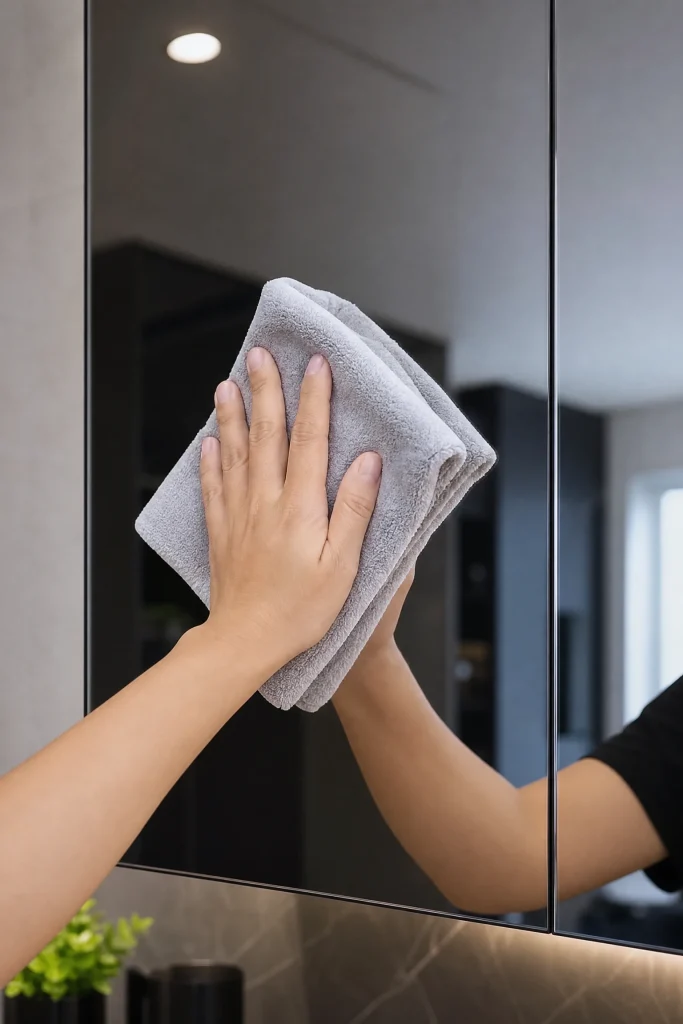
The flawless, mirror-like finish of high-gloss acrylic is incredibly beautiful but notoriously easy to scratch with improper cleaning tools. You absolutely must completely ban paper towels, rough sponges, and dry dusters from touching the cabinets. Paper towels are made from tiny wood fibers that will instantly leave millions of permanent microscopic scratches in the soft plastic surface. You must strictly use ultra-plush, highly clean microfiber cloths slightly dampened with pure water to gently wipe away oily fingerprints.
Acrylic Cleaning Protocol:
- Never use Windex, bleach, or any harsh chemical glass cleaners, which will violently cloud the plastic.
- Use strictly warm water and a tiny drop of mild dish soap for heavy grease stains.
- Always wipe in strict, straight vertical lines, never in chaotic circular motions.
Pro Move: Buy a dedicated pack of microfiber cloths that are used exclusively for the acrylic cabinets; if you use a cloth that previously wiped a dirty floor, a trapped grain of sand will deeply gouge the plastic.
The Protective Peel-Off Film
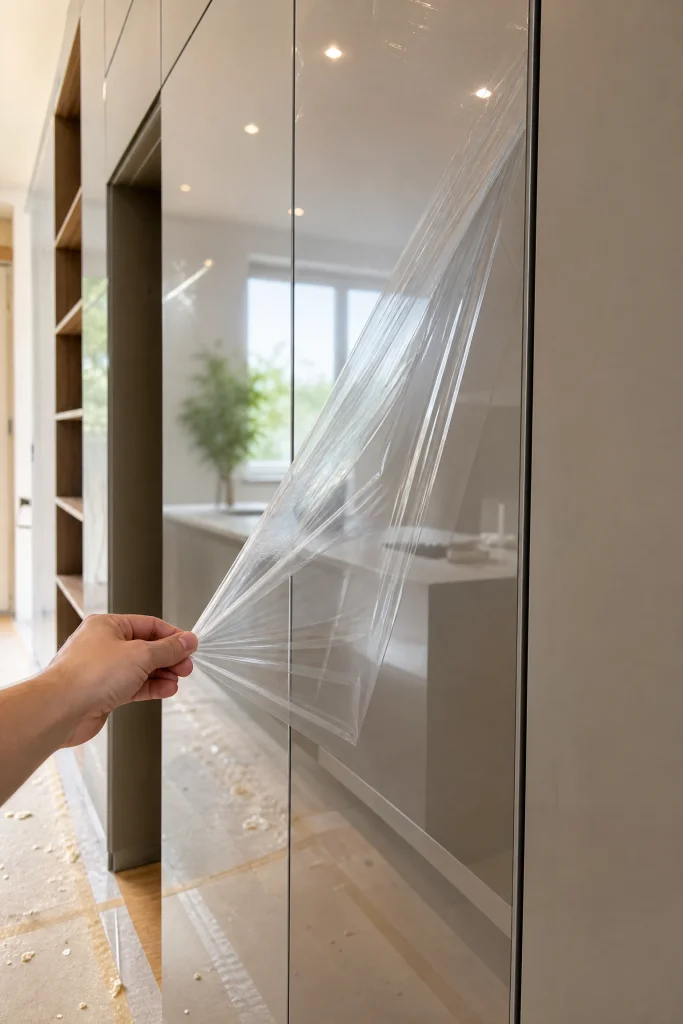
When brand new acrylic cabinets are finally installed in your home, they will arrive covered in a tight, cloudy plastic protective film. Do not let your contractor rip this film off immediately. You must leave this protective film completely intact until every single other renovation task in the kitchen is totally finished. Flying sawdust, swinging hammers, and careless painters will instantly ruin the expensive acrylic. Only after the floors are finished, the paint is dry, and the construction dust is completely vacuumed should you finally peel the film off to reveal the pristine surface.
Heads Up: Do not leave the protective film on for more than three months in a room with heavy direct sunlight, as the UV rays will permanently bake the cheap adhesive directly into the expensive acrylic finish.
Repairing Micro-Scratches
Despite your absolute best efforts, high-gloss acrylic will eventually accumulate tiny, microscopic hairline scratches from daily use, especially around the handles. The incredible benefit of solid acrylic over cheap painted wood is that you can physically buff these scratches out. By utilizing a highly specialized plastic polishing compound and a soft buffer pad, you can gently polish the top layer of the acrylic, completely erasing the tiny scratches and fully restoring the flawless, mirror-like factory finish.
Scratch Repair Execution:
- Aggressively clean the scratched area with a damp microfiber cloth to remove all dust.
- Apply a tiny drop of specialized acrylic polishing compound to a clean, soft buffing pad.
- Gently rub the compound into the scratch using strict, straight vertical motions.
- Wipe the remaining compound away to reveal the restored, glossy surface.
Designer Advice: Never attempt to heavily polish ultra-matte acrylic cabinets; the polishing compound will physically remove the matte texture, leaving a highly visible, terribly shiny glossy spot in the middle of the matte door.

UV Resistance and Sun Fading
One of the massive hidden benefits of high-quality acrylic cabinets is their incredible resistance to ultraviolet light. Traditional painted wood cabinets, especially stark white ones, will violently yellow and fade over time when exposed to heavy, direct afternoon sunlight. Premium solid acrylic is completely UV stable, meaning that brilliant stark white or deeply saturated emerald green will remain perfectly, flawlessly color-accurate for decades without fading or turning yellow. This makes acrylic the absolute best material choice for massive, sun-drenched architectural kitchens.
Quick Tip: When buying acrylic-faced MDF cabinets, you must explicitly ask the manufacturer for their specific UV warranty, as cheap overseas acrylic sheets often lack the necessary chemical UV stabilizers.

Conclusion
Selecting acrylic kitchen cabinets is a massive commitment to a highly specific, rigorously modern architectural aesthetic. As this Engineering Guide completely demonstrates, you cannot treat acrylic like traditional painted wood. You must aggressively protect the flawless plastic from deep scratches, carefully control the ambient room lighting to maximize the high-gloss reflection or ultra-matte sophistication, and strictly pair the cabinets with heavy, organic materials like walnut and marble to prevent the room from feeling like a sterile hospital. Whether you boldly execute a highly saturated terracotta orange kitchen or rely on the pristine perfection of stark hospital white, high-quality acrylic provides an indestructible, flawless, and deeply luxurious finish that permanently elevates your home into the realm of high-end European design.
Frequently Asked Questions
Are acrylic kitchen cabinets better than laminate?
Yes, absolutely. High-quality acrylic provides a significantly more flawless, mirror-like finish than laminate. Acrylic is also non-toxic, highly resistant to UV fading, and completely waterproof, whereas cheap laminate often looks plasticky, fades in the sun, and easily peels at the edges when exposed to steam.
Do high-gloss acrylic cabinets show fingerprints?
Yes, high-gloss acrylic aggressively highlights oily fingerprints, water splashes, and dust. If you have young children or pets, you will spend a significant amount of time wiping the lower cabinets. To avoid this, utilize an ultra-matte acrylic finish on the base cabinets, which hides smudges incredibly well.
How do you clean acrylic kitchen cabinets?
You must strictly use a clean, damp microfiber cloth and pure water. For heavy grease, use a tiny drop of mild dish soap. You absolutely must never use harsh chemical glass cleaners, bleach, rough sponges, or paper towels, as they will violently cloud and permanently scratch the soft plastic surface.
Can you paint over acrylic cabinets?
It is highly unadvisable and incredibly difficult. Because the acrylic surface is flawlessly smooth and completely non-porous, standard cabinet paint cannot physically grip the plastic and will easily peel off. You would have to aggressively sand the entire kitchen and use specialized industrial primers to even attempt it.
Are acrylic cabinets expensive?
Solid acrylic slab cabinets are extremely expensive, often rivaling high-end custom hardwoods. Acrylic-faced MDF cabinets are more affordable, acting as a mid-tier option, but you must ensure the manufacturer uses laser edge-banding technology to prevent the thin acrylic sheet from peeling off the cheap MDF core.
Can I mix matte and gloss acrylic in the same kitchen?
Yes, this is a highly strategic design choice. You install high-gloss acrylic strictly on the upper wall cabinets to brilliantly reflect ceiling lights and make the room feel tall, while installing ultra-matte acrylic strictly on the lower base cabinets to hide the heavy daily wear and dirty fingerprints.