
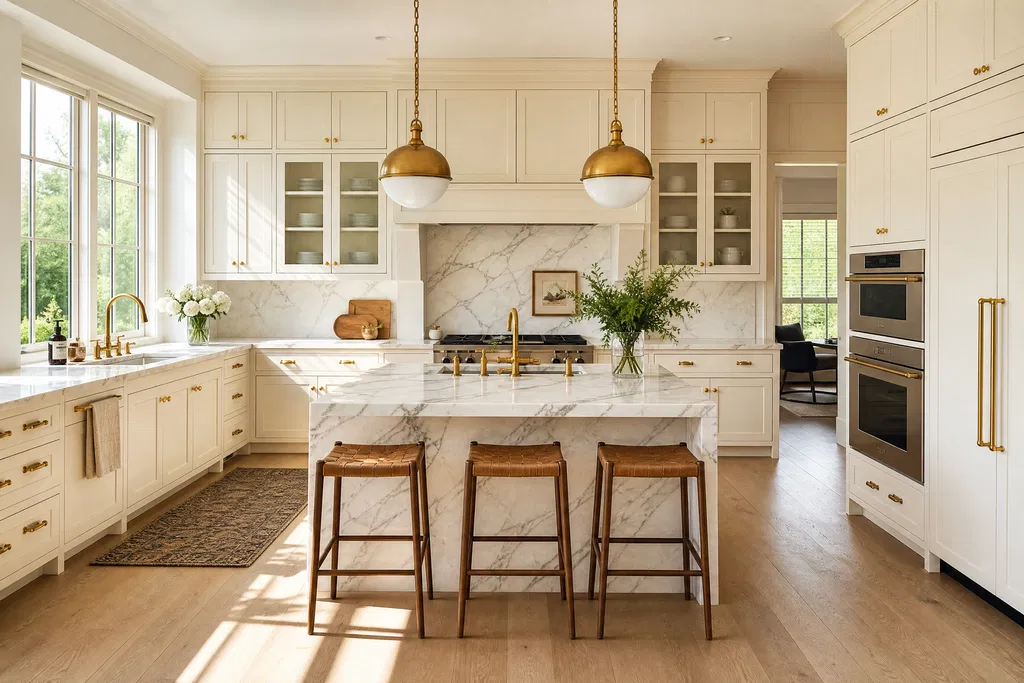
The Architectural Style Translation: 22 Ways to Deploy Alabaster Kitchen Cabinets
Sherwin-Williams Alabaster (SW 7008) is not simply a white paint; it is a highly calculated architectural chameleon. While stark, brilliant whites like Chantilly Lace reflect light so aggressively they often feel like a clinical operating room, Alabaster possesses a highly sophisticated, deeply creamy undertone. With a Light Reflectance Value of eighty-two, it is bright enough to make a massive kitchen feel incredibly airy and expansive, yet it retains a subtle, earthy warmth that deeply grounds the space. This specific chemical formulation makes it the undisputed king of kitchen cabinetry colors. However, because it is so incredibly versatile, homeowners frequently make the fatal mistake of treating it like a blank canvas, throwing random materials at it and hoping for a cohesive result.
A successful Alabaster kitchen requires strict architectural discipline. The paint color must be translated perfectly into a specific design language using highly curated hardware, countertops, and lighting. To guarantee your success, we have completely abandoned the standard randomized list format. Instead, this article is structured as The Architectural Style Translation. We have broken exactly twenty-two brilliant ideas into four highly rigid aesthetic translations: The English Farmhouse, The Transitional Luxury, The Mid-Century Modern, and The Coastal Elevation. By adhering strictly to the material ingredient tables and translation checklists provided within your chosen aesthetic, you will flawlessly execute a jaw-dropping Alabaster kitchen.
Translation 1: The English Farmhouse
To translate Alabaster into a deeply historic, rustic English Farmhouse aesthetic, you must aggressively pair the creamy white cabinets with heavily textured, organic materials. The goal is to make the brand new kitchen look like a beautifully aged, two-hundred-year-old estate.
Aged Copper Hardware Integration
The absolute fastest way to establish a historic farmhouse aesthetic is to completely abandon modern silver hardware and strictly install heavy, unlacquered aged copper pulls on the Alabaster cabinets. The deep, fiery orange and brown tones of the raw copper perfectly complement the creamy yellow undertones hidden deep within the Alabaster paint. As you cook daily, the raw copper will violently react to the oils on your hands and the humidity in the kitchen, developing a beautiful, dark green and black patina that introduces massive amounts of living history into the room.
| Hardware Finish | Aging Process | Aesthetic Result |
| Unlacquered Copper | Rapidly develops heavy dark patina | Authentic historic farmhouse |
| Antique Brass | Remains consistently dark | Traditional but slightly static |
| Polished Chrome | Never ages | Completely destroys the rustic illusion |
Reality Check: Unlacquered copper will literally turn your fingers slightly green if it oxidizes heavily; if you cannot handle a living, changing metal, you must purchase pre-aged, clear-coated antique brass instead.

The Massive Soapstone Sink
A standard stainless steel undermount sink completely ruins the illusion of a historic English estate. You must explicitly instruct your cabinet maker to heavily reinforce the sink base cabinet to support a massive, three-hundred-pound carved soapstone apron-front sink. The heavy, dark charcoal grey of the natural soapstone violently contrasts against the soft Alabaster cabinetry, providing a massive visual anchor in the exact center of the kitchen. The soapstone requires monthly oiling, which adds to the deeply tactile, bespoke ritual of maintaining a high-end farmhouse.
Pro Move: Because soapstone is incredibly heavy, your carpenter absolutely must build a custom structural wooden cradle inside the Alabaster base cabinet; standard cabinet walls will violently collapse under the weight.

Reclaimed Wood Ceiling Beams
To heavily ground the airy Alabaster upper cabinets, you must look upward to the ceiling. Installing massive, structural ceiling beams made from heavily distressed, reclaimed barn wood introduces incredible organic texture. The rough, splintered grain of the dark wood beams perfectly offsets the smooth, flawlessly painted creamy cabinets. This architectural addition visually lowers a massive vaulted ceiling, making the large kitchen feel deeply cozy, highly intimate, and historically grounded.
Designer Advice: You must physically match the stain of your wooden kitchen floors to the exact tone of the reclaimed ceiling beams to create a cohesive, heavily unified architectural envelope.

The Beaded Shaker Profile
A standard, flat shaker cabinet door is often too stark and modern for a true English Farmhouse. You must specify a ‘beaded shaker’ profile when ordering your Alabaster doors. This means the carpenter routes a tiny, delicate rounded bead of wood perfectly along the inside edge of the shaker frame. This incredibly minor architectural detail violently alters how shadows fall across the door, introducing a highly traditional, slightly ornate shadow line that deeply enhances the creamy richness of the Alabaster paint.
Beaded Shaker Rules:
- You must use a Satin paint finish; a flat matte finish will completely hide the delicate shadow line.
- Ensure the bead routing is highly precise and not clogged with thick primer before the final paint is applied.
- Clean the tiny crevice weekly, as heavy kitchen grease will instantly accumulate inside the bead.
Quick Tip: If you are painting older oak cabinets, you must heavily fill the deep wood grain with putty before routing the bead, or the delicate detail will look incredibly jagged and cheap.

Hand-Molded Terracotta Floors
To completely solidify the rustic aesthetic, you must completely abandon modern porcelain tile and install incredibly thick, hand-molded terracotta floor tiles. The heavily uneven, deeply textured surface of the baked clay provides massive visual weight and fiery orange warmth beneath the soft Alabaster cabinets. The creamy paint flawlessly neutralizes the aggressive orange floor, creating a highly balanced, deeply welcoming environment that feels exactly like a historic countryside kitchen.
Heads Up: Hand-molded terracotta is wildly uneven; you absolutely cannot slide a heavy refrigerator easily across this floor without severely cracking the delicate clay tiles.

Translation 2: The Transitional Luxury
Transitional design is the absolute pinnacle of current high-end interior architecture, perfectly blending classic traditional warmth with sleek modern lines. Alabaster is the ultimate color for this aesthetic.
The Calacatta Marble Waterfall
To elevate Alabaster cabinets into the realm of extreme modern luxury, you must top them with a massive slab of highly polished Calacatta marble featuring a dramatic waterfall edge. The expensive stone physically wraps down both sides of the center island, plunging directly into the floor. The creamy white background of the Calacatta marble flawlessly matches the Alabaster paint, while the violent, thick grey and gold veining provides massive architectural drama. This seamless integration between painted wood and natural stone screams billionaire luxury.
Executing the Waterfall Edge:
- You must explicitly purchase two identical slabs of marble from the exact same mountain block to ensure the veining matches.
- Instruct the stone fabricator to perfectly book-match the veins where the horizontal counter meets the vertical drop.
- Ensure the Alabaster base cabinets are perfectly level, or the heavy vertical stone will violently crack under its own weight.
Pro Move: Marble is highly porous; you absolutely must seal the stone with a heavy industrial sealant twice a year, or a spilled glass of red wine will permanently stain the million-dollar island.

Polished Nickel Hardware
For a transitional kitchen, unlacquered brass is too historic and matte black is far too modern. You must strictly utilize heavy, solid polished nickel hardware. Unlike cheap chrome, which casts a terrible, cold blue light, polished nickel features a deeply warm, slightly golden undertone. This specific warm silver reflection perfectly compliments the creamy nature of the Alabaster paint, providing a highly sophisticated, sparkling jewelry effect that feels incredibly tailored and highly expensive.
| Silver Metal | Undertone | Pairing with Alabaster |
| Polished Nickel | Warm/Golden | Perfect; highly luxurious and complementary |
| Polished Chrome | Cold/Blue | Terrible; clashes with the creamy paint |
| Brushed Nickel | Flat/Grey | Boring; looks like a cheap builder-grade flip |
Reality Check: Polished nickel requires aggressive daily maintenance; you must wipe every single handle with a dry microfiber cloth every night, or it will heavily display highly visible, cloudy water spots.

The Matching Plaster Range Hood
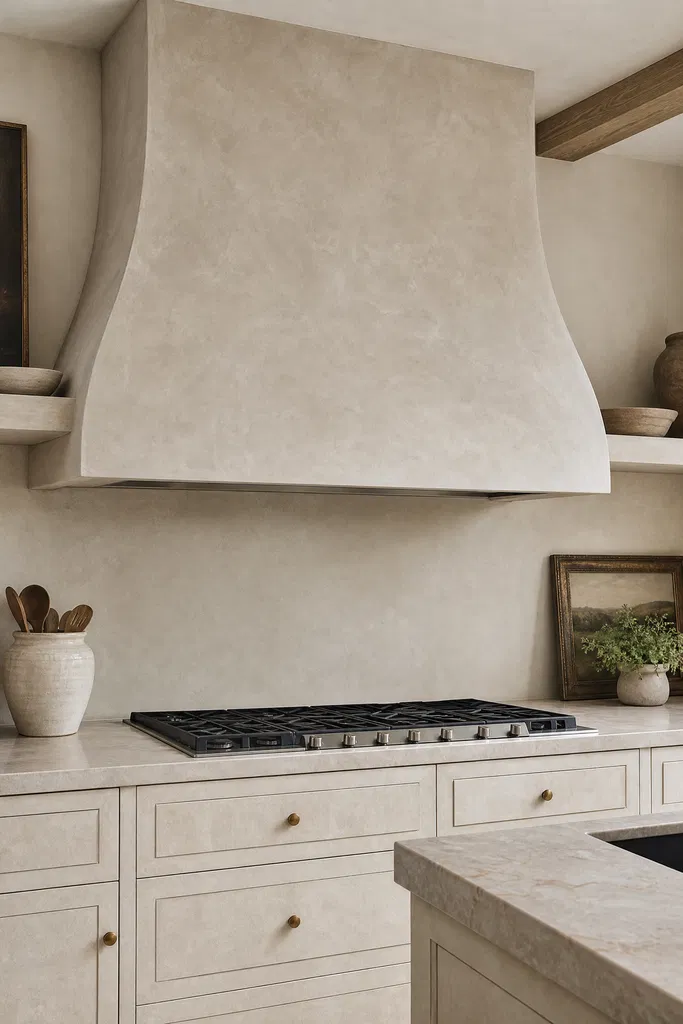
A massive stainless steel exhaust hood completely ruins the soft, tailored aesthetic of a transitional kitchen. You must hire an artisan to build a custom wooden hood surround and heavily coat it in traditional Roman clay plaster, explicitly color-matched to Sherwin-Williams Alabaster. The incredibly subtle, cloudy texture of the hand-troweled plaster provides massive visual depth compared to the flat painted cabinets below. This completely hides the utilitarian machinery while introducing a highly bespoke, artisanal focal point.
Designer Advice: You must seal the porous plaster hood with a clear, matte polyurethane; otherwise, boiling tomato sauce will violently splatter and permanently stain the expensive white clay.
Stark White Ceiling Contrast
Because Alabaster is a creamy off-white, you must provide sharp contrast to prevent the room from looking old and yellowed. You absolutely must paint your ceiling and heavy crown molding in a stark, brilliant white, such as Sherwin-Williams High Reflective White. When the creamy Alabaster upper cabinets physically touch the stark white ceiling molding, the violent contrast forcefully proves that the cabinets are intentionally creamy, not just dirty. This crisp architectural boundary is mandatory for high-end luxury.
Contrast Painting Rules:
- Paint the stark white ceiling in a flat Matte finish to hide drywall imperfections.
- Paint the stark white crown molding in a high-gloss finish to aggressively bounce light.
- Never paint the ceiling Alabaster; it will make the entire room look like a smoky, yellowed cave.
Quick Tip: If you are using a white subway tile backsplash, it must be the exact same creamy Alabaster tone; a stark white backsplash will make the creamy cabinets look sickly yellow.

Glass-Front Tower Cabinets
To break up massive, heavy walls of solid Alabaster wood, you must install tall, glass-front tower cabinets resting directly on top of the countertops. These tall architectural pillars introduce massive visual depth and provide a highly curated display space for beautiful white ceramics and crystal glasses. To maximize the luxury aesthetic, you must paint the interior back wall of the glass cabinet slightly darker than Alabaster, such as a soft greige, to aggressively highlight the glowing white ceramics inside.
Heads Up: You must strictly install hidden LED puck lights inside the very top of the glass tower; a dark glass cabinet instantly becomes a terrifying, ugly black void in the middle of a bright kitchen.

Translation 3: The Mid-Century Modern
Alabaster is the absolute perfect neutral backdrop to balance the heavy, aggressive wood tones and sharp geometric lines required for a highly authentic Mid-Century Modern architectural aesthetic.
Flat Slab Door Profiles
To execute a Mid-Century Modern translation, you must completely abandon the traditional shaker cabinet door. You absolutely must order completely flat, solid slab doors painted in Alabaster. The complete lack of decorative routing or panels creates a hyper-minimalist, sleek architectural line across the entire kitchen. The smooth, creamy Alabaster paint heavily softens the aggressive, stark geometry of the flat slabs, ensuring the modern room feels deeply inviting rather than resembling a cold, sterile science laboratory.
| Door Style | Architectural Line | Best Design Fit |
| Flat Slab | Unbroken, highly geometric | Mid-Century Modern, Ultra-Contemporary |
| Standard Shaker | Classic, framed | Transitional, Farmhouse |
| Raised Panel | Highly ornate, heavy shadow | Traditional, heavily dated |
Pro Move: You must explicitly specify a high-quality Satin finish for the flat slab doors; a high-gloss finish will turn the kitchen into a 1980s Miami nightclub rather than a 1950s Mid-Century masterpiece.

Heavy Walnut Base Cabinets
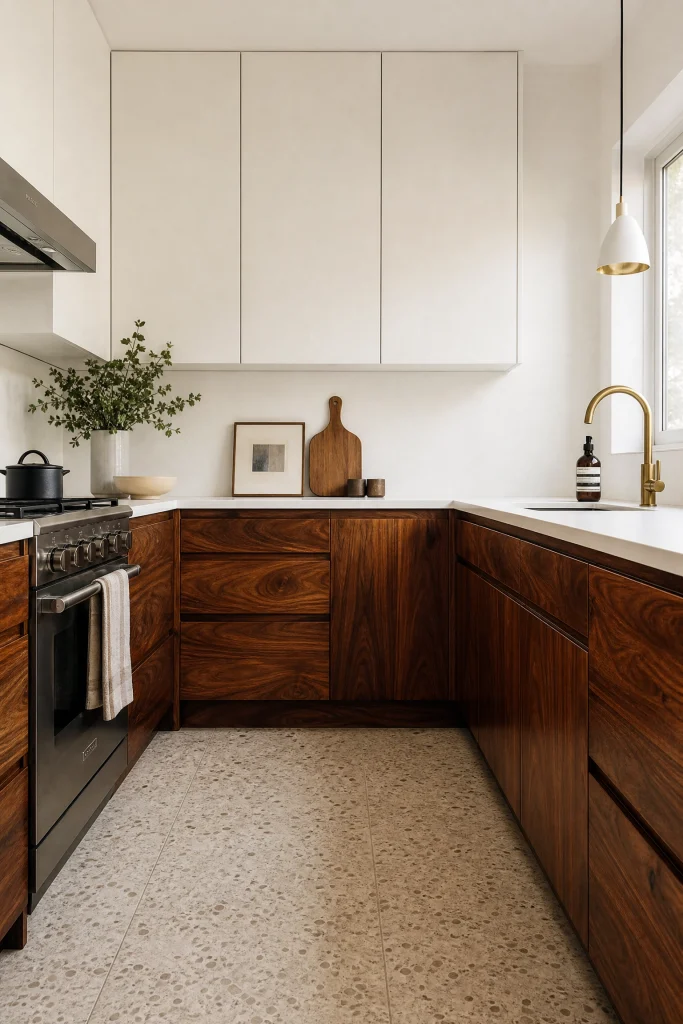
Mid-Century design relies heavily on beautiful, rich wood grains. A stunning architectural strategy is to execute a two-tone kitchen by installing heavy, solid walnut base cabinets and pairing them with brilliant Alabaster flat-slab upper cabinets. The dark, fiery amber tones of the raw walnut violently ground the lower half of the room, while the creamy white uppers visually melt into the ceiling. The subtle warmth in the Alabaster perfectly bridges the gap between the dark wood and the white ceiling.
Two-Tone Walnut Rules:
- You must ensure the grain of the walnut doors is perfectly matched vertically across the entire lower bank of cabinets.
- Never use a dark, muddy stain on the walnut; strictly use a clear matte sealant to highlight the natural fiery orange tones.
- Keep the backsplash incredibly simple, like a solid sheet of white glass, to avoid competing with the heavy wood grain.
Designer Advice: If you use heavy walnut base cabinets, you must utilize a stark white countertop to provide a sharp, highly necessary visual break before the eye reaches the Alabaster upper cabinets.
Matte Black Geometric Hardware
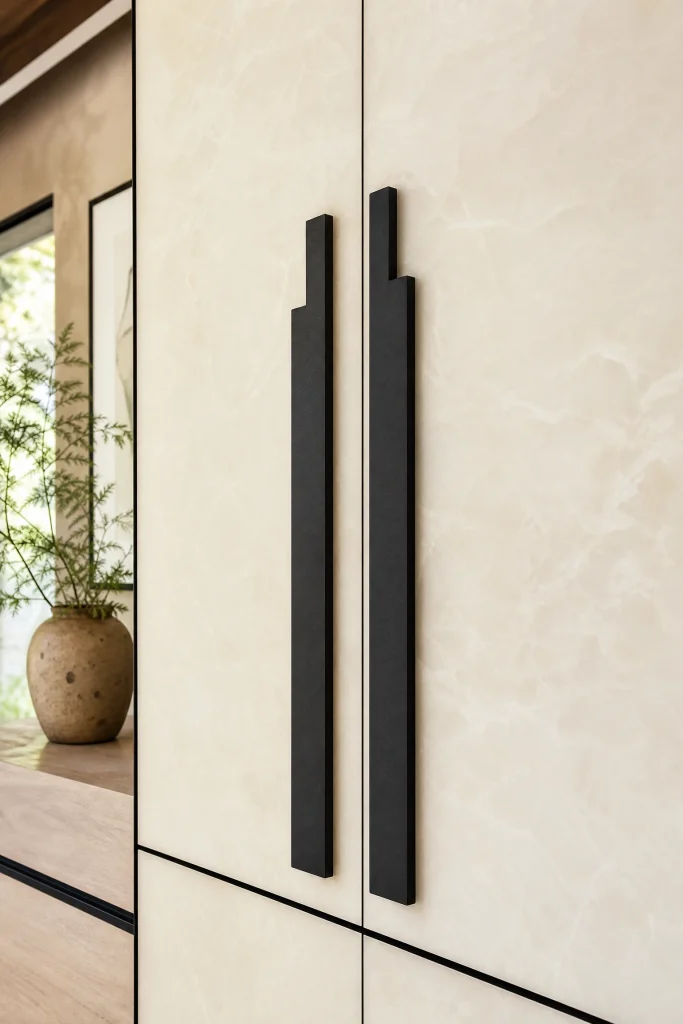
To provide the sharp, aggressive punctuation required for Mid-Century design, you must strictly install completely flat, matte black geometric hardware on the Alabaster cabinets. The dead-flat black metal provides incredible high-contrast against the soft creamy paint, acting exactly like sharp eyeliner. You must abandon traditional round knobs completely and utilize long, stark rectangular bar pulls. This rigorous hardware choice heavily enforces the strict horizontal and vertical architectural lines that define the Mid-Century aesthetic.
Reality Check: You must ensure the matte black hardware is heavily powder-coated; cheap painted black handles will violently chip and reveal silver metal underneath within two months of daily use.
The Terrazzo Floor Revival
To completely cement the Mid-Century aesthetic, you must rip out standard wood flooring and install poured Terrazzo floors. The chaotic, highly speckled mixture of white cement, black marble chips, and amber glass perfectly pulls together the Alabaster cabinets, the black hardware, and the walnut accents. The creamy Alabaster cabinetry acts as the perfect, quiet, solid architectural anchor that prevents the highly busy, chaotic patterned floor from completely overwhelming the human eye and causing severe visual fatigue.
Terrazzo Installation Warnings:
- Authentic poured Terrazzo is incredibly heavy; you must heavily reinforce your floor joists before pouring the cement.
- You must hire a highly specialized artisan to grind the floor perfectly smooth and polish it to a high shine.
- If budget is a concern, utilize large-format Terrazzo-look porcelain tiles tightly installed with minimal grout lines.
Heads Up: Terrazzo is incredibly cold and physically rock-hard; if you drop a delicate glass or a heavy cast-iron pan on this floor, it will violently shatter instantly.

Globe Pendant Lighting
Lighting is critical in Mid-Century design. You must abandon traditional lantern pendants and hang massive, perfectly spherical milk-glass globe lights directly above the kitchen island. The stark, geometric perfection of the glowing white spheres heavily reinforces the modern aesthetic. When illuminated, the soft, diffused light pouring through the milk glass perfectly highlights the creamy, warm undertones of the Alabaster cabinets, preventing the minimalist space from feeling cold or uninviting at night.
Quick Tip: You must explicitly use 3000K warm-white LED bulbs inside the milk-glass globes; a cold 4000K bulb will turn the beautiful glowing spheres into terrifying, stark blue hospital lights.

Translation 4: The Coastal Elevation
Alabaster is the ultimate foundational color for a highly elevated, luxurious coastal kitchen. Unlike stark white, which feels like a cold beach house rental, Alabaster provides the warm, sun-baked elegance of a high-end Hamptons estate.
Woven Rattan Accents
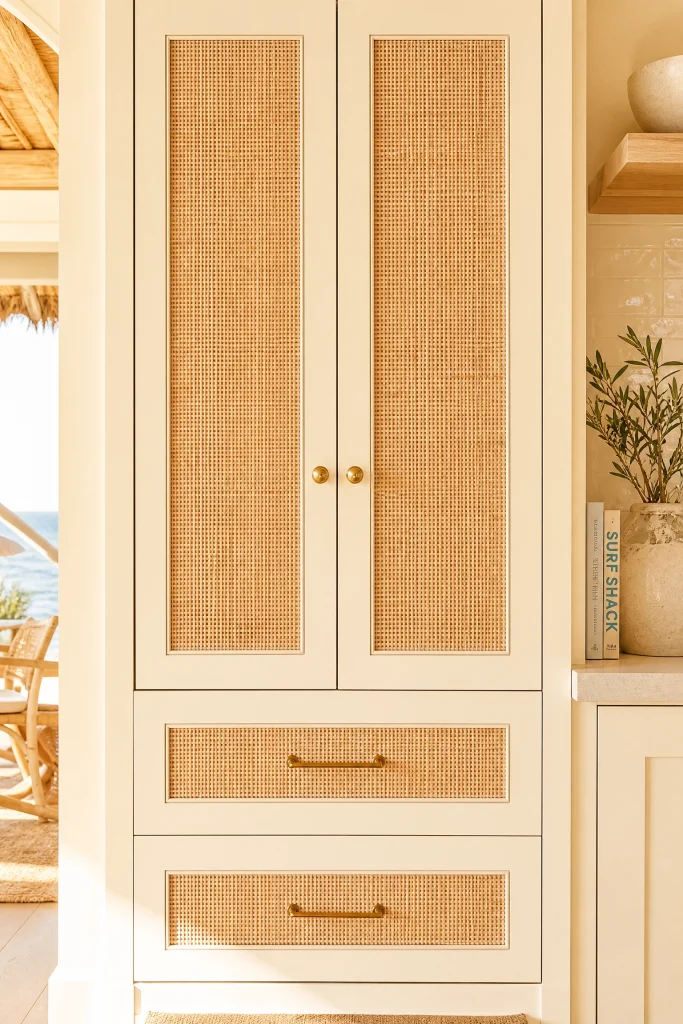
To instantly establish a highly elevated coastal aesthetic, you must aggressively introduce organic, beach-inspired textures to contrast the smooth painted cabinetry. Installing heavy, woven rattan panels directly into the center of the Alabaster cabinet doors, or hanging massive rattan dome pendants over the island, is a brilliant strategy. The highly tactile, sandy-blonde color of the natural rattan perfectly harmonizes with the subtle yellow undertones deep within the Alabaster paint, creating a deeply cohesive, heavily sun-drenched atmosphere.
| Coastal Texture | Color Profile | Integration Method |
| Natural Rattan | Sandy Blonde | Cabinet door inserts, pendant lighting |
| Seagrass | Soft Green/Tan | Heavy woven floor runners, barstools |
| Bleached Jute | Pale White/Grey | Avoid; clashes with the warm creamy paint |
Pro Move: If you install rattan panels directly into the cabinet doors, you must stretch the material incredibly tight; loose, sagging rattan instantly makes the expensive kitchen look like cheap patio furniture.
The Soft Sage Island
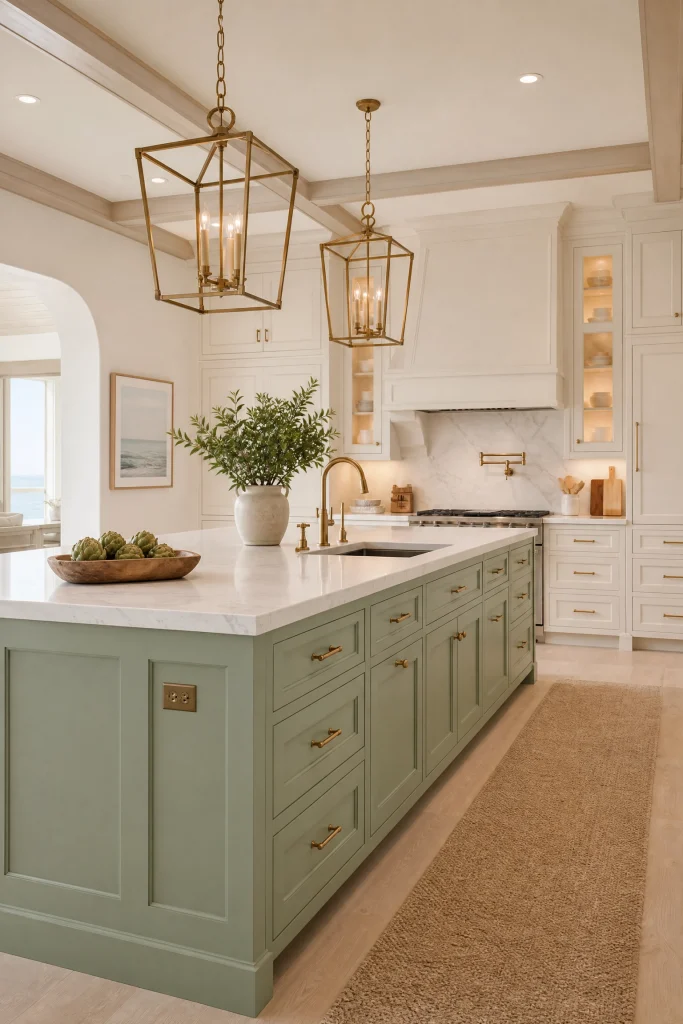
While an all-white kitchen is a classic coastal staple, painting the massive center island in a soft, muted sage green provides incredible architectural depth. The soft green instantly evokes the color of sea glass and coastal dune grass. Because Alabaster features warm undertones, it acts as the perfect, quiet framing mechanism for the green island, allowing the color to softly pop without violently clashing. This subtle introduction of organic color heavily elevates the room from a boring white box into a highly curated designer space.
Designer Advice: You must strictly utilize a muted, grey-based green like Sherwin-Williams Sea Salt; a highly saturated, bright lime green will violently destroy the calm, high-end coastal luxury aesthetic.
Light White Oak Flooring
A coastal kitchen demands light, airy flooring. You must completely avoid dark, heavy mahogany or cherry wood floors, which will drag the room down into a dark, traditional aesthetic. Instead, explicitly install wide-plank, wire-brushed European white oak flooring. The incredibly pale, heavily desaturated blonde wood perfectly mimics the color of driftwood and sun-bleached sand. The pale floors violently bounce natural sunlight upward, heavily illuminating the creamy Alabaster lower cabinets and making the entire room feel incredibly massive.
White Oak Flooring Rules:
- Strictly utilize planks that are at least seven inches wide to minimize chaotic, busy seam lines.
- Ensure the wood is wire-brushed to introduce extreme matte texture that hides daily beach sand.
- Seal the floors with a completely invisible, water-based matte polyurethane to prevent the wood from turning yellow.
Reality Check: Never use an oil-based polyurethane on white oak floors; the oil will violently oxidize over time, turning your beautiful pale floors a terrifying, sickly orange color.

Unlacquered Brass Ship Lighting
To inject subtle nautical character without resorting to cheesy, literal beach decor, you must hang heavy, unlacquered brass dome pendants directly over the kitchen sink and island. These heavy metal fixtures perfectly mimic the utilitarian, highly durable lighting found in the engine room of a historic luxury yacht. The fiery golden brass provides massive warmth against the creamy Alabaster cabinets, and as the salt air naturally oxidizes the unlacquered metal, it will develop a deeply authentic, spotted coastal patina.
Heads Up: You absolutely must ensure the heavy brass pendants are physically anchored directly into the solid wooden ceiling joists; they will violently rip straight out of standard drywall.

Shiplap Range Hood Surround
A massive, heavy plaster or stainless steel range hood will completely destroy the light, airy coastal vibe. Instead, you must instruct your carpenter to build a custom wooden hood surround completely wrapped in horizontal shiplap wooden boards. You must paint the shiplap the exact same Alabaster color as the surrounding cabinetry. The subtle, horizontal shadow lines created by the shiplap gaps introduce highly necessary architectural texture, completely hiding the heavy exhaust machinery behind a beautiful, beach-house inspired facade.
Shiplap Hood Execution:
- You must use a heavily precise nickel-gap spacing tool to ensure the horizontal lines are perfectly uniform.
- Aggressively caulk all the vertical corner seams before painting to prevent the wood from looking like a cheap DIY project.
- Use a highly durable, washable Semi-Gloss finish on the shiplap to easily wipe away boiling grease splatters.
Quick Tip: You must strictly check local fire codes to ensure the wooden shiplap is installed the legally required distance away from the massive open gas flames of your luxury stovetop.

White Macaubas Quartzite
For the ultimate luxury coastal countertop, completely avoid busy, heavily speckled granites. Instead, source a massive slab of White Macaubas quartzite. This incredibly expensive natural stone features a brilliant, pale background heavily laced with straight, linear grey and soft blue veining that perfectly mimics the visual movement of gentle ocean waves. This sweeping, linear stone perfectly complements the warm Alabaster cabinets, providing an incredibly serene, deeply luxurious surface that is significantly harder and more durable than fragile marble.
Pro Move: Because the veining in Macaubas quartzite is heavily linear, you must explicitly instruct your stone fabricator to cut the slab so the veins run perfectly parallel to the longest wall of your kitchen to maximize the illusion of length.

The Hidden Scullery Pantry
High-end coastal living demands a perfectly pristine, uncluttered kitchen for entertaining. You must utilize Alabaster cabinetry to completely hide a massive, secondary ‘scullery’ or dirty kitchen. By installing a massive, secret cabinet door that perfectly matches the Alabaster pantry wall, you create a hidden architectural portal. When entertaining guests, you can aggressively hide all the dirty dishes, loud blenders, and messy prep work behind the flawless painted door, ensuring the primary kitchen remains a perfectly serene, highly curated architectural masterpiece.
Designer Advice: The hidden scullery door must be built incredibly robustly with heavy-duty hidden hinges; a flimsy door will violently sag over time, completely ruining the seamless illusion of the cabinet wall.

Conclusion
Sherwin-Williams Alabaster is the undisputed king of kitchen cabinetry precisely because of its incredible architectural versatility. However, as this Style Translation guide proves, its creamy, warm undertones absolutely demand strict design discipline. You cannot simply paint your cabinets Alabaster and hope for the best. You must aggressively translate the color into a specific aesthetic by rigidly controlling the surrounding hardware, stone, and lighting. Whether you are aiming for the heavy, historic patina of an English Farmhouse, the stark, geometric lines of Mid-Century Modernism, the sparkling elegance of Transitional Luxury, or the sun-drenched serenity of a Coastal Elevation, Alabaster provides the flawless, deeply grounded architectural foundation required to execute a breathtaking, high-end masterpiece.
Frequently Asked Questions
Does Alabaster look too yellow on kitchen cabinets?
It can, if you pair it incorrectly. Alabaster has distinct creamy, warm undertones. If you pair it with stark, cool white subway tile or cold 4000K LED lighting, the harsh contrast will violently force the Alabaster to look sickly and yellow. You must pair it with warm whites and warm 3000K lighting to maintain its sophisticated creaminess.
What is the best white paint for the ceiling if my cabinets are Alabaster?
You must use a stark, bright white like Sherwin-Williams High Reflective White on the ceiling. This creates a highly necessary, crisp architectural contrast. If you paint the ceiling Alabaster, the entire room will look like a smoky, yellowed cave.
Can I use Alabaster cabinets with grey floors?
It is highly dangerous. Cold, blue-based grey flooring violently clashes with the warm, creamy yellow undertones of Alabaster. If you must use grey, ensure it is a warm ‘greige’ or heavily brown-based grey. The absolute best pairing is a warm, light white oak or natural walnut floor.
What color hardware is best for Alabaster?
It depends entirely on your chosen architectural translation. Unlacquered copper provides historic farmhouse warmth. Polished nickel provides transitional luxury sparkle. Matte black provides sharp, modern mid-century contrast. Always avoid cheap brushed nickel, which looks incredibly dated next to the creamy paint.
Is Alabaster too dark for a kitchen with no windows?
No, Alabaster has an LRV of 82, making it incredibly bright and highly reflective. It is an excellent choice for a dark kitchen because its inherent creamy warmth prevents the windowless room from feeling like a cold, sterile hospital corridor.
Should I use Alabaster on both upper and lower cabinets?
Yes, completely drenching the cabinets in Alabaster creates a highly cohesive, massive architectural envelope. However, it also serves as a flawless upper-cabinet color in a two-tone kitchen when paired with heavy walnut or dark green base cabinets.


