Rug Sizing, Shape Pairing, and Anchor Strategies for Every Dining Room Layout
Dining room rugs define seating zones, protect hardwood floors, absorb noise, and anchor table arrangements with grounded material warmth. Selecting the right rug size, shape, pile height, and fiber type for each specific table configuration transforms bare flooring into a purposeful, cohesive foundation. These twenty-eight placement strategies cover every dining room layout, table shape, and room proportion for lasting functional design.
Extend Rectangular Rugs Twenty-Four Inches Beyond Each Long Table Edge
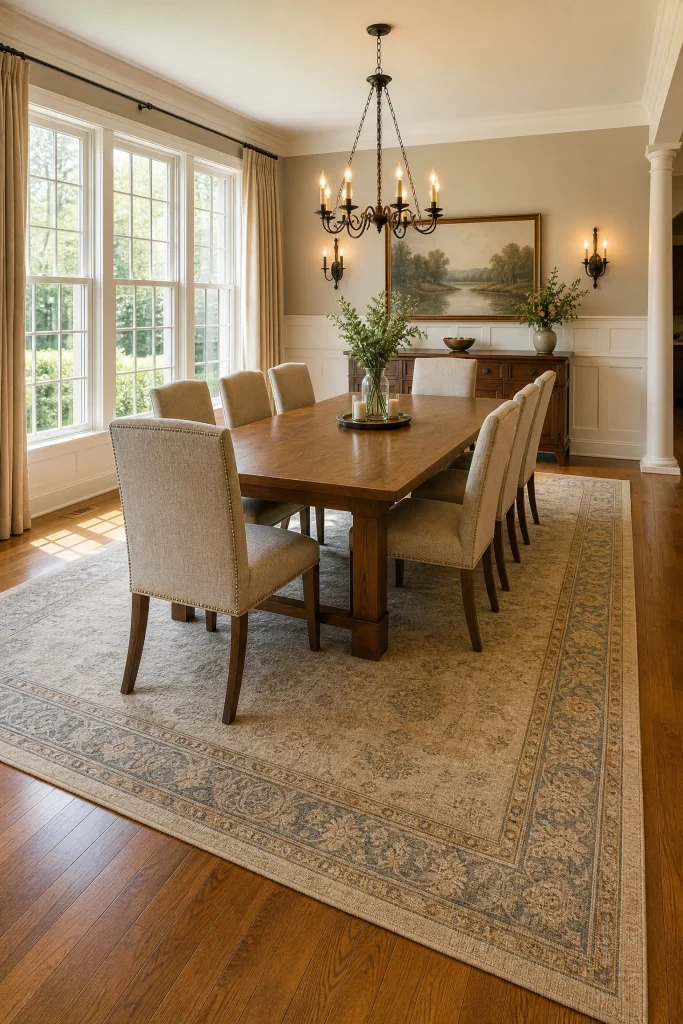
Positioning a rectangular rug so it extends a minimum of twenty-four inches beyond every long dining table edge ensures all chair legs remain supported on the rug when pushed back. This twenty-four-inch clearance standard prevents chair feet from snagging on rug borders during meal service, protecting both the rug edge and the hardwood flooring beneath. Measuring the table with all leaves extended before purchasing guarantees
DESIGNER ADVICE: Use painter’s tape on the floor to outline the proposed rug footprint before purchasing to confirm clearance on all sides.
Pair Round Rugs Directly Beneath Circular Pedestal Dining Tables
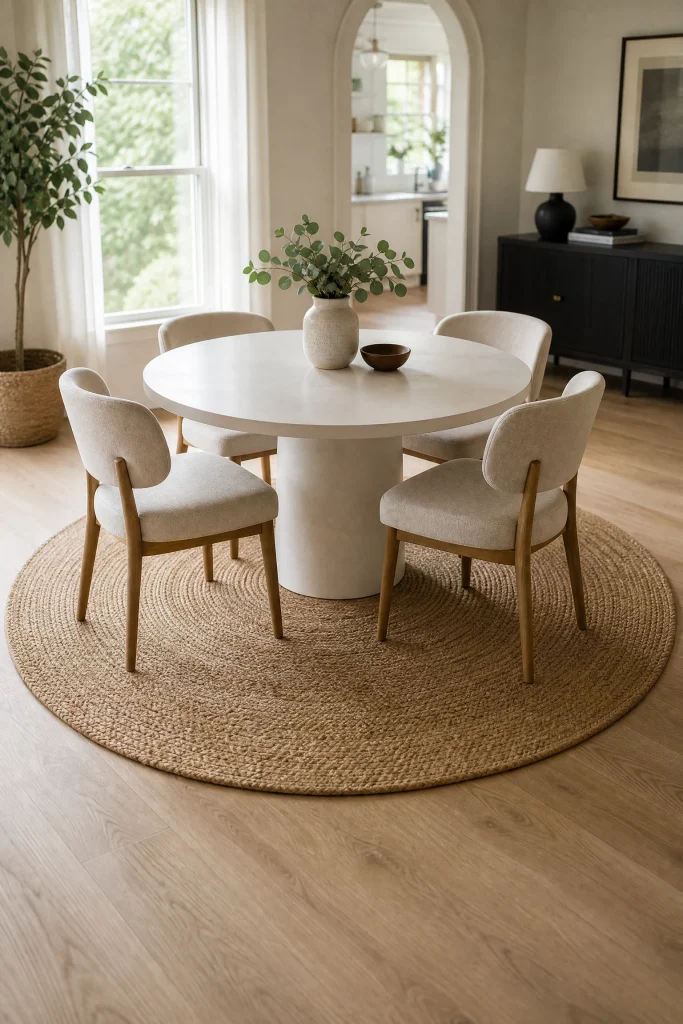
Placing a round rug centered beneath a circular pedestal dining table creates a unified, concentric composition that echoes the table’s own curvature. The matching round forms reinforce each other visually, establishing a contained circular seating zone within open-plan rooms. A round rug should extend at least twenty-four inches beyond the table circumference to keep all chair legs fully supported when pulled away from the pedestal
STYLE SECRET: Match rug diameter to at least twice the table diameter to maintain visual balance and adequate chair clearance simultaneously.
Use Nine-by-Twelve Foot Wool Rugs Under Eight-Seat Rectangular Tables
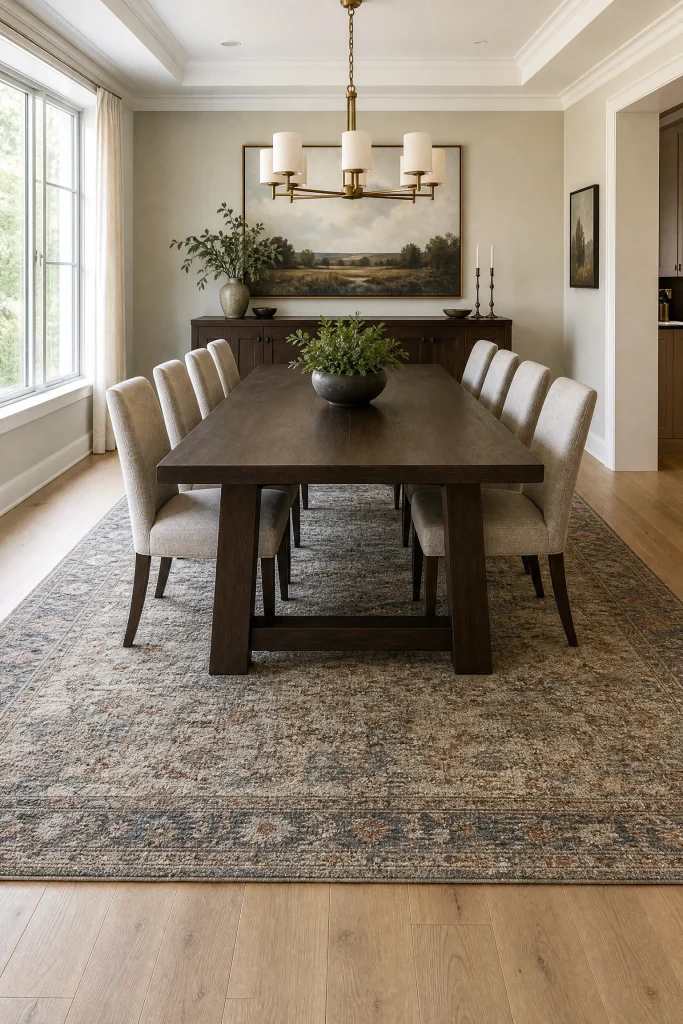
Sizing a nine-by-twelve foot wool area rug beneath a rectangular dining table seating eight guests provides sufficient perimeter clearance for comfortable chair movement on all sides. Wool fiber construction offers natural resilience against heavy chair leg pressure, recovering its pile shape even after years of daily dining traffic. This standard rug dimension works within most formal dining rooms without encroaching on buffet sideboards or doorway
QUICK TIP: Measure your dining room from wall to wall and leave at least eighteen inches of bare floor visible between the rug edge and walls.
Center Low-Pile Flat-Weave Rugs Beneath Tables for Easy Chair Sliding
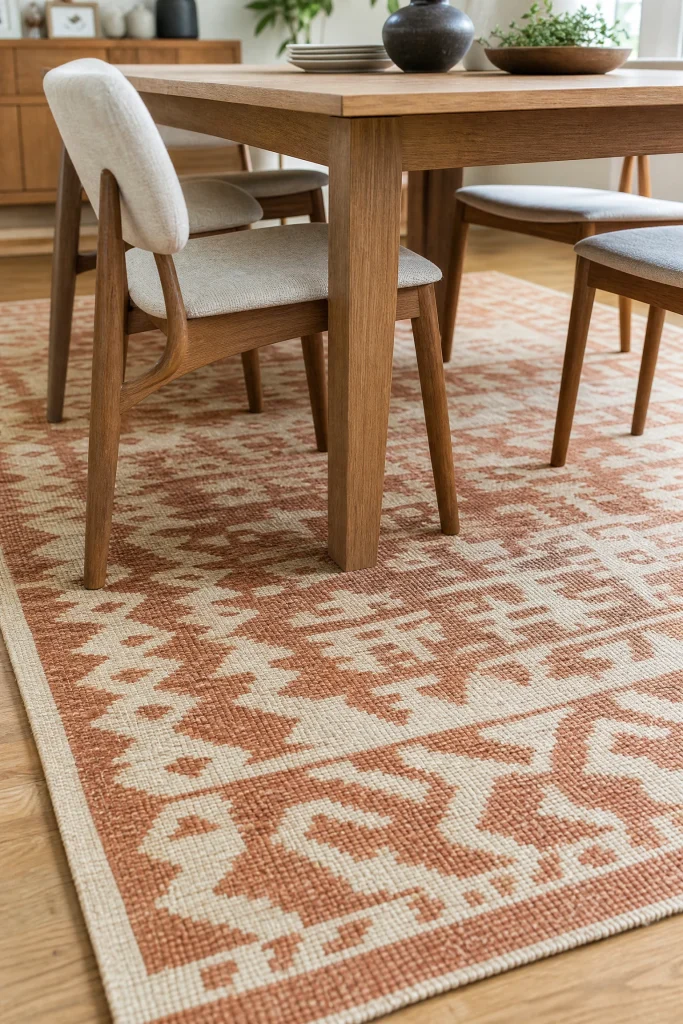
Choosing a flat-weave or low-pile rug for dining rooms allows dining chairs to slide smoothly across the rug surface without resistance from high pile fibers. High-pile shag rugs trap chair legs and cause frustrating drag during meal service, while flat-weave constructions permit effortless push-back clearance. Kilim-style flat-weave rugs in geometric patterns introduce bold color and textile character while providing the practical low-resistance surface essential for
MAINTENANCE RULE: Vacuum flat-weave dining rugs twice weekly using suction-only settings without beater bars to prevent warp thread damage.
Anchor Open-Plan Kitchen-Dining Zones with Distinct Bordered Rug Boundaries

Laying a bordered area rug beneath dining furniture in open-plan kitchen-dining spaces creates a visual room-within-a-room that separates the eating zone from surrounding living and cooking areas. The defined rug border acts as an architectural edge, communicating spatial intention without requiring physical partitions or walls. Selecting a rug with a contrasting narrow border in a complementary tone reinforces the dining zone boundary while tying adjacent
DESIGNER ADVICE: Choose bordered rugs with border widths of two to four inches to define dining zones without disrupting open-plan flow.
Layer Natural Jute Rugs Over Hardwood Floors in Farmhouse Dining Spaces
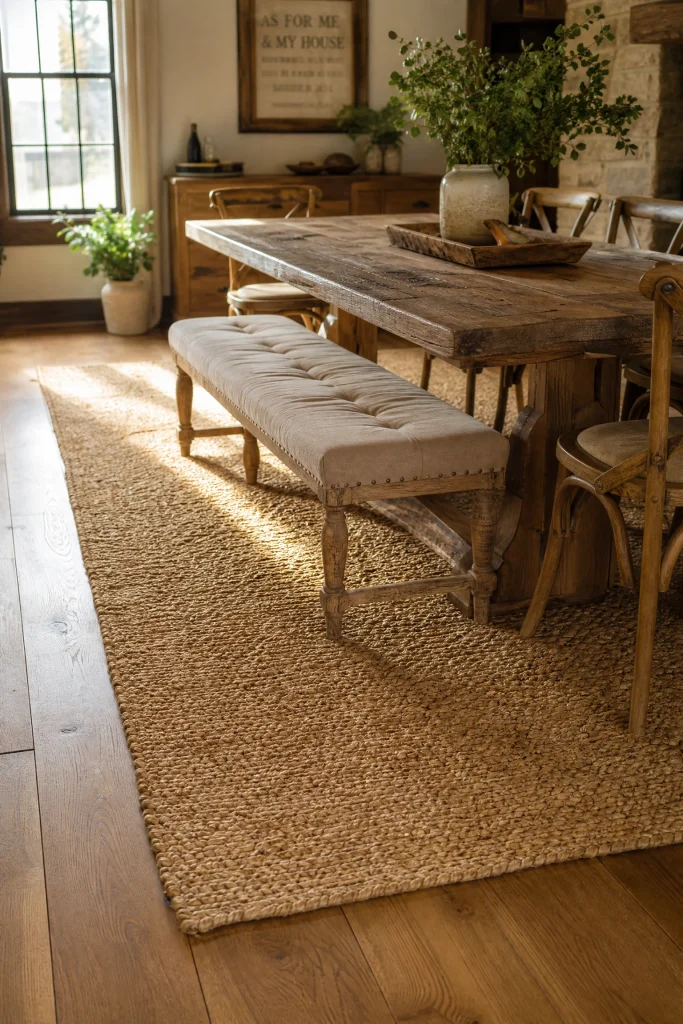
Positioning a large natural jute area rug over wide-plank hardwood flooring in farmhouse-style dining rooms introduces earthy plant-fiber texture that complements exposed timber ceiling beams and shiplap walls. Jute fibers display subtle tan, caramel, and brown fiber color variations woven into flat braided patterns, adding warm organic layering beneath reclaimed wood dining tables. Jute rugs perform best in dining rooms with lower spill frequency and
QUICK TIP: Blot jute rug spills immediately with a dry cloth since jute fibers absorb moisture quickly and can develop mold if left wet.
Position Eight-by-Ten Foot Rugs Under Six-Person Dining Tables with Side Chair Clearance
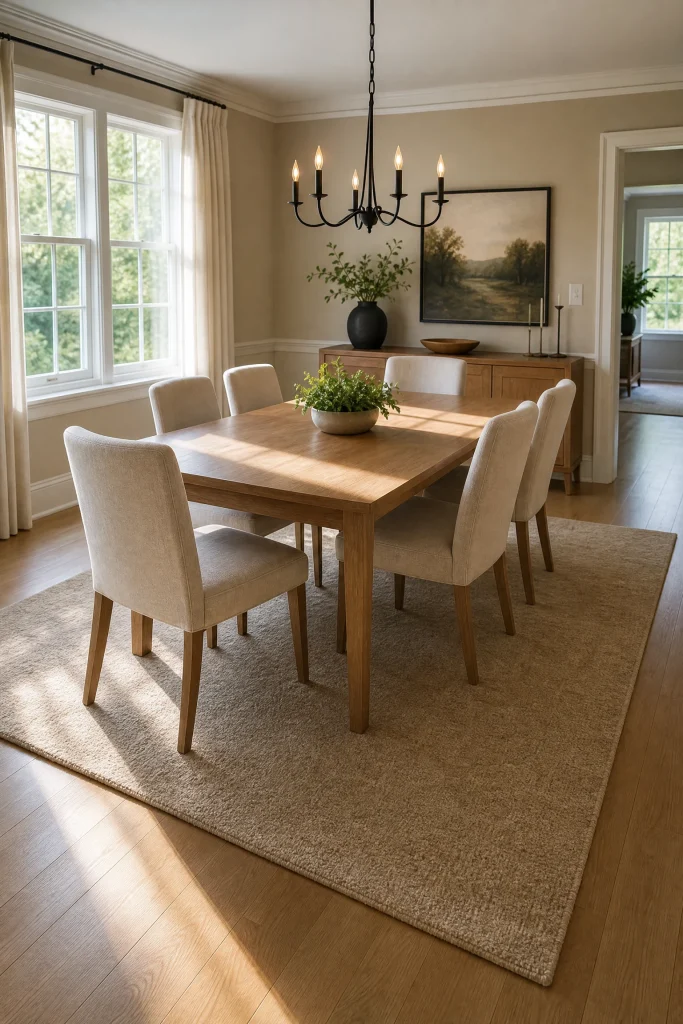
An eight-by-ten foot area rug provides adequate perimeter clearance for a standard six-person rectangular dining table, allowing host and end chairs to remain fully on the rug surface when guests push away from the table. This rug dimension suits dining rooms between twelve and fourteen feet in length, leaving eighteen to twenty-four inches of visible flooring along each wall. Selecting a warm neutral rug tone
DESIGNER ADVICE: Always measure your table with all extension leaves inserted to ensure the rug remains large enough during expanded seating configurations.
Place Oval Rugs Under Extendable Oval Dining Tables for Smooth Shape Transitions

Centering an oval area rug beneath an extendable oval dining table creates a seamless silhouette match between furniture and floor textile. The gently curving rug edges eliminate sharp angular transitions common with rectangular rug-table pairings, producing a softer, more organic seating composition. When the oval table is fully extended for hosting, the rug’s proportional oval shape continues to provide equitable perimeter clearance around all guest
STYLE SECRET: Oval rugs in solid neutral tones work best beneath patterned oval table surfaces to avoid competing visual complexity at floor level.
Use Washable Performance Rugs Beneath Family Dining Tables with Young Children

Selecting machine-washable synthetic performance rugs beneath family dining tables with young children provides practical spill protection without the anxiety of permanent staining on expensive wool fibers. Modern performance rug constructions in polypropylene or recycled fiber blends replicate the appearance of natural wool pile at significantly lower maintenance cost. Many washable rug designs include stain-resistant coatings that repel liquid droplets on contact, allowing quick wipe-clean recovery
MAINTENANCE RULE: Machine wash performance dining rugs in cold water on gentle cycles and lay flat to dry to prevent shrinkage and fiber distortion.
Align Rug Center Points with Chandelier Centers for Spatial Visual Balance

Centering a dining area rug directly below the pendant chandelier hanging fixture ensures the entire dining composition achieves vertical and horizontal visual alignment throughout the room. When the chandelier, table center, and rug center share the same axis point, the room reads as deliberately planned rather than casually arranged. This three-point alignment strategy is especially effective in formal dining rooms where architectural symmetry establishes an
DESIGNER ADVICE: Mark the chandelier drop point on the floor with tape before positioning the rug to ensure precise center alignment.
Choose Sisal Rugs for Dining Rooms Adjoining Coastal or Beach-House Interiors

Natural sisal fiber rugs bring coastal texture and relaxed beach-house character to seaside dining rooms through their rough-woven plant fiber construction and warm sand coloring. Sisal’s tightly twisted fibers create a dense, highly durable flat surface that withstands sandy foot traffic from adjacent outdoor decks. Pairing sisal rugs with whitewashed wood dining furniture and rattan pendant lights reinforces the organic material connection between interior dining
QUICK TIP: Apply a sisal fiber protector spray at installation to guard against liquid absorption since sisal has no natural stain resistance.
Place Rugs with Geometric Patterns Beneath Solid-Tone Wood Dining Furniture
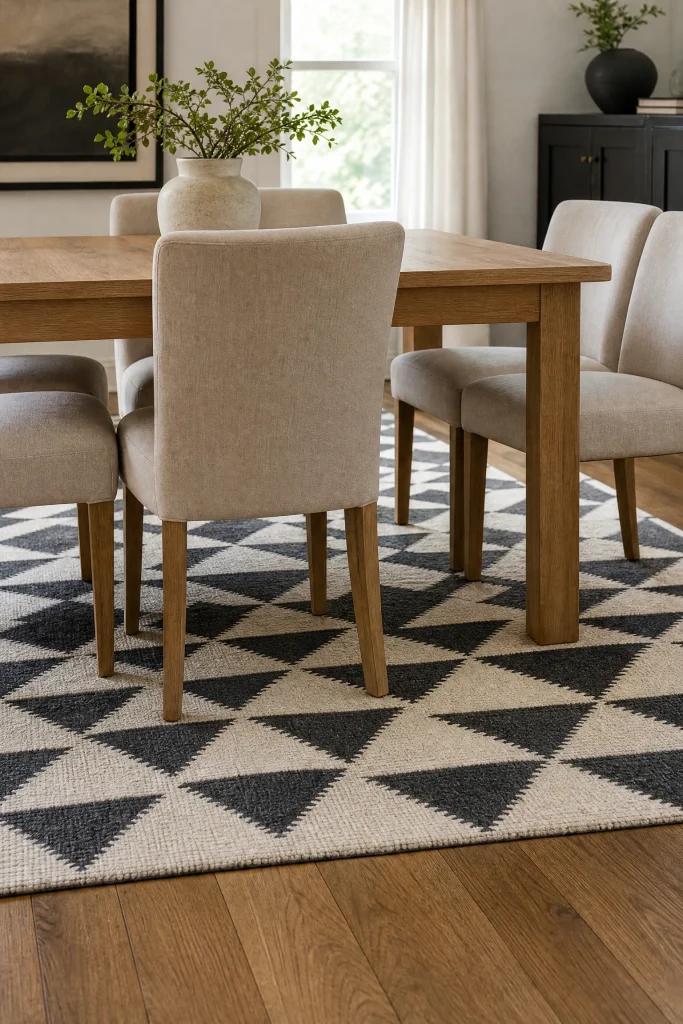
Laying a boldly patterned geometric area rug beneath a solid, understated wood dining table introduces graphic visual interest at floor level without competing with clean furniture silhouettes above. Diamond, chevron, or trellis rug patterns in two-tone neutral colorways add design complexity to simple minimalist dining rooms. Keeping dining chair upholstery in solid complementary tones balances the bold floor pattern, ensuring the rug draws attention without
STYLE SECRET: Limit geometric rug patterns to two primary tones to maintain visual clarity and prevent floor pattern from overpowering tableware.
Layer a Runner Rug Alongside the Dining Table in Narrow Galley Dining Rooms

Positioning a long narrow runner rug along one side of a dining table in a galley-style or narrow dining room provides underfoot comfort for the primary seating row without overwhelming the limited floor space. Runner rugs in narrow dining corridors should extend the full length of the table plus twelve inches beyond each end to avoid visually truncating the dining arrangement. Selecting a runner with
DESIGNER ADVICE: Choose runner widths between two and three feet in narrow dining rooms to allow adequate floor clearance beside the rug edge.
Extend Rug Placement Thirty Inches Beyond Table Edges for Oversized Dining Comfort
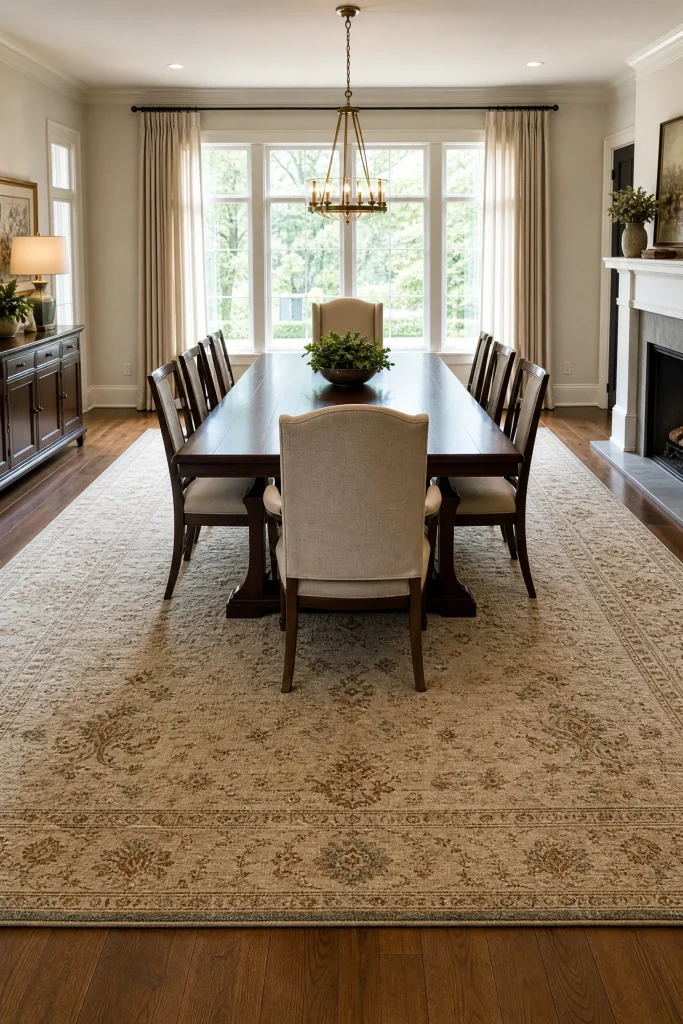
Extending a dining rug thirty inches beyond every table edge provides a generously proportioned rug perimeter that accommodates wider dining chairs, wheelchair access, and host chairs with armrests. The additional six inches beyond the standard twenty-four-inch clearance prevents even bulky captain’s chairs from straddling the rug edge during normal dining. This thirty-inch clearance standard also adds a sense of visual abundance, making dining rooms feel
STYLE SECRET: The thirty-inch clearance standard is especially important for tables hosting oversized armchairs or chairs with caster wheels.
Position Non-Slip Rug Pads Beneath All Dining Rugs on Polished Hardwood Floors

Installing a high-quality non-slip rug pad beneath every dining area rug on polished hardwood surfaces prevents rug migration caused by repeated chair pushing and pulling during meals. Premium felt and rubber combination pads grip both the hardwood floor and rug backing simultaneously, eliminating bunching, folding, and dangerous slipping hazards. Non-slip pads also add a thin cushioning layer beneath flat-weave dining rugs, providing marginally improved underfoot
SAFETY WARNING: Never place dining rugs on polished floors without non-slip pads since rug migration during chair movement creates serious tripping hazards.
Coordinate Rug Undertones with Dining Room Wall Paint for Cohesive Color Flow

Selecting a dining rug with undertones that mirror the room’s wall paint color builds a cohesive, layered interior palette that reads as intentionally designed from floor to ceiling. A warm greige wall paint pairs naturally with a rug containing matching warm cream and taupe undertones, while cool blue-grey walls coordinate with rugs displaying subtle cool stone grey fiber tones. Connecting floor and wall color temperatures
DESIGNER ADVICE: Hold rug samples against painted walls under both daylight and evening lamp conditions to evaluate undertone compatibility accurately.
Lay Square Rugs Beneath Square Dining Tables for Geometric Shape Continuity

Centering a square area rug beneath a square dining table creates strong geometric shape continuity between furniture and floor textile layers. Equal rug clearance on all four table sides reinforces the spatial symmetry of square dining arrangements where four guests sit one per side. Selecting a square rug with equal dimensional clearance on all sides simplifies furniture positioning since no table orientation creates an unequal
QUICK TIP: Square rugs for dining use should measure at least forty-eight inches larger than the table dimension in both directions.
Use Printed Cotton Dhurrie Rugs in Compact Breakfast Nook Dining Corners

A flat-woven printed cotton dhurrie rug sized to fit within a compact breakfast nook corner brings cheerful pattern and color to casual morning dining without overwhelming limited spatial dimensions. Cotton dhurrie construction stays thin and flat beneath banquette bench legs, preventing seat fabric from catching on pile fibers during sliding entry and exit. Selecting dhurrie prints in botanical, block print, or hand-painted stripe patterns adds
BUDGET HACK: Source hand-block printed cotton dhurrie rugs from Indian import retailers for authentic quality at a fraction of designer rug pricing.
Select Outdoor-Grade Polypropylene Rugs for Covered Alfresco Dining Areas

Placing UV-resistant polypropylene outdoor rugs beneath covered alfresco or patio dining furniture provides weather-durable underfoot comfort without risking fiber deterioration from humidity or rain splash. Outdoor-grade rug constructions dry rapidly after rain exposure and resist fading under direct UV sunlight far more effectively than indoor natural fiber alternatives. Many outdoor polypropylene rugs replicate the texture and visual appearance of natural sisal, jute, or flatweave wool
MAINTENANCE RULE: Hose down outdoor polypropylene dining rugs monthly and allow full drying before replacing furniture to prevent mildew beneath pile.
Rotate Seasonal Dining Rugs to Refresh Color Palettes Throughout the Year
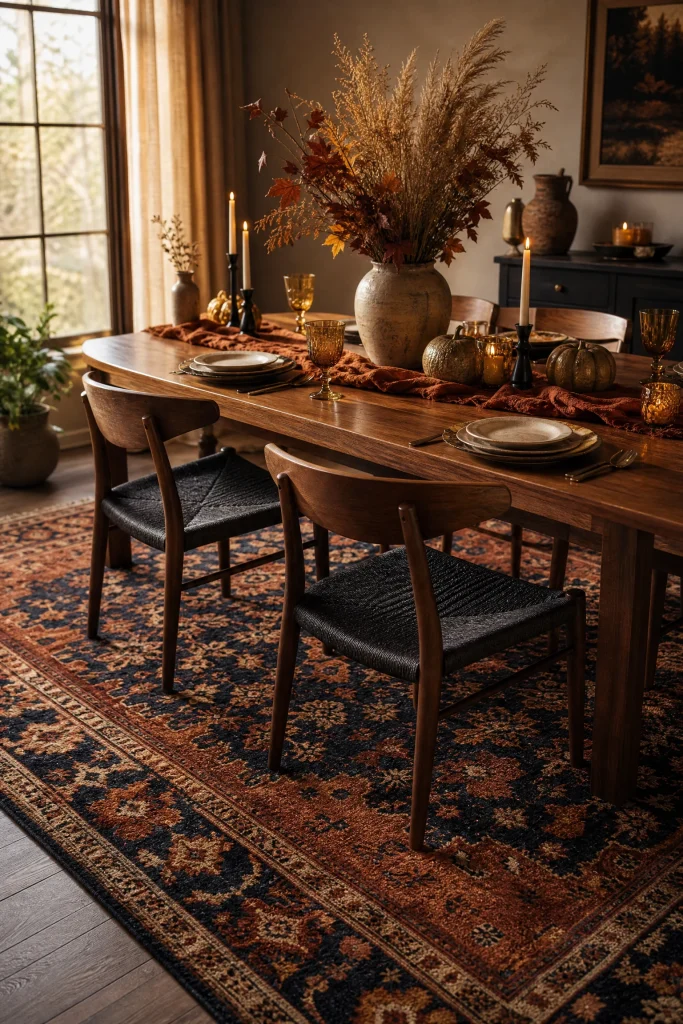
Swapping dining room rugs seasonally between lighter warm-weather tones in spring and summer and deeper rich colors in autumn and winter refreshes the entire dining atmosphere without replacing furniture. Keeping a primary rug year-round and rotating a secondary seasonal layer introduces variety and design intentionality that guests notice and appreciate. Storing off-season rugs rolled tightly in breathable cotton bags prevents fiber compression and insect damage
QUICK TIP: Roll rugs pile-side inward for storage and secure with cotton twine rather than plastic wrap to allow fiber breathability.
Use a Large Neutral Rug to Anchor Combined Living-Dining Spaces in Studio Apartments

Placing a single large neutral rug that spans both the dining and living seating zones within a studio apartment creates a unified floor anchor beneath multiple furniture groupings. The continuous rug surface communicates a shared spatial intention between dining and relaxing areas, making open combined rooms feel deliberately planned rather than spatially fragmented. Neutral ivory, cream, or sand rug tones work across diverse furniture styles
DESIGNER ADVICE: Use furniture legs to define sub-zones within a large neutral rug rather than separating combined spaces with two smaller rugs.
Fold Back Rug Corners Beneath Cabinet or Buffet Legs to Prevent Ruck Buildup
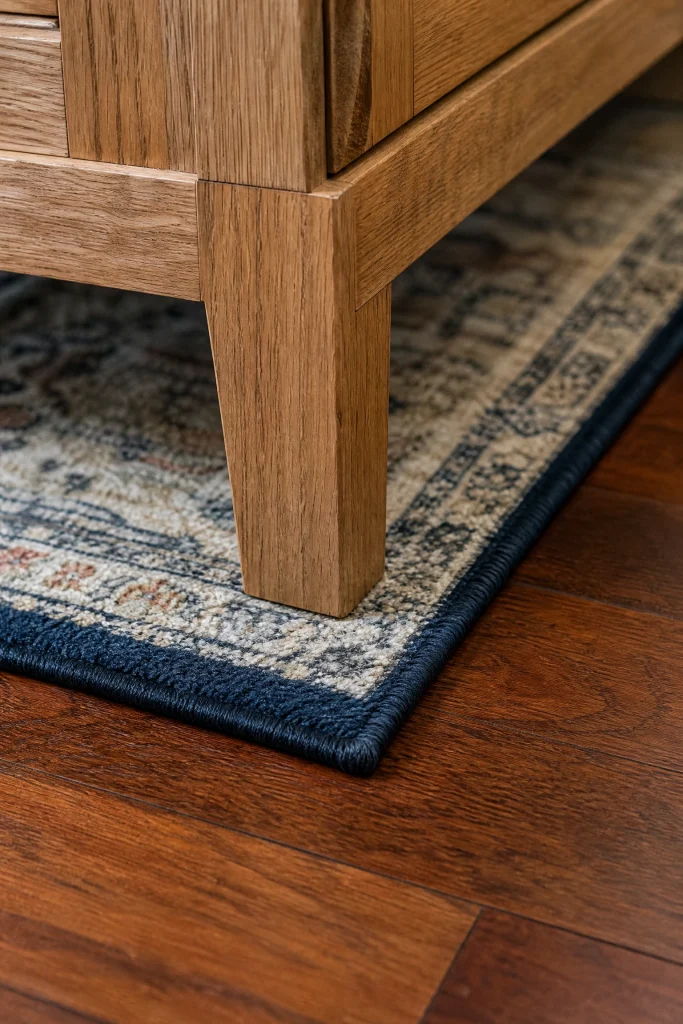
Tucking or folding rug corners beneath heavy sideboard or buffet cabinet legs in dining rooms prevents the rug from lifting, buckling, or creeping toward the table center over time. The physical weight of a solid buffet or china cabinet leg pressing against the rug backing anchors corner tension firmly, maintaining flat rug positioning across high-traffic dining areas. Ensuring the rug extends two to four inches
MAINTENANCE RULE: Check rug corner positions beneath furniture monthly and re-tuck if movement has allowed corners to lift from under furniture legs.
Choose Medallion-Patterned Rugs for Traditional Dining Rooms with Ornate Chandeliers

Pairing a center medallion-patterned area rug with an ornate chandelier fixture in traditional dining rooms creates a visual axis of symmetry between floor and ceiling. The central medallion motif mirrors the radial form of overhead chandelier arms, reinforcing the room’s formal bilateral symmetry. Rich jewel tones in deep navy, burgundy, or forest green within traditional medallion weaves complement dark walnut table finishes and upholstered velvet
STYLE SECRET: Align the medallion rug center precisely with the chandelier center overhead to achieve perfect vertical symmetry in formal dining rooms.
Lay Patterned Rugs Running Lengthwise Parallel to Long Dining Table Orientations

Orienting a rectangular patterned rug so its long dimension runs parallel to the long axis of a rectangular dining table creates natural directional harmony between textile and furniture arrangements. Misaligning a rug at a perpendicular angle to the table creates visual tension that undermines the ordered dining composition. Stripe, herringbone, or linear rug patterns running parallel to the table length further reinforce directional flow, drawing
DESIGNER ADVICE: Align all stripe or linear rug pattern directions parallel to the table’s longest axis to reinforce architectural directional flow.
Layer Two Rugs of Different Textures for Depth in Large Formal Dining Rooms
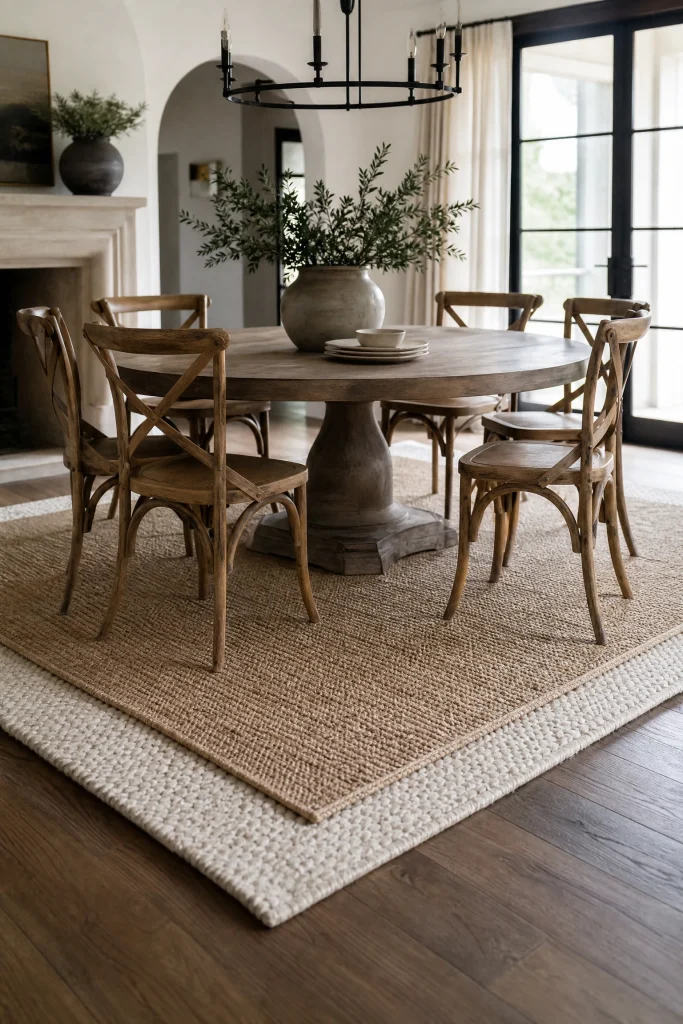
Layering a smaller natural fiber jute rug over a larger foundational wool area rug beneath dining furniture adds textural depth and collected-over-time character to large formal dining rooms. The lower wool rug provides dense pile cushioning and vibrant color, while the upper jute layer introduces raw organic surface interest and a contrasting material note. Offset layering where the lower rug extends six to eight inches
STYLE SECRET: Layer a flat natural fiber rug over a high-pile wool base rug to prevent upper rug slipping on top of textured lower pile.
Confirm Rug Measurements Allow Dining Room Door Clearance Before Installation
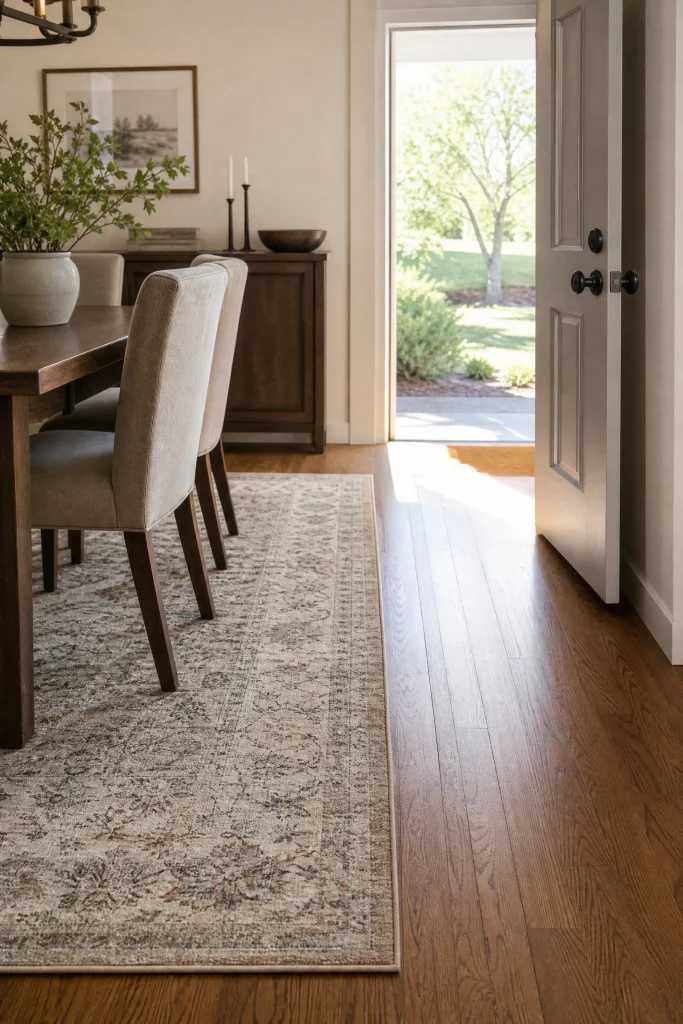
Verifying that a proposed dining rug does not extend across door thresholds before installation prevents door-opening interference that can damage rug pile and strip door weatherstripping. Standard interior doors require clear floor within at least the door’s swing radius, which typically measures twenty-eight to thirty-two inches from the hinge edge. Marking door swing arcs on the floor with tape before placing any dining rug prevents
QUICK TIP: Measure and mark all door swing arcs on bare floors with tape before finalizing dining rug placement positions.
Use Dark-Toned Rugs in Dining Rooms to Minimize Visible Food and Beverage Stains
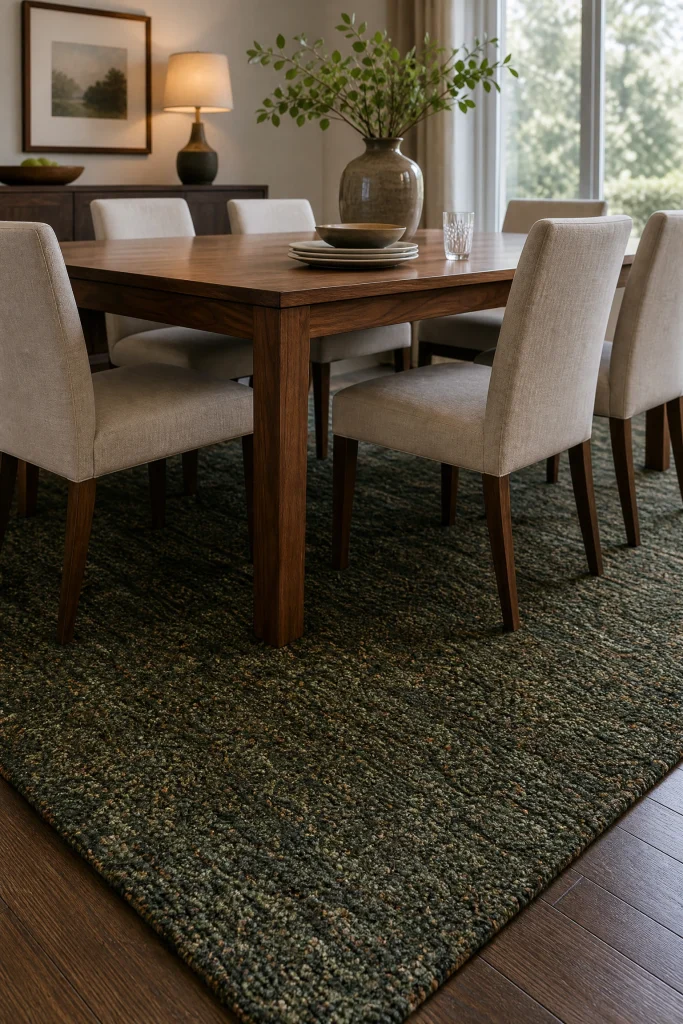
Placing a deep-toned navy, charcoal, forest green, or burgundy area rug beneath dining furniture significantly reduces the visual impact of food crumbs and beverage drips compared to pale or cream-colored alternatives. Dark fiber dye concentrations mask minor soiling between cleaning sessions, reducing homeowner anxiety during active family mealtimes. Selecting dark rugs with multicolor or flecked weave patterns further disguises staining because variegated tones scatter color
MAINTENANCE RULE: Spot clean dark dining rugs with colorfast cleaners rather than general multi-surface sprays to prevent dye bleeding during stain removal.
Center Handwoven Vintage Kilim Rugs for Eclectic Boho Dining Room Foundations

Anchoring an eclectic bohemian dining room with a vintage hand-woven kilim rug at table center introduces rich historical textile pattern, warm jewel-tone color, and artisanal provenance to the floor foundation. Kilim flat-weave construction allows chairs to slide smoothly while displaying intricate tribal geometric motifs. Pairing vintage kilim rugs with rattan pendant lights, leather dining chairs, and raw wood tables builds a globally inspired dining aesthetic
STYLE SECRET: Seek vintage kilim rugs with center field patterns that can be visually centered beneath the table footprint for balanced placement.
Conclusion
Dining room rug placement transforms bare floors into anchored, purposeful foundations that define seating zones, protect flooring, and add rich material texture beneath everyday meals. From the twenty-four-inch clearance standard and shape-matching principles to seasonal rotation and non-slip pad installation, these twenty-eight practical strategies address every rug placement scenario encountered across real homes. Applying these research-backed guidelines ensures dining rugs remain functional, beautiful, and well-proportioned for years of daily use.