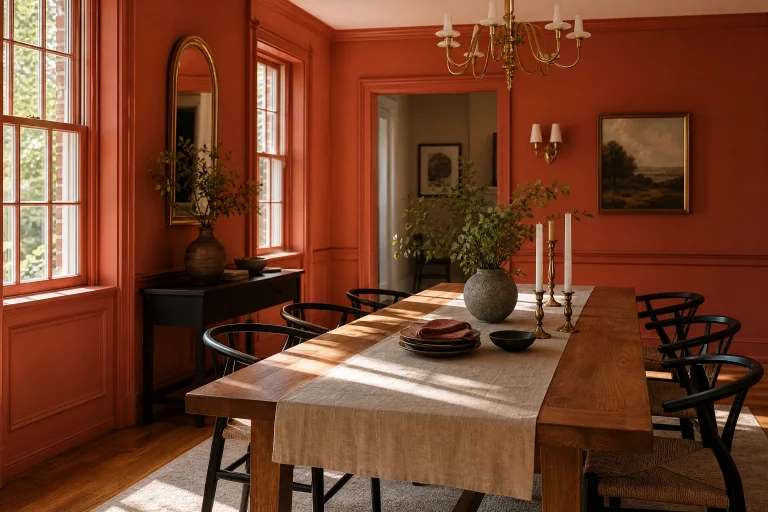
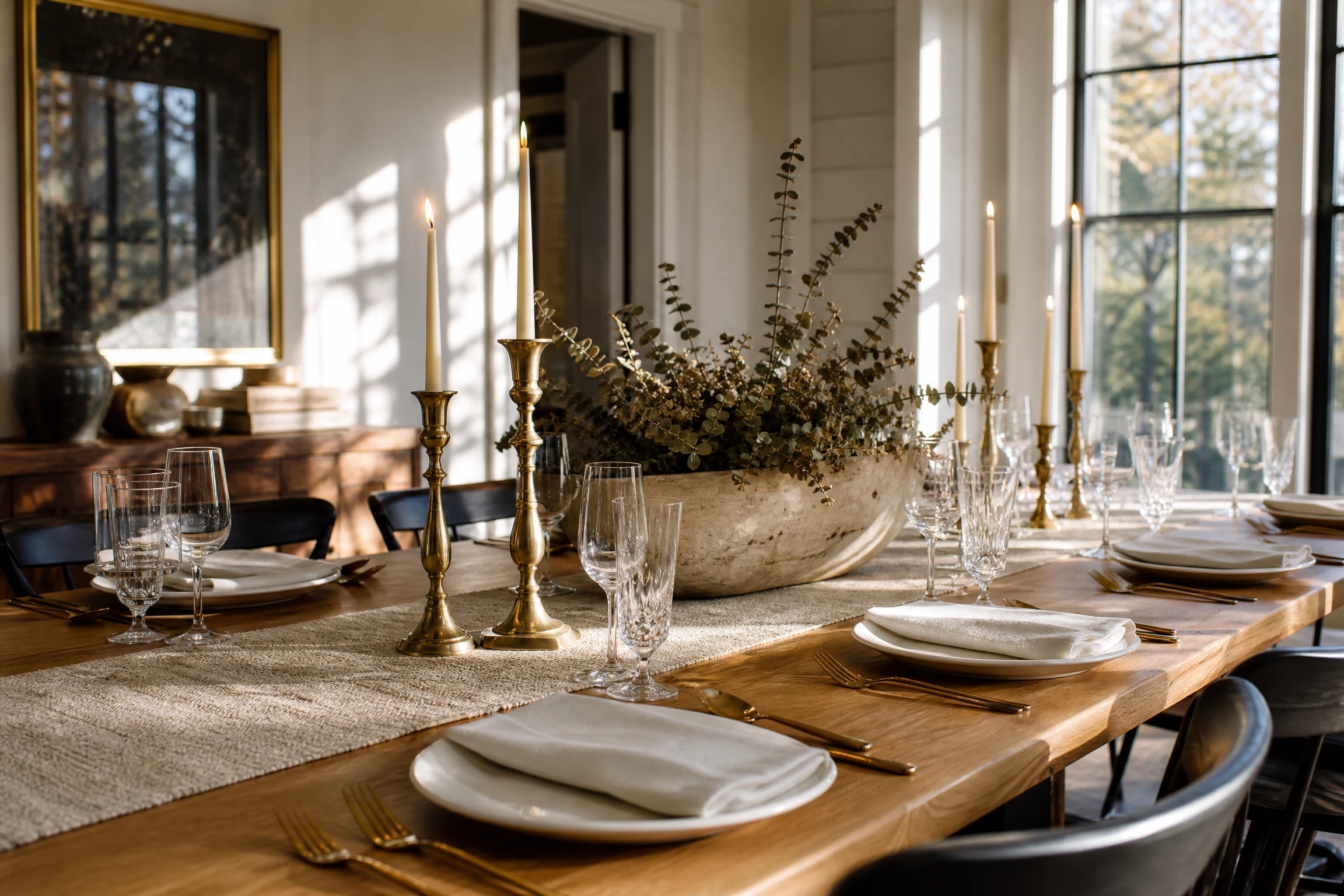
Curated Table Compositions with Natural Stone, Handmade Ceramics, and Seasonal Botanicals
Dining room centerpieces anchor meal gatherings with visual focus, textural richness, and seasonal personality across tabletop landscapes. From sculptural ceramic vessels and clustered taper candle groupings to carved stone trays and foraged botanical runners, the right centerpiece grounds a table with intentional material beauty. Explore these thirty research-backed strategies to compose dining centerpieces with lasting organic warmth.
Anchor Long Oak Tables with Oversized Hand-Thrown Ceramic Dough Bowls
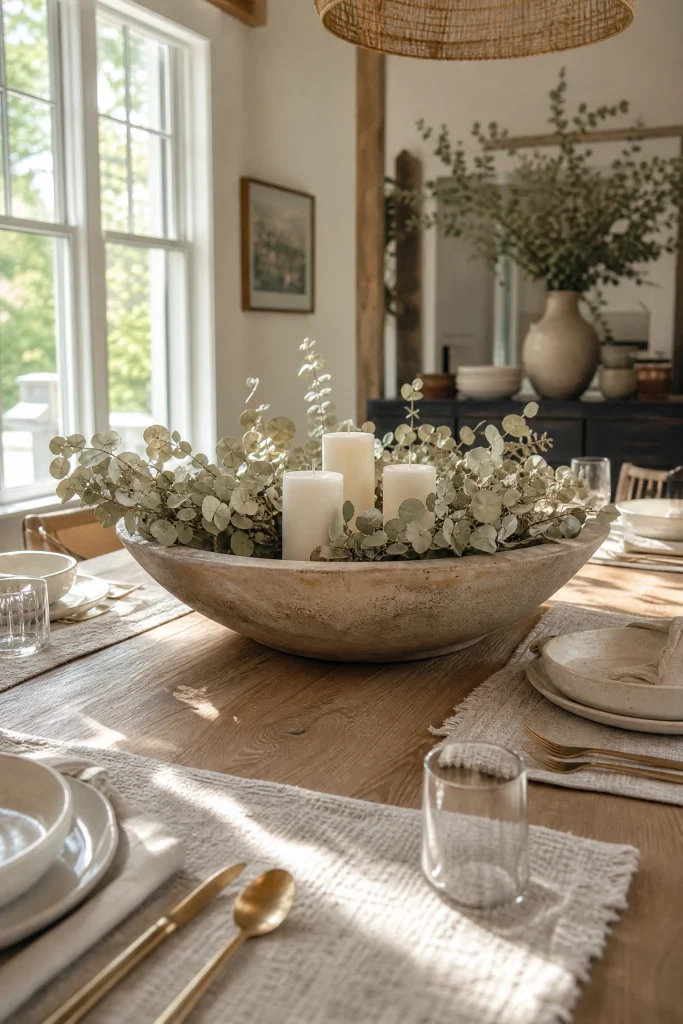
Placing an oversized hand-thrown ceramic dough bowl along the center axis of a long oak dining table provides a generous organic vessel for seasonal rotating displays. The wide, shallow ceramic basin holds dried botanicals during autumn months and fresh citrus fruit during warmer seasons without crowding place settings. Matte clay finishes absorb candlelight gently, grounding rustic farmhouse table settings with artisanal weight and earthen color
DESIGNER ADVICE: Select dough bowls at least twenty inches long to maintain visual proportion on tables seating six or more guests.
Cluster Varying Height Brass Taper Candlestick Holders Along Woven Linen Runners
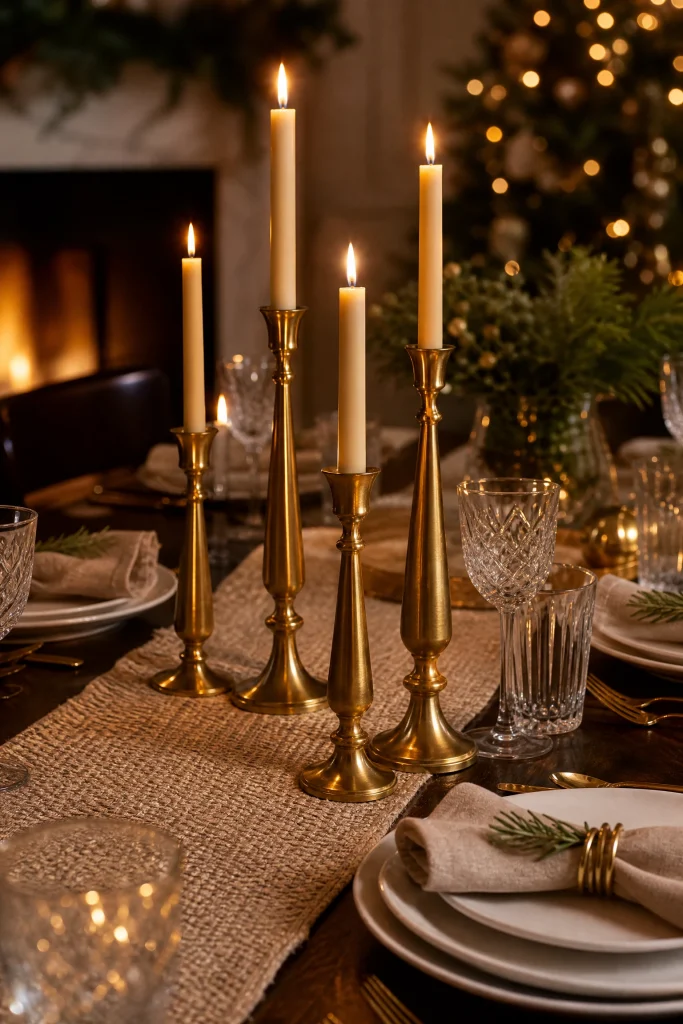
Grouping five to seven brushed brass taper candlestick holders of staggered heights along a woven oatmeal linen table runner creates a dramatic linear light display. The warm golden patina of aged brass catches flickering candlelight and scatters soft reflections across adjacent glassware and ceramic dinner plates. Varying holder heights from four inches to fourteen inches builds a natural silhouette rhythm that draws eyes along the
STYLE SECRET: Arrange candlestick holders in asymmetrical groupings rather than evenly spaced rows to achieve organic, gallery-curated compositions.
Fill Shallow Honed Travertine Stone Trays with Seasonal Fresh Citrus Fruit

Loading a shallow honed travertine stone tray with mounded seasonal citrus fruit brings bold organic color and Mediterranean warmth to neutral dining tables. The cool, porous surface of travertine contrasts with bright lemon yellows and blood orange reds, producing a functional centerpiece guests can pick from during meals. Rotating citrus varieties seasonally keeps the arrangement fresh and visually engaging without requiring replacement of the permanent
QUICK TIP: Line travertine tray bottoms with a thin felt pad to prevent fruit moisture from seeping into porous natural stone surfaces.
Arrange Potted Rosemary and Thyme Herb Plants in Terracotta Cachepots

Lining the center of dining tables with small terracotta cachepots holding live rosemary, thyme, and sage herb plants introduces fragrant, functional greenery to meal settings. Guests can pinch fresh herbs directly from table planters to garnish dishes during communal meals, adding interactive culinary charm. The warm reddish clay of terracotta pots grounds green foliage against pale tablecloths while providing earthy Mediterranean garden character throughout everyday
MAINTENANCE RULE: Water herb cachepots sparingly and place drainage saucers beneath pots to protect wood table surfaces from moisture rings.
Compose Monochromatic White Ceramic Vessel Trios at Varying Sculptural Heights

Grouping three matte white ceramic vessels of different sculptural silhouettes and heights on a dining table creates a curated gallery display. Selecting one tall cylindrical vase, one squat round bowl, and one medium-height urn establishes visual rhythm through form variation alone. The unified white glaze ties disparate shapes into a cohesive tonal statement that pairs cleanly with any table linen, flatware finish, or seasonal accent
DESIGNER ADVICE: Arrange ceramic trios in triangular formations rather than straight lines to establish natural visual balance on rectangular tables.
Drape Fresh Eucalyptus Garland Runners Alongside Pillar Candle Clusters
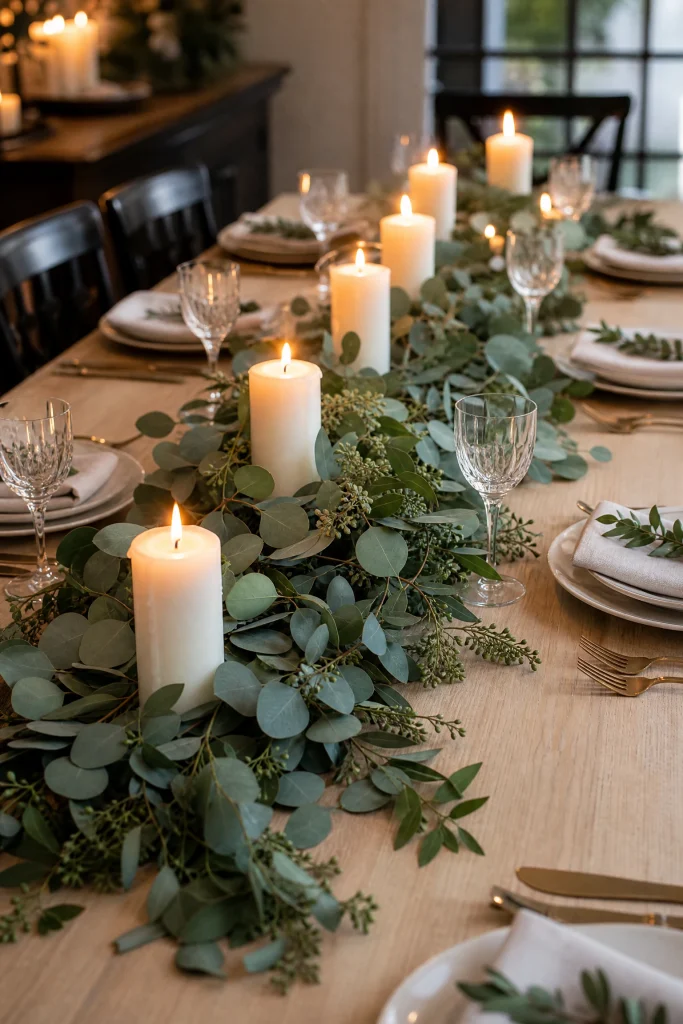
Laying a fresh eucalyptus garland runner down the center of dining tables alongside grouped white pillar candles creates a lush, aromatic linear display. The silvery green eucalyptus foliage releases a subtle herbal scent that enhances dinner atmospheres naturally while softening rigid table edges with organic leaf curves. Interspersing pillar candles of three different heights among trailing eucalyptus stems adds flickering warm light throughout evening suppers.
QUICK TIP: Mist eucalyptus garlands lightly with water every few days to maintain leaf freshness and extend garland lifespan.
Float Single Bloom Flower Heads in Low Clear Glass Cylinder Bowls
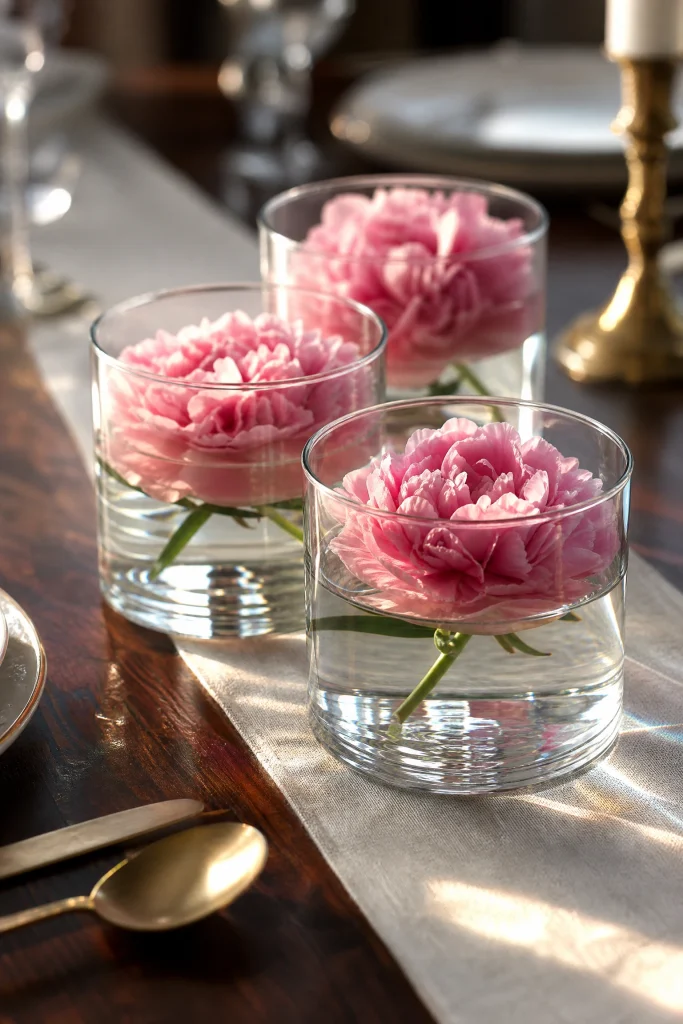
Placing individual flower heads like peonies, garden roses, or dahlias floating in shallow clear glass cylinder bowls creates an elegant, low-profile centerpiece. The magnified underwater view of submerged petals and stems adds visual depth, while the low height ensures unobstructed conversation across tables. Clustering three to five glass bowls along a table runner produces a gentle repetitive rhythm that reads as intentional floral art.
STYLE SECRET: Use distilled water in floating flower bowls to maintain crystal-clear transparency and prevent mineral cloudiness over time.
Stack Neutral Linen-Bound Books Beneath Ceramic Bud Vases on Round Tables

Stacking two or three neutral linen-bound art books beneath a slender ceramic bud vase holding a single dried stem creates a compact, intellectual centerpiece for round dining tables. The layered book spines introduce horizontal weight that anchors the delicate vase above while displaying curated titles as conversation starters. Choosing linen covers in cream, sand, and taupe tones coordinates with natural tablescapes without competing against food
DESIGNER ADVICE: Stack books in descending size order from bottom to top to create stable, visually pleasing pyramidal centerpiece platforms.
Carve Reclaimed Olive Wood Boards into Rustic Serving Centerpiece Platforms

Positioning a large reclaimed olive wood board down the table center serves as both rustic display platform and functional charcuterie surface. The naturally irregular edges and rich swirling grain patterns of olive wood introduce handcrafted Mediterranean character to neutral dining rooms. Topping the board with artisan cheese, dried figs, and small ceramic bowls of olives creates an edible centerpiece that encourages communal grazing throughout casual
MAINTENANCE RULE: Condition olive wood boards monthly with food-safe mineral oil to prevent surface cracking and maintain rich grain luster.
Suspend Dried Flower Cloud Installations Above Table Centers from Ceiling Hooks

Hanging an overhead cloud of dried flowers, grasses, and seed pods from ceiling hooks above dining tables creates a suspended centerpiece that keeps table surfaces completely clear. Dangling clusters of dried lunaria, bunny tail grass, and straw flowers at varying lengths build a floating botanical canopy overhead. This installation frees table space for serving dishes while still anchoring the dining zone with a dramatic organic
SAFETY WARNING: Install dried flower clouds at least thirty inches above table surfaces to ensure adequate clearance above standing candle flames.
Nest Flickering Votive Candles Inside Carved Sandstone Candle Holders

Setting small glass votive candles inside carved natural sandstone holders scatters intimate pockets of warm light across dining table surfaces. The rough, mineral texture of carved sandstone contrasts with smooth flickering glass votives, creating a primitive yet polished material tension. Grouping five to seven sandstone votives in a loose organic cluster along a linen runner produces a soft, scattered glow that flatters dinner guests during
QUICK TIP: Use battery-operated LED votive candles inside sandstone holders for worry-free flame alternatives around young children.
Pair Matte Black Iron Candelabras with Cream Beeswax Taper Candles

Centering a matte black wrought iron candelabra fitted with cream hand-dipped beeswax taper candles introduces bold architectural contrast to pale dining tables. The dark skeletal iron frame draws sharp graphic lines against light oak or cream painted wood surfaces, while beeswax tapers emit a gentle honey scent as they burn. Multi-arm candelabras concentrate dramatic candlelight height into a single sculptural statement piece that commands formal
STYLE SECRET: Choose hand-dipped beeswax tapers over paraffin candles for cleaner burning and warmer, more natural light emissions.
Scatter Smooth River Stones Across Shallow Ceramic Platters as Minimalist Displays

Arranging polished river stones of varying sizes across a large shallow cream ceramic platter creates a meditative, Zen-inspired minimalist centerpiece. The smooth, water-worn stone surfaces display subtle grey, taupe, and charcoal mineral tones that ground neutral tablescapes with geological weight. Adding one or two small succulent cuttings nestled between stones introduces a controlled organic accent without disrupting the clean, contemplative arrangement aesthetic.
DESIGNER ADVICE: Select stones with naturally flat bottoms so they rest stable on platters without shifting when the table is bumped.
Weave Dried Lavender Bundles into Loose Table Garland Arrangements

Scattering loose dried lavender bundles tied with natural twine along table centers fills dining rooms with gentle floral fragrance and Provencal countryside charm. The purple-grey dried lavender stems introduce muted botanical color against cream or white tablecloths without the maintenance demands of fresh flowers. Placing bundles in small groupings between place settings allows guests to enjoy the calming scent at close range throughout long, leisurely
QUICK TIP: Trim dried lavender stems to uniform lengths before bundling to achieve neat, professional-looking tied arrangements.
Position Oversized Smoke-Tinted Glass Vases Holding Single Architectural Branches

Placing a single oversized smoke-tinted glass vase holding one dramatic architectural branch creates a striking, sculptural focal point requiring minimal material. The transparent grey glass filters incoming daylight into soft amber tones while magnifying the angular branch structure within. Foraged branches from curly willow, quince, or dogwood trees provide seasonal variety and architectural drawing-like silhouettes that suit both modern and traditional dining rooms.
DESIGNER ADVICE: Trim branch ends at sharp angles before placing in water to maximize water absorption and extend branch freshness.
Build Tiered Wooden Cake Stand Displays Loaded with Seasonal Harvest Produce
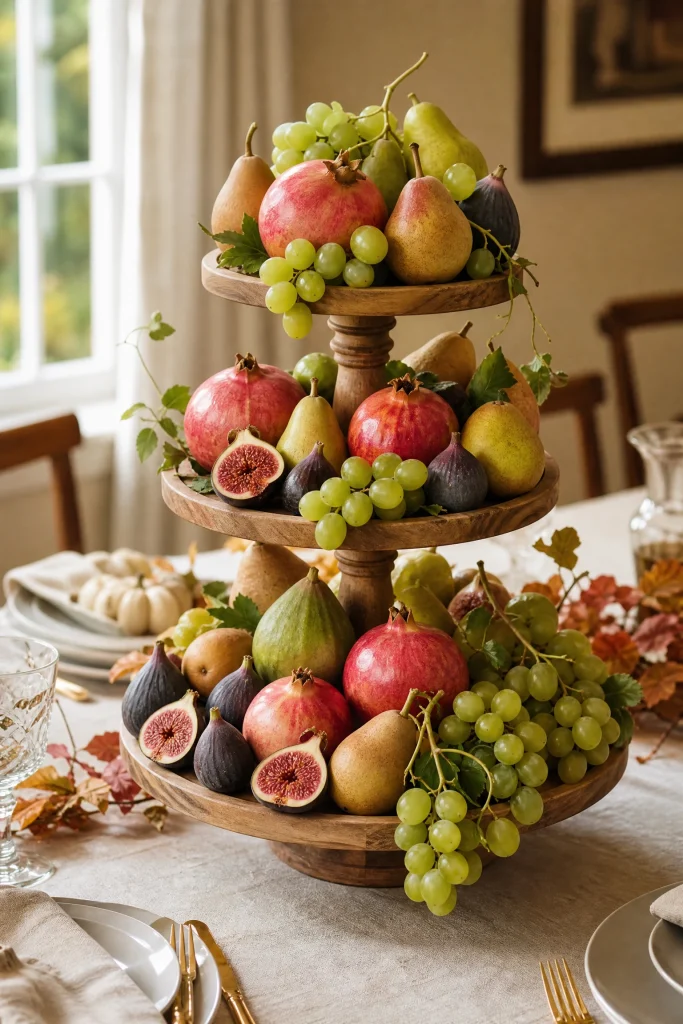
Stacking a two-tier or three-tier natural wood cake stand loaded with seasonal harvest produce provides vertical visual interest and edible beauty simultaneously. Autumn tiers hold miniature pumpkins, pears, and pomegranates, while summer displays feature ripe peaches, figs, and cherries in abundant organic heaps. The elevated wood platforms lift colorful produce off table surfaces, creating a cascading cornucopia effect that invites guests to reach and graze.
BUDGET HACK: Source seasonal produce from local farmers markets for affordable, fresh centerpiece materials that double as dessert offerings.
Group Hand-Poured Concrete Geometric Planters Holding Air Plants and Succulents

Clustering three to five hand-poured concrete geometric planters holding tillandsia air plants and small succulents introduces industrial botanical texture to modern dining tables. The raw cement surfaces display natural color variation and fine aggregate patterns, while spiky air plant foliage contrasts with smooth geometric edges. Concrete planters require zero watering maintenance for air plants, making them practical year-round centerpieces for busy household dining rooms.
MAINTENANCE RULE: Mist air plants weekly with filtered water and soak them monthly for thirty minutes to maintain healthy growth.
Lay Antique Brass Trays Beneath Clusters of Mixed Cream and Ivory Pillar Candles

Setting an antique brass tray beneath a clustered arrangement of cream and ivory pillar candles of varying diameters and heights concentrates warm, golden ambient light. The aged patina of hammered brass trays grounds creamy wax pillars with reflective metallic warmth while catching melting wax drips tidily. This contained candle cluster reads as an intentional design composition rather than scattered decoration, providing romantic atmosphere for evening
SAFETY WARNING: Never leave burning pillar candle clusters unattended and maintain at least three inches between individual pillar candles for fire safety.
Arrange Foraged Moss and Lichen Covered Branches on Natural Stone Platters
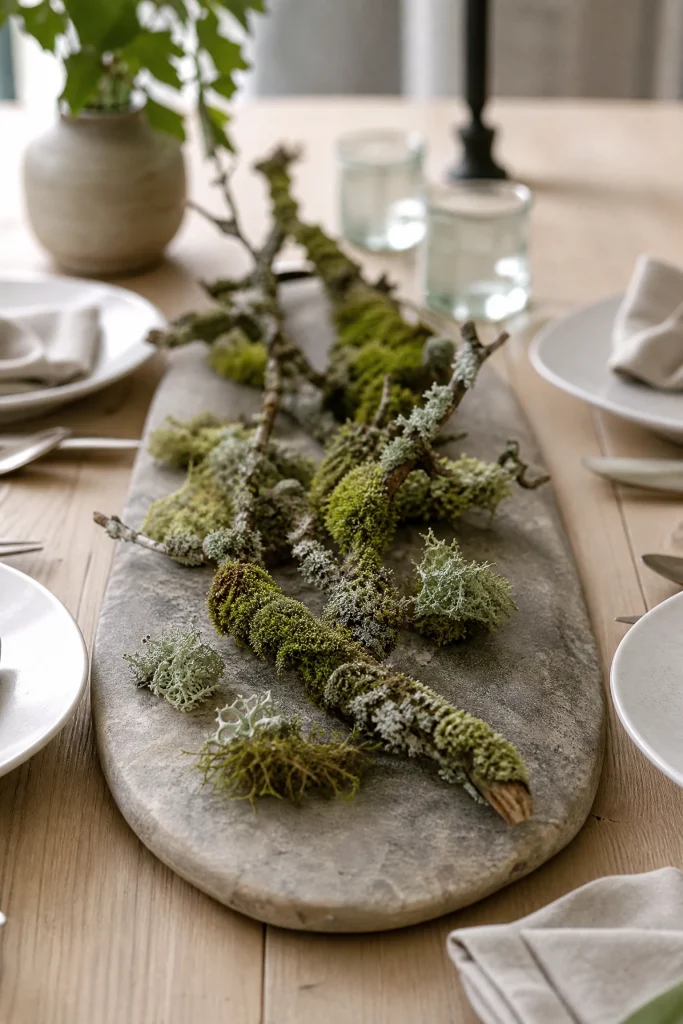
Placing foraged moss-covered and lichen-speckled branches across a long natural stone platter brings raw woodland textures directly to dining table surfaces. The soft green and grey hues of living moss create an organic color bridge between neutral tableware and natural wood furniture. Foraged branch arrangements change seasonally as moss growth shifts, providing a living, slowly evolving centerpiece that connects indoor dining to surrounding outdoor landscapes.
QUICK TIP: Mist moss-covered branches daily with a spray bottle to maintain green color vibrancy and prevent drying indoors.
Center Vintage Cut Crystal Bowls Filled with Floating Gardenias on Mirror Trays
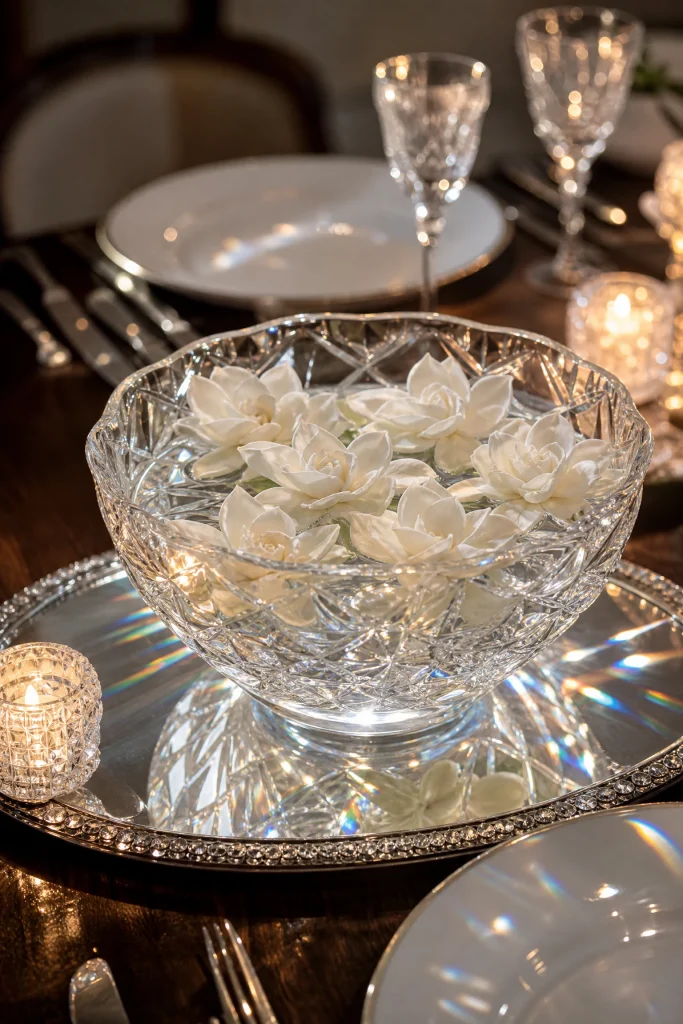
Placing a vintage cut crystal bowl filled with water and floating gardenia blooms on a mirrored tray creates a luminous, fragrant centerpiece that multiplies candlelight reflections. The faceted crystal surfaces refract incoming light into prismatic patterns across walls and ceilings, while gardenia petals release a rich, heady perfume. Mirrored tray bases double visual depth by reflecting both crystal bowl facets and floating flower arrangements simultaneously.
STYLE SECRET: Replace floating gardenia blooms every two days to maintain pristine white petal freshness and strong fragrance.
String Copper Wire Fairy Lights Through Clear Glass Bottle Collections

Threading warm copper wire fairy lights through a collection of clear glass bottles of varying heights and shapes produces a whimsical, twinkling centerpiece for casual dining. The thin copper wires coil inside glass vessels, scattering hundreds of tiny warm light points across transparent surfaces and surrounding tableware. Mixing apothecary bottles, wine decanters, and vintage medicine jars in a loose grouping builds eclectic character and conversation
BUDGET HACK: Collect clear glass bottles from thrift stores and flea markets to build eclectic centerpiece collections affordably over time.
Combine Raw Edge Marble Slabs with Matte Ceramic Oil Decanters as Functional Art
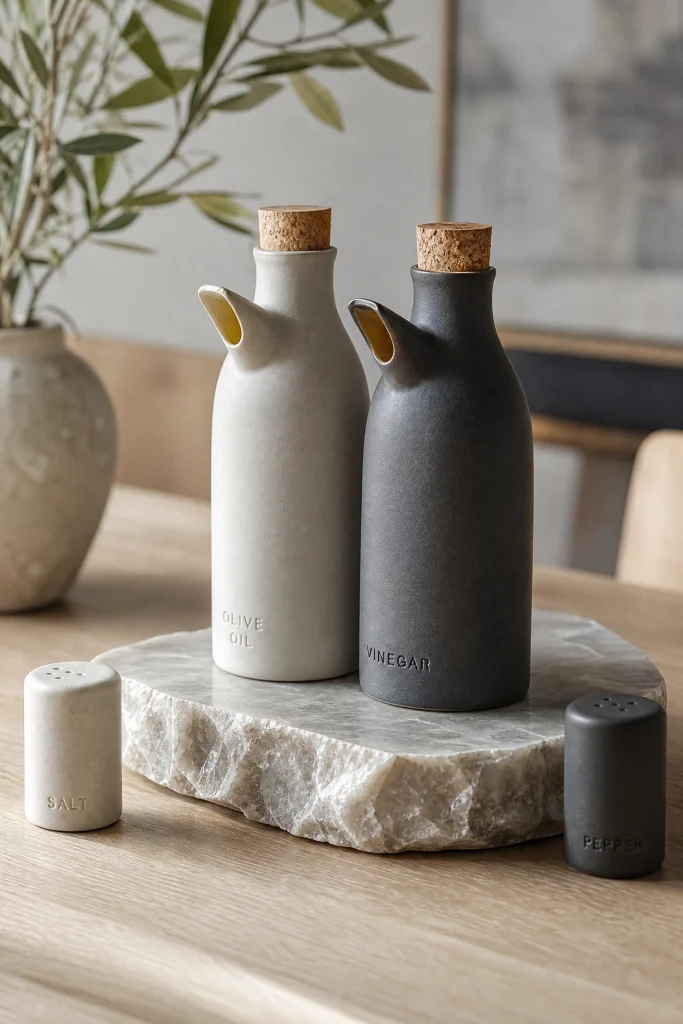
Placing a raw edge marble slab as a central table pedestal beneath a pair of matte ceramic olive oil and vinegar decanters creates functional artisan kitchen art. The rough, unfinished marble edges expose natural crystalline mineral layers that contrast with smooth ceramic decanter surfaces. This practical centerpiece keeps cooking condiments accessible while treating everyday items as sculptural objects worthy of permanent table display.
DESIGNER ADVICE: Apply felt pads beneath marble slab bases to protect wood dining table finishes from heavy stone scratching.
Construct Seasonal Wreath Rings Laid Flat Around Central Pillar Candle Groups

Laying a seasonal wreath ring flat on the table surface encircling a central pillar candle cluster frames candlelight within a botanical border. Autumn wreaths of dried wheat and berries transition to spring versions woven with fresh chamomile and garden roses, providing year-round visual variety. The horizontal wreath ring occupies minimal vertical space, keeping sightlines clear across tables while wrapping candle clusters in dense foliage texture.
QUICK TIP: Place a round felt mat beneath seasonal wreaths to protect table surfaces from leaf debris and moisture transfer.
Display Single Oversized Monstera Leaves in Slim Matte Black Ceramic Vases
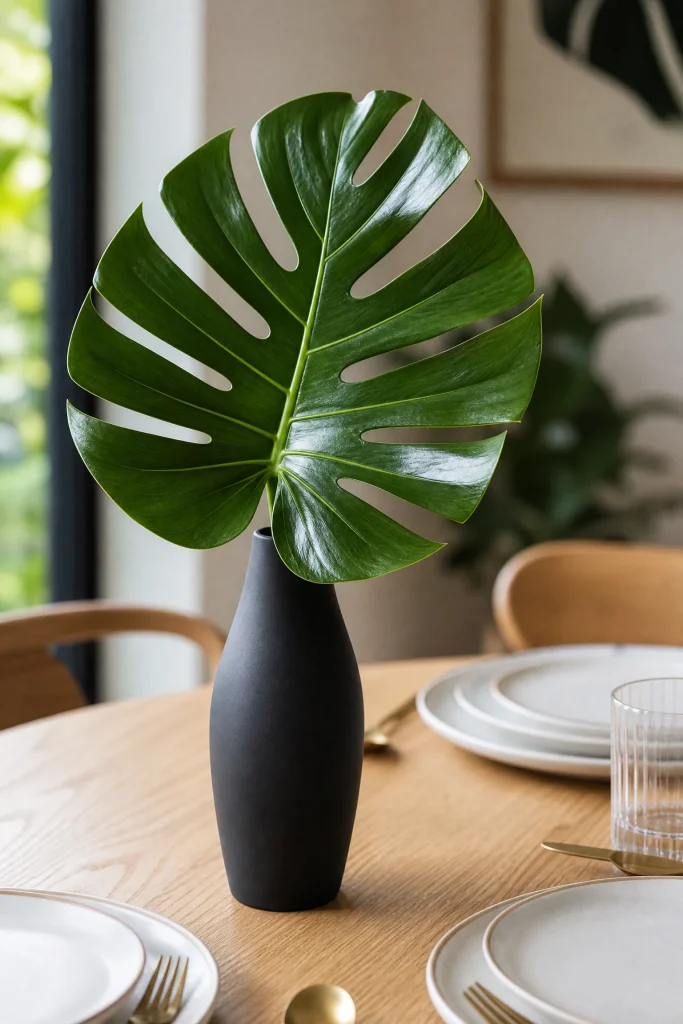
Placing one large glossy monstera leaf in a slim matte black ceramic vase creates a bold, graphic tropical centerpiece with minimal effort. The dramatic fenestrated leaf pattern contrasts sharply against the dark monochrome vase, producing a striking sculptural silhouette. A single monstera leaf lasts over two weeks in fresh water, making this arrangement both visually impactful and exceptionally low-maintenance for everyday dining table display.
MAINTENANCE RULE: Trim monstera leaf stems underwater at an angle every four days and refresh vase water to maximize leaf longevity.
Layer Vintage Brass Compote Bowls with Fresh Grapes and Trailing Ivy Greenery
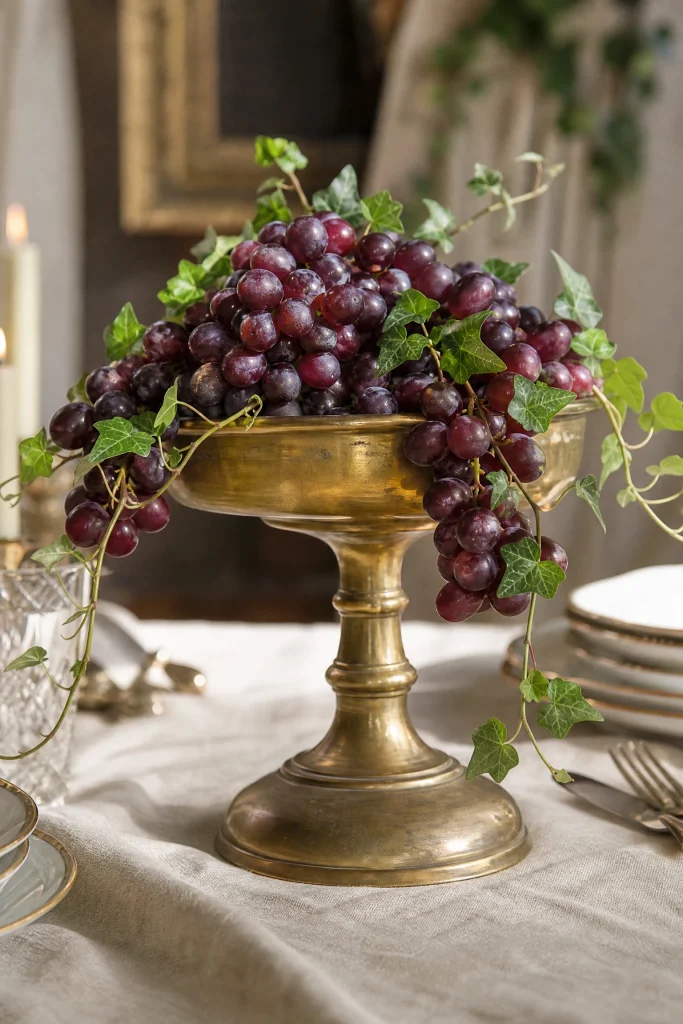
Filling a vintage brass pedestal compote bowl with cascading purple grapes and trailing ivy stems creates a classical still-life centerpiece inspired by European oil painting compositions. The elevated compote platform lifts fruit above table surfaces, allowing grape bunches to spill gracefully over polished brass rims. Green ivy trails soften rigid metal edges while connecting the raised fruit display to surrounding table linen with organic vine
STYLE SECRET: Tuck small water tubes around ivy stem ends to keep trailing greenery fresh for up to five days on brass compote bowls.
Pair Handwoven Seagrass Basket Trays with Ceramic Salt Cellars and Beeswax Candles
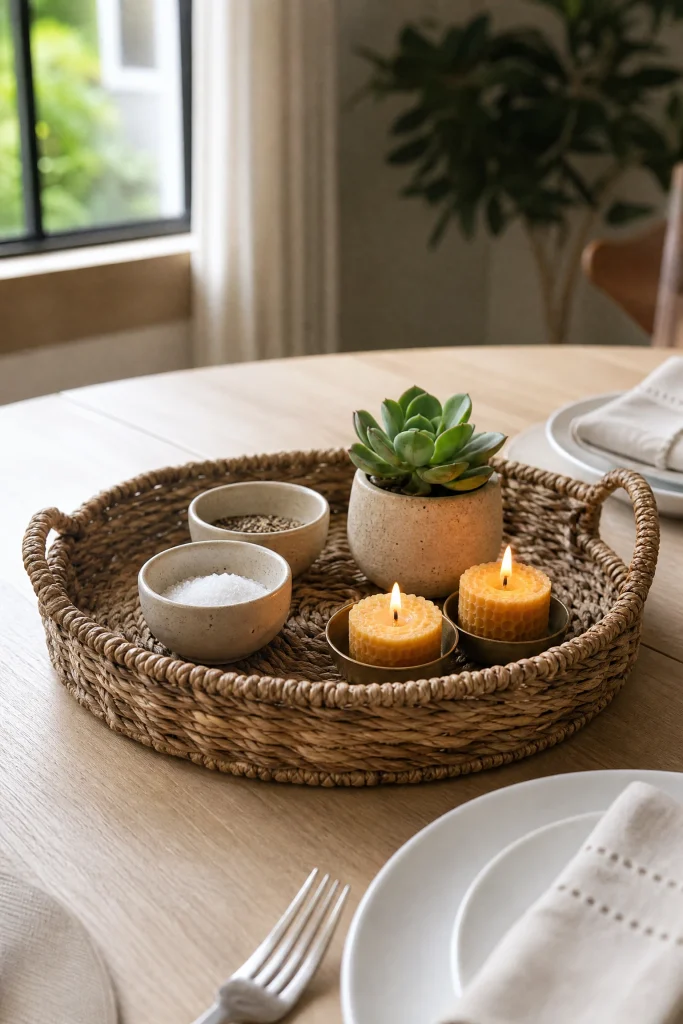
Placing a flat handwoven seagrass basket tray at table center to corral small ceramic salt cellars, beeswax tea lights, and a tiny succulent planter creates a contained everyday centerpiece. The woven plant-fiber tray provides a unified base that makes the arrangement easy to lift and move when clearing for meals or switching to a work surface. Natural seagrass weave adds warm coastal texture that coordinates
BUDGET HACK: Source handwoven seagrass trays from import stores for affordable, natural centerpiece bases under twenty dollars.
Mount Slim Terracotta Bud Vases in a Linear Row Holding Single Wildflower Stems
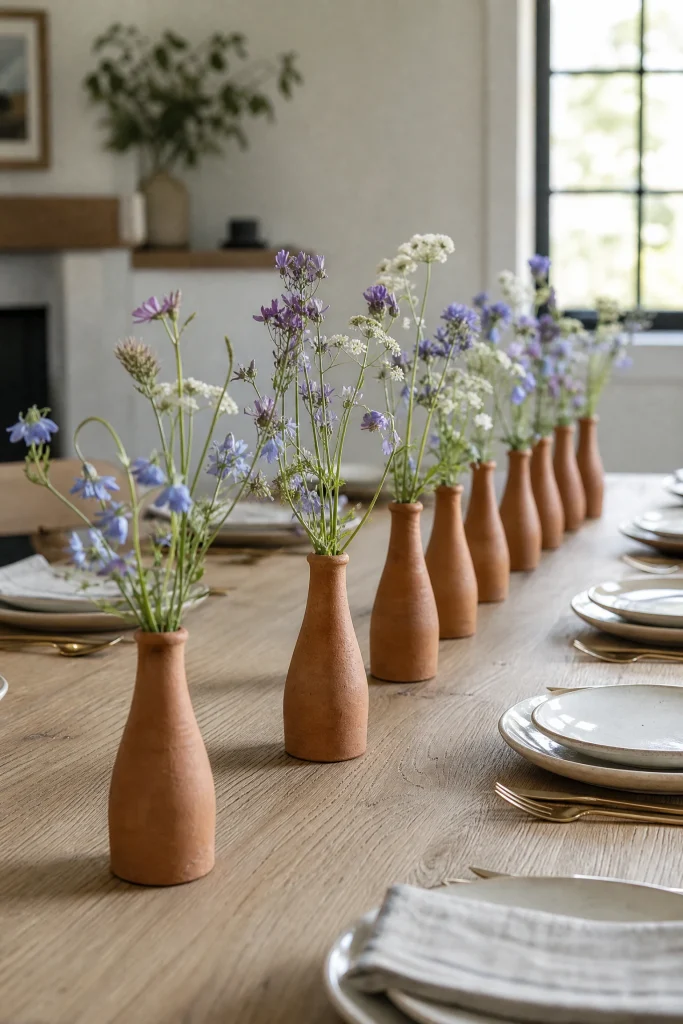
Spacing five to seven slim terracotta bud vases in a linear row down the table center, each holding a single wildflower stem, creates a rhythmic botanical parade. The repetitive vessel spacing builds visual cadence along the table length while allowing each individual flower species to receive focused attention. Mixing wildflower varieties like Queen Anne’s lace, cornflowers, and cosmos across the row introduces subtle color variety
DESIGNER ADVICE: Space bud vases eight to ten inches apart to maintain clear rhythm while leaving room for plates and glassware between.
Fill Wooden Dough Bowls with Decorative Ceramic Orbs in Cream and Taupe Tones

Loading a large vintage wooden dough bowl with handmade ceramic orbs in graduating cream, sand, and taupe tones produces a sculptural, textural centerpiece requiring zero maintenance. The smooth ceramic spheres contrast with rough carved wood interiors, creating a satisfying tactile tension between materials. Rotating orb color palettes seasonally, swapping warm autumn tones for cool grey winter shades, keeps this permanent centerpiece feeling fresh without full
STYLE SECRET: Mix matte and glossy ceramic orb finishes together to add subtle sheen variation within monochromatic tone groupings.
Hang Pendant Edison Bulb Fixtures Low Above Table Centers as Illuminated Focal Points

Suspending two or three pendant Edison bulb fixtures low above table centers replaces traditional tabletop centerpieces with overhead illuminated focal points. The warm amber filament glow of exposed Edison bulbs casts flattering golden light directly onto food and table settings below. Adjustable cord lengths allow precise height positioning that frames the dining area intimately, keeping table surfaces completely open for platters and serving dishes.
QUICK TIP: Hang pendant bulbs approximately thirty inches above table surfaces to illuminate place settings without blocking guest sightlines.
Drape Handwoven Macramé Table Runners Beneath Clustered Ceramic Candle Holders
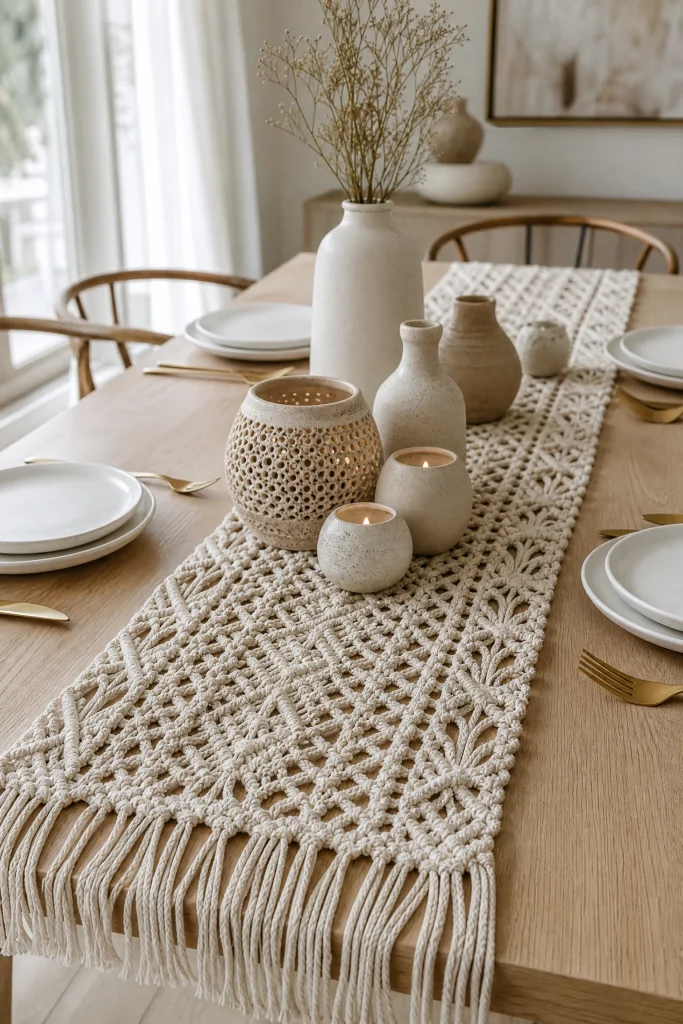
Laying a handwoven macramé table runner down the center of dining tables introduces intricate knotted textile pattern and bohemian craft character beneath tabletop displays. The open lattice weave of natural cotton macramé allows wood table grain to remain visible through decorative knot openings while providing a soft fiber foundation. Clustering matte ceramic candle holders atop the macramé runner combines artisanal textile warmth with smooth sculptural
MAINTENANCE RULE: Hand wash macramé runners in cold water with mild detergent and lay flat to dry to preserve knotted cotton fiber integrity.
Conclusion
Dining room centerpieces anchor shared meals with organic texture, seasonal variety, and curated material harmony across every table gathering. From foraged moss branches and floating gardenia bowls to brass candelabras and terracotta herb gardens, the right centerpiece composition reflects personal taste while inviting communal connection. These thirty practical strategies ensure your dining table remains a beautiful, welcoming focal point for years to come.