Kids Bedroom Designs That Work Now and Still Work Later
The most common mistake parents make designing a kids bedroom is building it entirely around what their child loves right now: the dinosaur phase, the princess obsession, the space era. Two years later the child has moved on and the whole room feels dated. The best kids bedroom designs are built on a foundation of smart, flexible decisions that can absorb any phase a child goes through and adapt as they grow, with the character and personality living in the details that are easy to swap rather than the bones that are not.
1. Choose a Neutral Base Palette With Swap-Able Accents
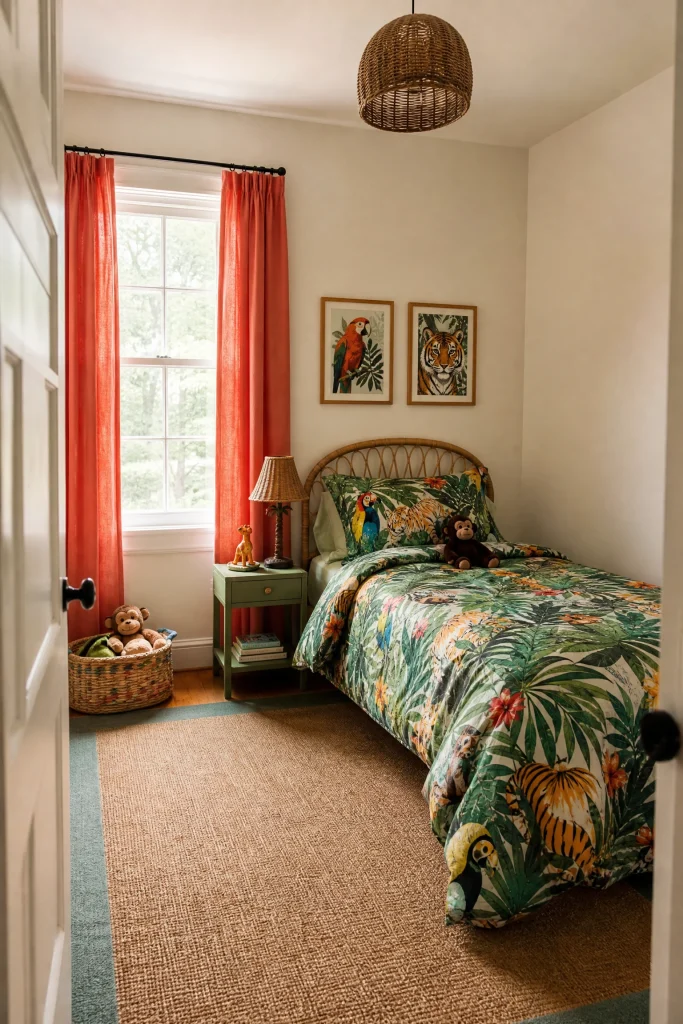
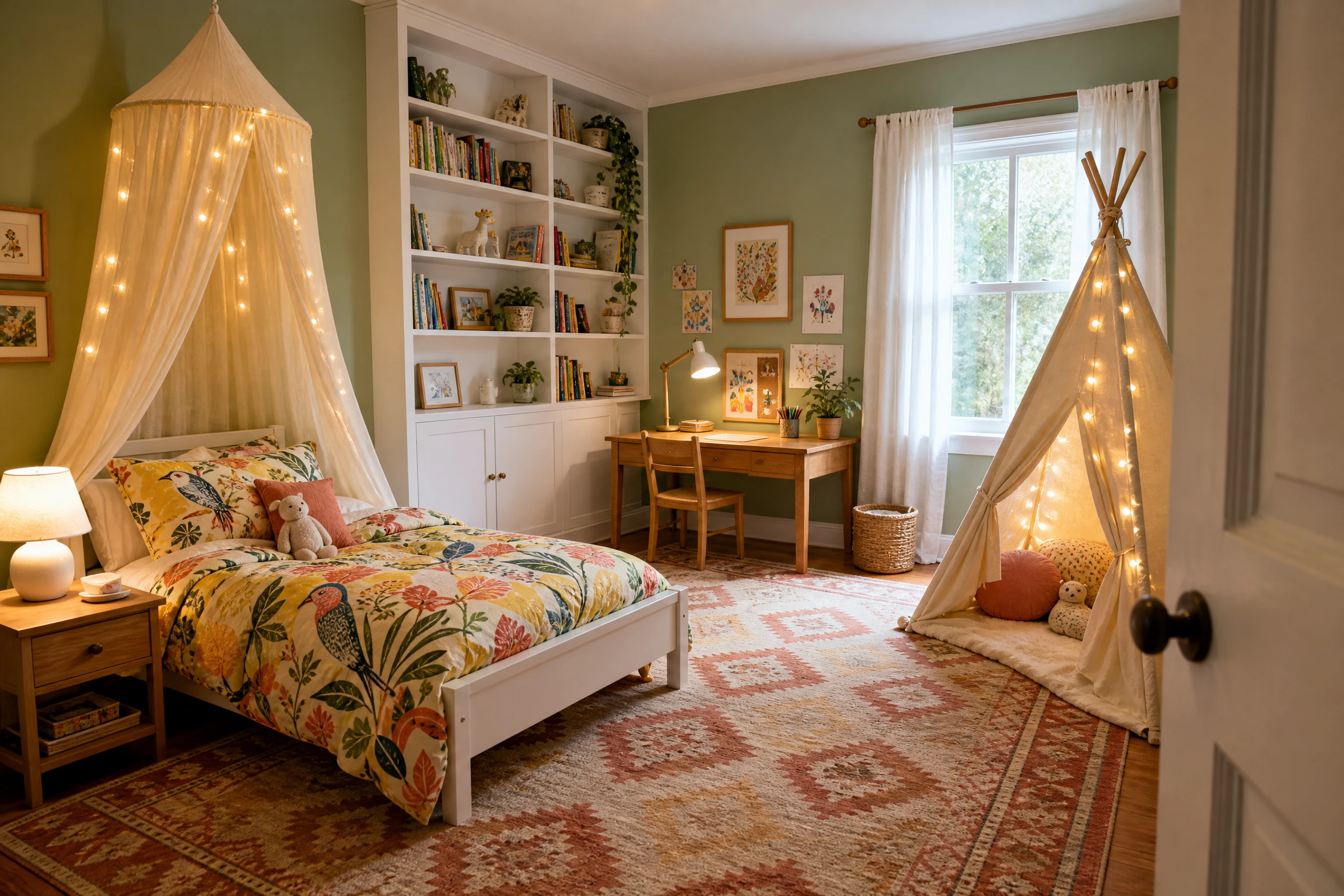
A soft neutral base on the walls, warm white, pale sage, muted sky blue, dusty blush, or a light warm greige, is the single most important long-term decision in a kids bedroom because it is the one thing that is genuinely difficult and disruptive to change. The personality, color, and theme of the room should live in the bedding, the curtains, the rugs, the cushions, and the art, all of which can be replaced in an afternoon as the child grows and changes their mind without touching the walls.
Pro Move: Invest in high-quality neutral wall paint and cheap, cheerful accessories. Reverse that equation and you will be repainting every three years while the accessories age out anyway.
2. Build a Reading Nook Into a Windowsill or Alcove
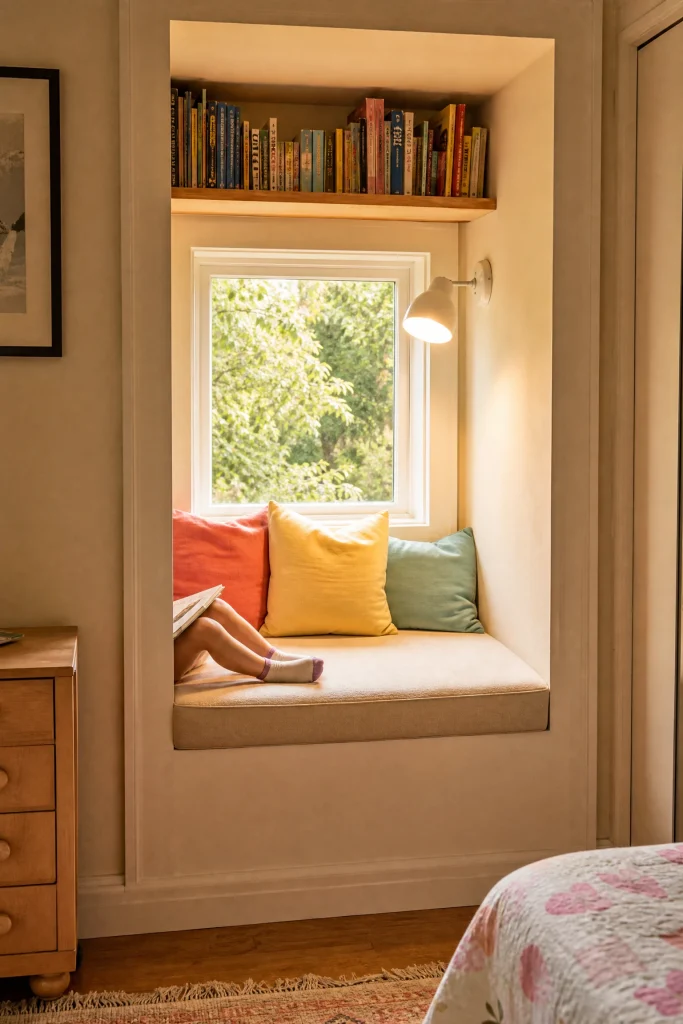
A reading nook built into a windowsill, under a loft bed, or inside a bedroom alcove is one of the few kids bedroom features that genuinely gets better with age rather than worse, because a young child uses it as a cozy hiding corner and an older child uses it as a private reading and homework space. A simple upholstered bench with a storage lift top, a cushion, and a small shelf of books overhead is all it takes, and the same structure serves a four-year-old and a fourteen-year-old equally well.
Quick Tip: Add a small plug-in reading light inside the nook rather than relying on the main room light. A child who has their own controllable light source inside their nook will spend dramatically more time reading in it than one who does not.
3. Use a Loft Bed to Create a Play Zone Below
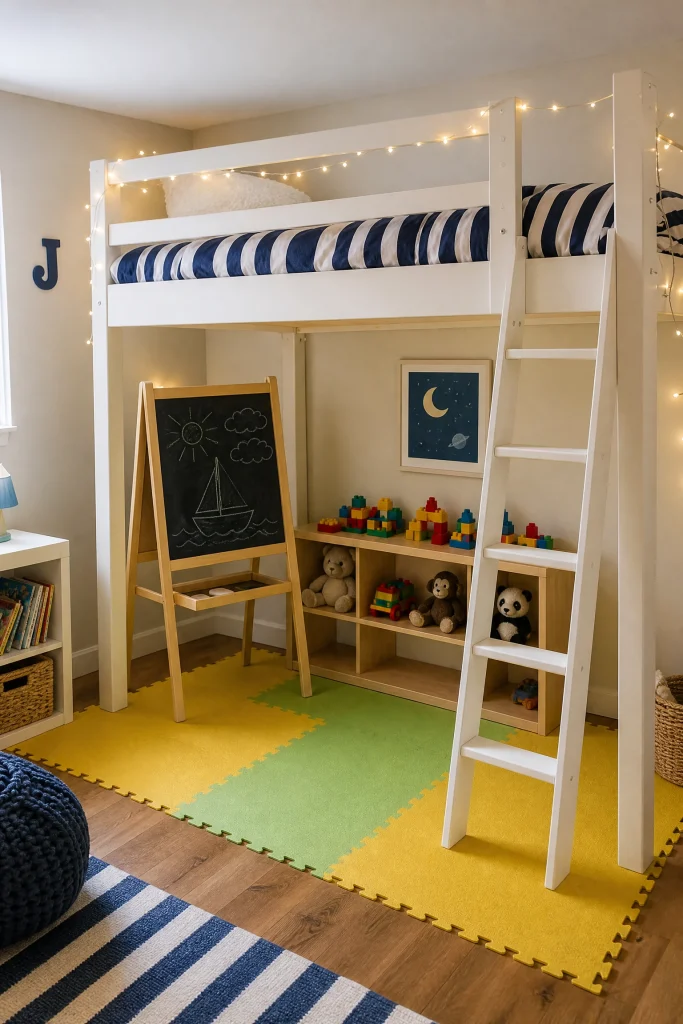
A loft bed raises the sleeping surface to maximize the floor area beneath for play, a desk, a reading corner, or storage, which makes it one of the highest-value space investments in any kids bedroom. In a standard-height room the loft platform sits at approximately 5 to 5.5 feet, leaving enough clearance below for a child to move freely while maintaining a comfortable ceiling height above the mattress. The play zone beneath can be dressed differently at every stage of childhood without touching the bed structure above.
Heads Up: Loft beds are not suitable for children under six years old, and solid guardrails on all exposed sides are non-negotiable regardless of age. Always verify the bed meets current safety standards before purchasing.
4. Install Built-In Storage That Reaches the Ceiling
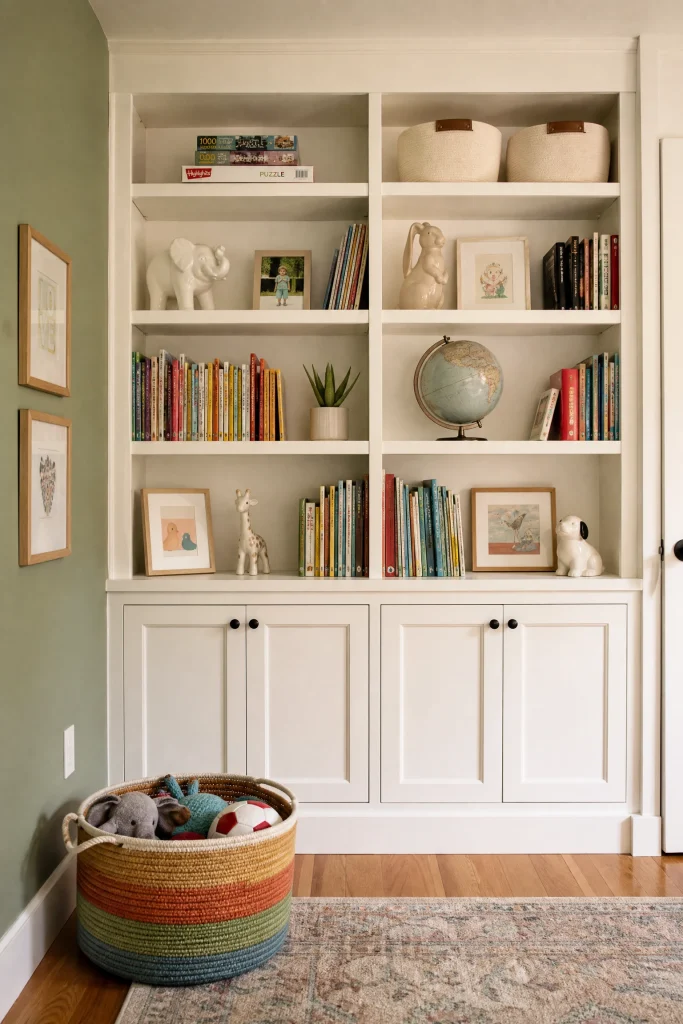
Floor-to-ceiling built-in storage on one wall of a kids bedroom is the investment that most dramatically changes the function of the room over its lifetime because it grows with the child, holding nappies and toy baskets when they are small and textbooks and art supplies when they are teenagers. Open shelving in the upper sections and closed cabinet doors below is the most practical arrangement: lower closed storage hides the inevitable toy chaos, while upper open shelving shows books, trophies, and collections that change and develop over the years.
Designer Advice: Paint the built-in the same color as the wall behind it for a seamless architectural effect that makes the room feel larger and the storage feel less visually dominant. A floor-to-ceiling white storage unit on a white wall reads as architectural; the same unit on a white wall painted in a contrasting color reads as furniture.
| Storage Type | Best Age Range | What Goes In It | Longevity |
| Under-bed drawers | Toddler to teen | Clothes, spare bedding, seasonal items | Excellent, always useful |
| Floor-to-ceiling built-ins | All ages | Toys, books, clothes, collections | Outstanding, grows with child |
| Open low shelving | Toddler to 8 years | Toys, books, baskets | Good but may need updating |
| Wardrobe with top shelf | School age to teen | Clothes, school bags, bulky items | Excellent long-term investment |
5. Design a Dedicated Study Corner From the Start
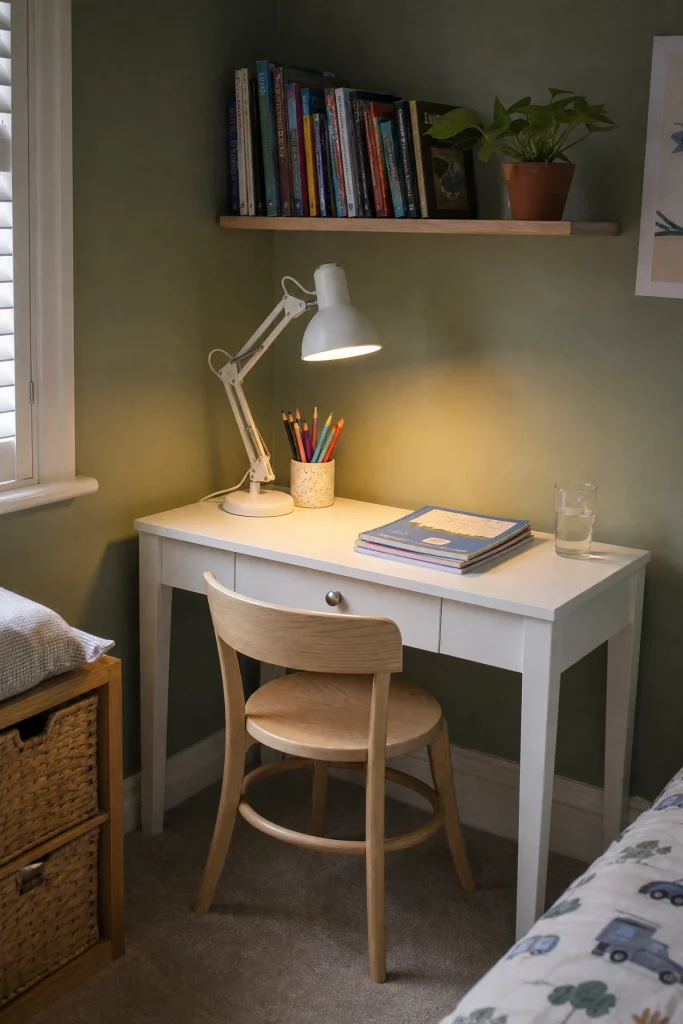
Even for a four-year-old who does not yet have homework, a low desk in the corner of the bedroom establishes the habit and the physical space of independent work from a very young age, and by the time homework arrives in earnest the child already has a settled routine around it. A desk that adjusts in height, or a standard desk at the correct height for the current age with a quality chair, and a dedicated shelf above for school materials makes the study corner feel purposeful and permanent.
Reality Check: A desk in a kids bedroom genuinely only works for homework and focused work if the room also has good task lighting above the desk surface. A bare bulb overhead is not sufficient for reading and writing; an adjustable desk lamp is the minimum requirement.
6. Add a Gallery Wall of Their Own Artwork
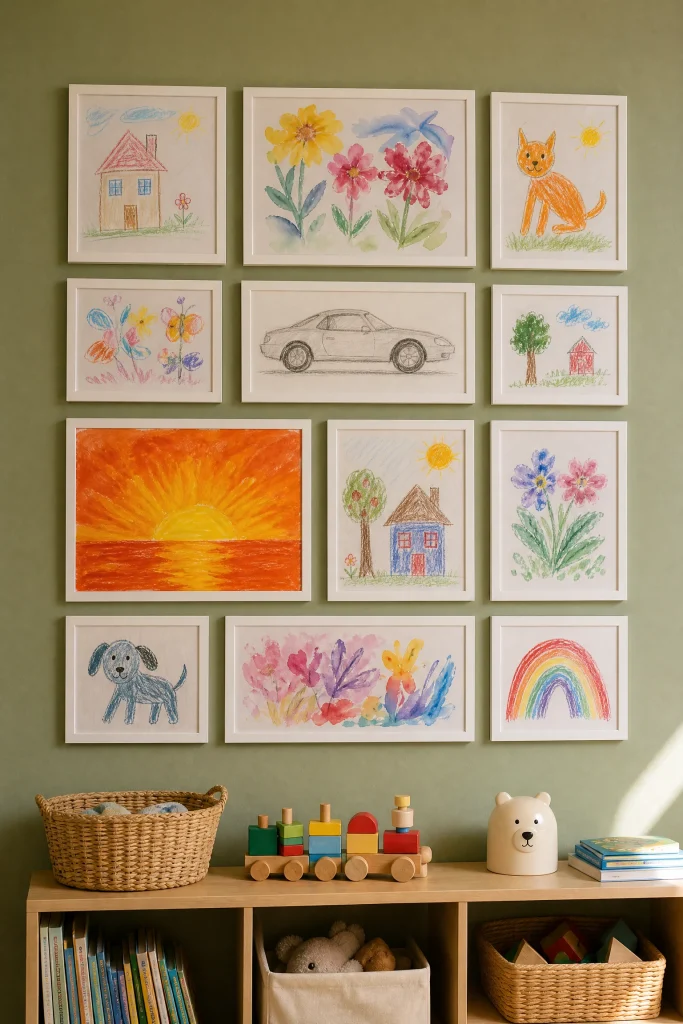
A dedicated gallery wall where the child’s own drawings, paintings, and school art are displayed in simple matching frames is the most cost-effective and most personally meaningful decoration in any kids bedroom, because it changes continuously with the child’s development and always reflects exactly who they are right now. Use a grid of ten to fifteen identical thin white or natural wood frames in different sizes, clip-frame style, so prints and paintings can be swapped in and out in seconds without tools.
Pro Move: Date and label the back of each piece before framing it so you have a record of when it was made. Five years later, watching how a child’s art develops from the earliest scribbles is one of the most meaningful archives a family can have.
7. Choose Washable Paint and Wipeable Surfaces Everywhere
Kids bedrooms accumulate marks, crayon, pencil, sticky residue, and scuffs faster than any other room in the house, and the difference between a washable eggshell or premium matte paint and a standard flat paint in this context is the difference between a quick wipe and a repainting job. Choose a washable premium matte such as Benjamin Moore Aura or Sherwin-Williams Emerald for the walls, and opt for wipeable surfaces on furniture, desks, and storage units rather than untreated wood or fabric-wrapped pieces.
Quick Tip: A paint-over-primer in a washable finish on the lower section of the wall up to chair-rail height provides an extra layer of protection in the zone where most crayon and hand-mark contact happens, without affecting the overall look of the room.
8. Use a Canopy Over the Bed for Instant Magic
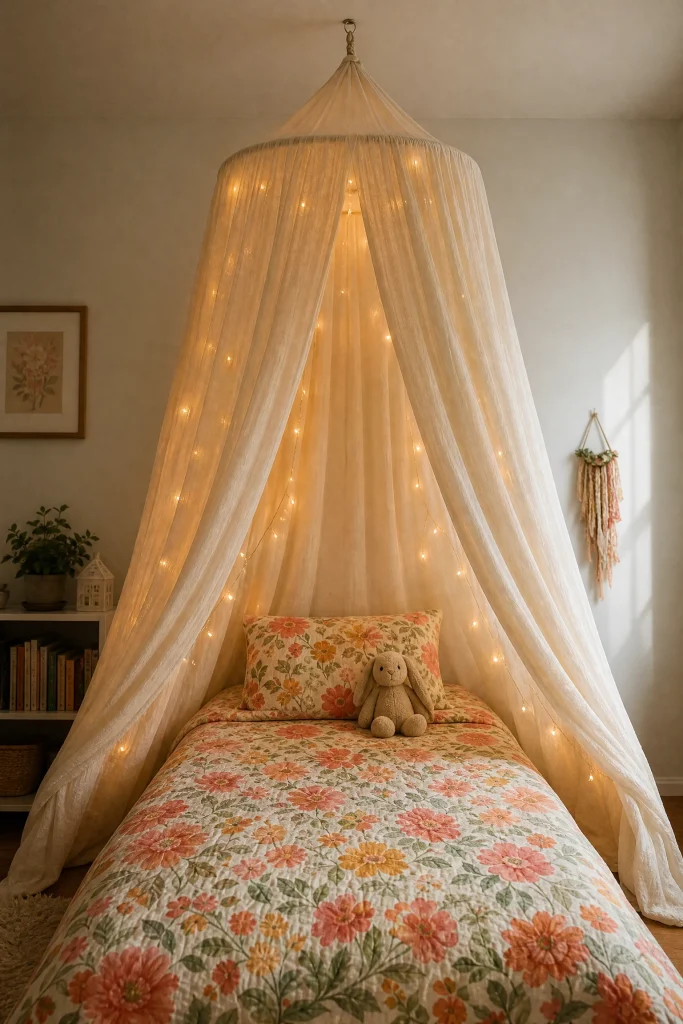
A simple fabric canopy over a child’s bed, whether a ceiling-hung circular canopy, a four-post canopy frame, or a sheer fabric drape from a ceiling hook, transforms a standard bed into the most special spot in the room and requires almost no investment or structural work. Children have a deep instinct for enclosed, nest-like spaces for sleeping and imagining, and a canopy satisfies that instinct while adding a genuinely beautiful visual element that photographs well and works from toddler age right through to early teenage years.
Designer Advice: For the most versatile canopy approach, install a simple ceiling hook above the center of the headboard and drape a single piece of lightweight sheer or muslin fabric over it, spreading the fabric down to each side of the bed. The whole installation costs less than most bed accessories and can be changed to a different color or fabric as the child grows.
9. Install a Chalkboard or Magnetic Paint Panel
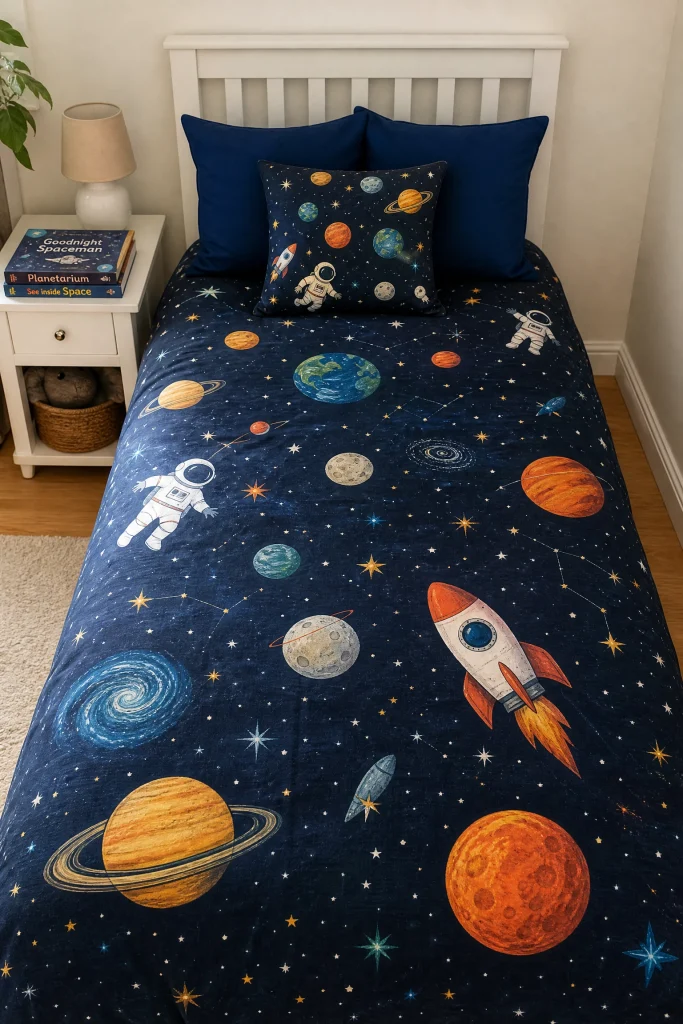
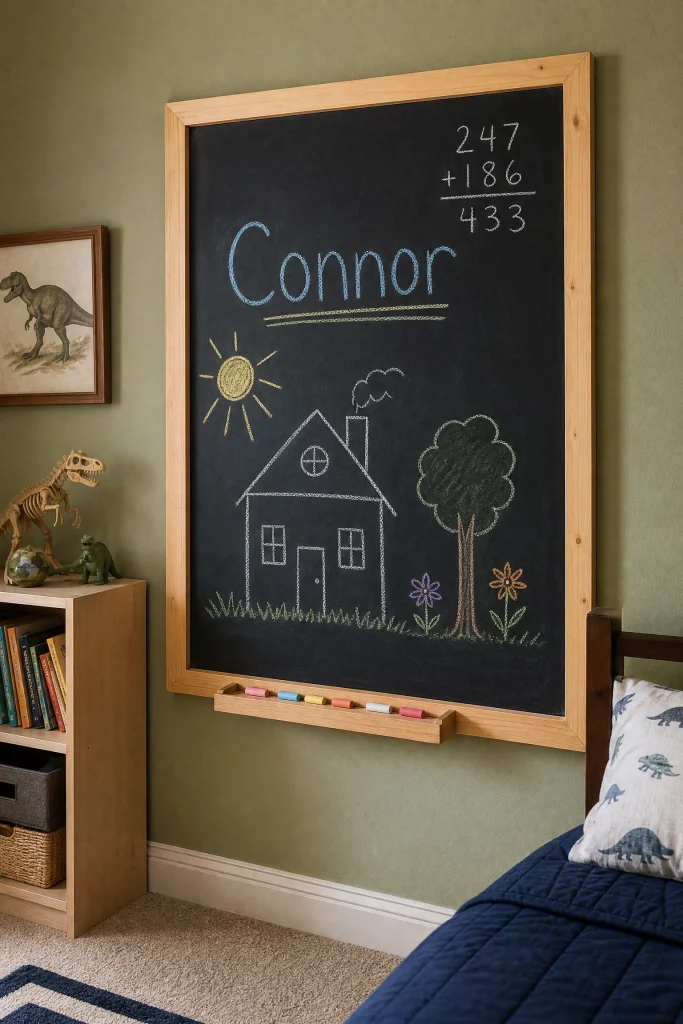
A chalkboard painted panel on one bedroom wall, or a section of magnetic paint behind a specific zone, gives children a permanent creative surface that they own and can fill and erase at will, which satisfies the urge to draw on walls in a controlled and intentional way. A chalkboard rectangle painted in the lower half of one wall, framed with a simple wood border, works as a drawing surface for young children and as a homework noticeboard, calendar, and planning surface for older children and teenagers.
Reality Check: Chalk dust from a chalkboard wall does settle on nearby surfaces and furniture, which is worth considering before placing it directly beside a bed or upholstered chair. Position the chalkboard panel on the wall opposite or adjacent to the main furniture grouping rather than directly behind it.
10. Pick Bedding as the Room’s Main Color Vehicle
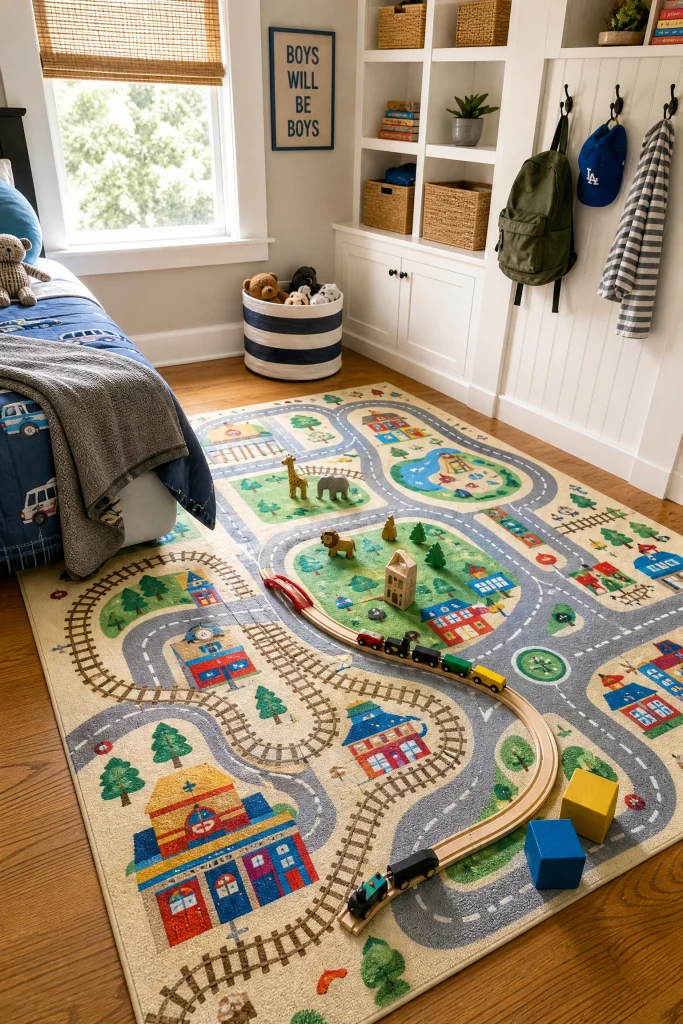
Bedding is the most visible surface in a kids bedroom and the easiest to change as the child grows, which makes it the correct place to introduce the boldest colors, the most character-driven patterns, and the most age-specific personality in the room. A neutral-walled room with bold, personality-driven bedding in a high-quality cotton can look completely different in twenty minutes with a single bedding change, and the investment in neutral walls and one good set of bold bedding is always easier to update than the reverse.
Quick Tip: Buy two complete bedding sets for a kids bedroom: one as the main everyday set and one as a backup for washing days and accidents. Matching sets are easier to manage in the long run than mixing patterns from different collections.
| Age Stage | Bedding Approach | Color Strategy | Update Frequency |
| Toddler (2-5) | Bright patterns, favorite characters | Bold, playful, character-led | Every 1-2 years as interests shift |
| Young child (5-9) | Themed or illustrated prints | Coordinated with one accent color | Every 2-3 years |
| Tween (9-13) | Striped, geometric, or textured | More sophisticated, self-chosen | Every 3-4 years or child-led |
| Teen (13+) | Solid color or subtle pattern | Near adult palette, quality materials | Child-driven, invest in quality |
11. Create a Low-Level Play Area With an Activity Mat

For toddler and young child bedrooms, designating a specific floor area as the play zone with a large, washable activity mat or a layered rug arrangement keeps toys contained, protects the floor, and gives the child a clear physical signal about where play happens. A large foam-backed play mat or a machine-washable flat weave rug in a bright color or map print can define the zone visually and acoustically, reducing the surface noise of toy play and making the room feel organized even when it is not.
Heads Up: Choose a play mat or rug with a non-slip backing on hard floors. A shifting rug in a room where a child runs and tumbles is a fall hazard, and in a kids bedroom the safety consequence of a sliding rug is higher than in any other room in the house.
12. Use Wall Decals for Easy Theme Updates
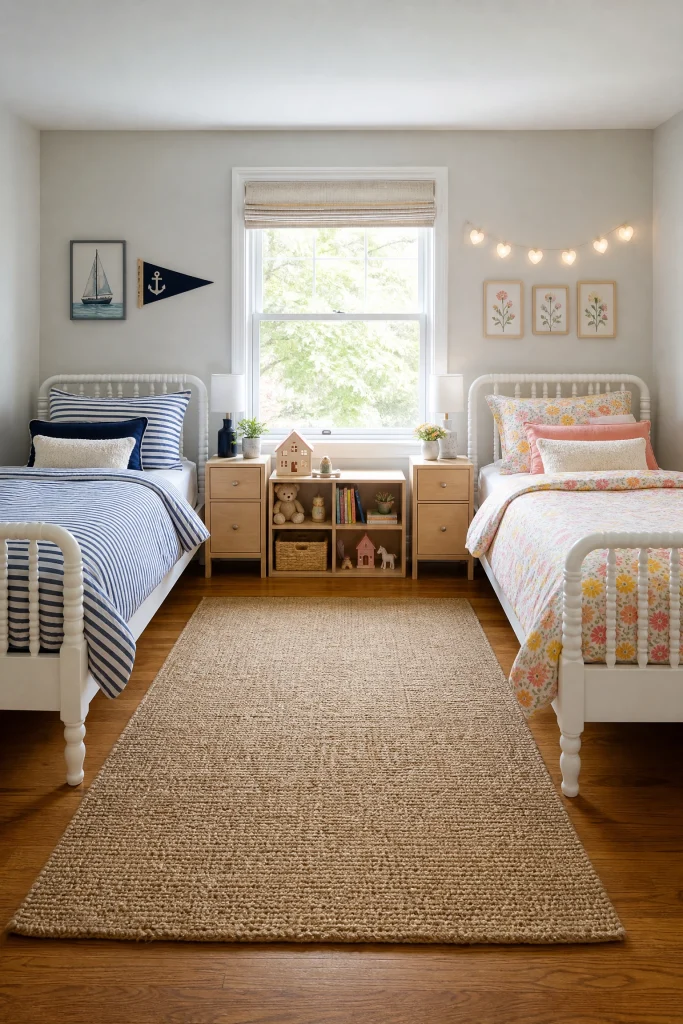
High-quality removable wall decals allow a child’s bedroom to have a clear, immersive theme, a jungle, a solar system, an underwater world, a mountain landscape, without committing the walls to a permanent painting or wallpaper that becomes difficult to remove and impossible to partially update. Good quality vinyl decals from reputable brands apply cleanly, do not damage painted walls when removed, and can be replaced with an entirely different set for approximately the cost of a few tins of paint.
Pro Move: Apply the decals to a single focal wall, the one the child faces when lying in bed, rather than spreading them across all four walls. A concentrated composition on one wall reads as designed and intentional; scattered decals across four walls reads as decorating without a plan.
13. Design a Shared Bedroom With Equal But Individual Zones

The most important principle in designing a shared kids bedroom is giving each child a clearly defined personal zone, a section of wall, a shelf, a dedicated drawer, and their own bedside surface, so that the shared bedroom does not become a source of constant territorial disputes. The furniture and structural elements, bed frames, main storage, rug, curtains, should be consistent between the two zones, while the personal touches, bedding, wall art above each bed, personal shelf styling, can express each child’s individual personality.
Designer Advice: Nate Berkus’s rule for shared kids bedrooms is the most reliable: match the main furniture pieces but allow completely different bedding and personal accessories. Matching bedside tables and lamps on both sides read as a designed room; matching everything reads as a barracks.
14. Add Star or Fairy Lights for Nighttime Atmosphere

String lights, fairy lights wound through a canopy, or a star projector on the ceiling provide the warm, low-level ambient light that children find genuinely soothing at bedtime in a way that overhead room lights cannot. The soft point sources of multiple small warm bulbs create a distributed warm glow that avoids the harsh single-point brightness that makes many children’s bedrooms feel too active and bright for sleep. A simple dimmer-controlled string light on the wall or ceiling above the bed is one of the least expensive and most impactful bedtime additions in a kids bedroom.
Reality Check: Choose LED string lights rated for indoor use with a low heat output, and avoid strings with fine copper wire around a toddler’s bed as the wire can become a strangulation hazard if the light string comes loose. Fabric-covered or rubber-coated strings in a fixed position are safer for younger children.
15. Use a Bunk Bed to Double the Sleeping Capacity
Bunk beds are the most practical solution for two children sharing a bedroom, providing two sleeping surfaces in the footprint of one, and when chosen in a solid wood or powder-coated steel construction with integrated storage on the sides or below they become one of the most long-lived and useful furniture investments in a family home. Modern bunk bed designs include integrated ladder-stairs with storage drawers on the steps, built-in shelving on the side rails, and guard rails that extend fully along the upper bunk rather than just at the ends.
Quick Tip: Position the bunk bed against a wall rather than in the center of the room so the upper bunk has at least one fixed-wall side, reducing the exposed edge that requires guardrail protection and making the upper bunk feel more enclosed and secure for the child sleeping in it.
16. Create a Teepee or Tent Corner for Imaginative Play

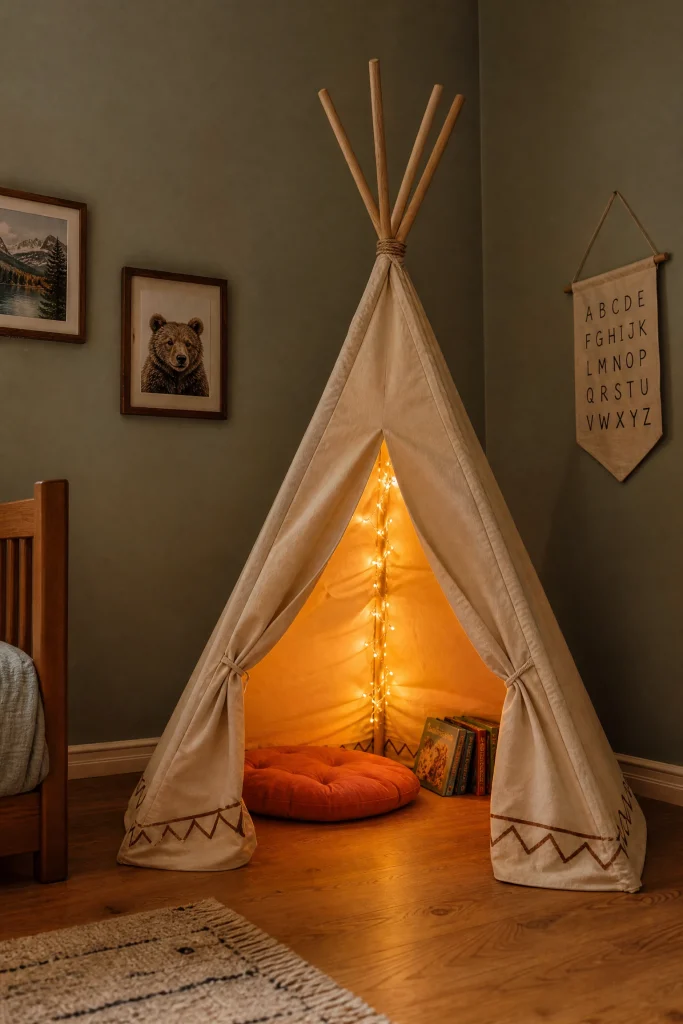
A fabric teepee or a simple tent structure in the corner of a kids bedroom creates an enclosed private space that children gravitate to for imaginative play, quiet reading, and the kind of semi-hidden corner time that is genuinely important for a developing child’s sense of self and independence. A basic floor-standing teepee with a cotton canvas cover costs very little, requires no installation, can be moved anywhere in the room, and works from age two through to around ten years old in different ways as the child’s play changes.
Pro Move: Line the inside of the teepee with a small flat cushion and a string of battery-powered fairy lights hanging from the top pole. The lit interior transforms the teepee from a structure into an experience and dramatically increases how much time the child spends in it.
17. Invest in a Quality Natural Fiber Rug as the Room’s Base
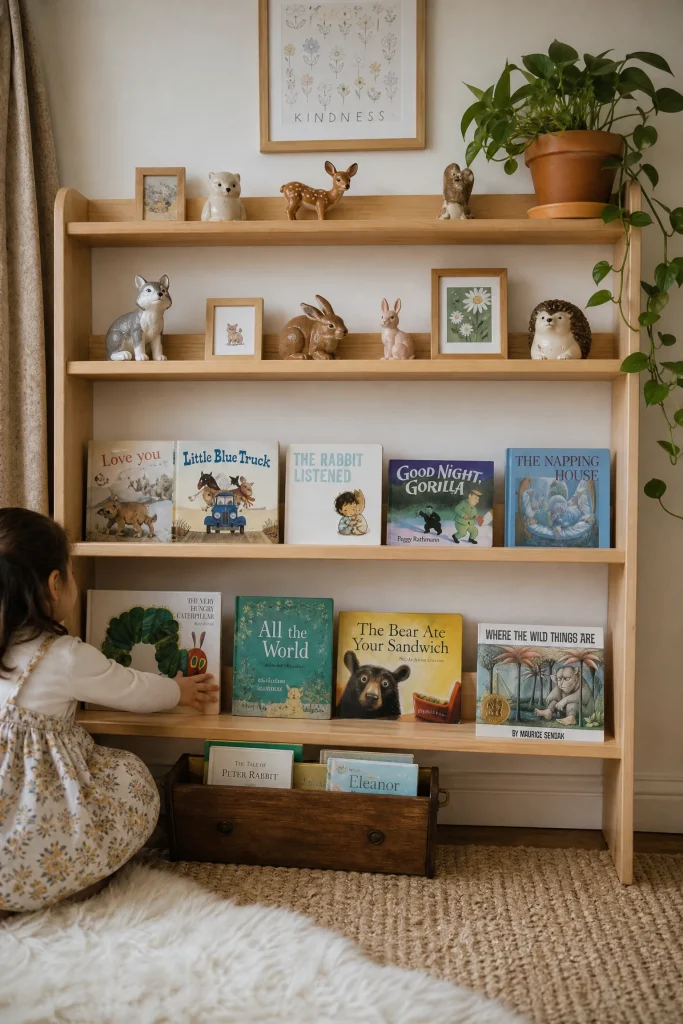
A large natural fiber rug, jute, sisal, or a flat-weave cotton, in a muted neutral or simple geometric pattern is the correct foundation for a kids bedroom because it is durable, washable in most cases, visually grounding, and completely compatible with every stage of childhood from toddler play on the floor to teenage studying at the desk. The rug should cover the majority of the floor area, including the space beside the bed and the play zone, and should be large enough that the bed legs and main furniture legs all sit on it.
Heads Up: Avoid very light rugs in kids bedrooms no matter how beautiful they look in photographs. A cream or white rug in a child’s room requires constant professional cleaning and never truly recovers from spills and play marks. Warm mid-toned naturals or patterns with a dark border are the most forgiving choices.
18. Paint a Feature Wall in a Bold, Child-Friendly Color

Where painting all four walls in a bold color is a risky long-term commitment in a kids bedroom, painting a single feature wall, typically the one behind the bed or the reading nook, in a confident child-appropriate color gives the room personality and energy without the feeling of being permanently enclosed in a commitment. Sky blue, mint green, warm coral, sunshine yellow, or a deep forest green all work beautifully as single-wall colors in kids bedrooms with neutral surrounding walls, and they are significantly easier to repaint than a full four-wall commitment when the child’s preferences change.
Designer Advice: The feature wall in a kids bedroom should be the wall the child faces most frequently, usually the wall opposite the bed or the wall behind the headboard that is visible from the doorway. This maximizes the visual impact of the bold color while keeping the other walls available as neutral canvas for display and storage.
19. Install Adjustable Shelving at Child Height First

Bookshelves and display shelving in a kids bedroom should be positioned at the child’s current reach height, not at adult height, so they can independently access their books, toys, and creative materials without assistance. A low, wide bookshelf where books are displayed spine-out or face-out at floor level for a toddler, with adjustable brackets that allow the shelves to move higher as the child grows, is both more practical and more empowering than a shelf mounted at a height that requires adult help to access.
Quick Tip: IKEA Kallax or Billy shelving systems with adjustable shelf positions are among the most cost-effective and longest-lasting kids bedroom storage solutions available precisely because they can be reconfigured at no additional cost as the child’s needs change.
20. Use a Nautical, Nature, or Space Theme That Ages Well
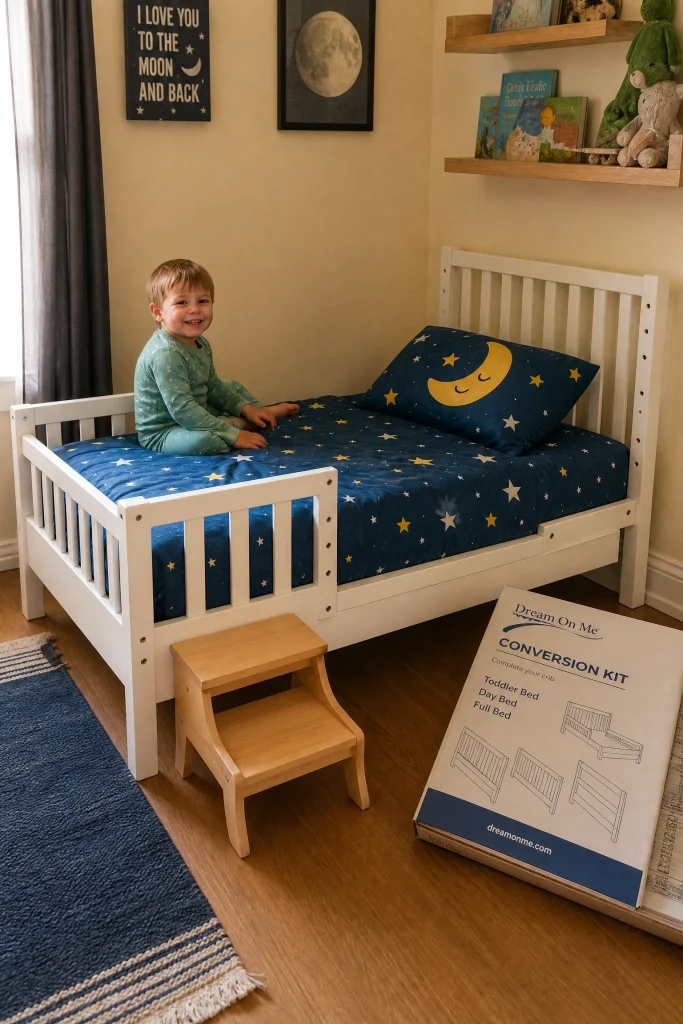
Some themes age out of a kids bedroom so quickly that they become embarrassing to the child within two or three years: cartoon characters, specific branded franchises, highly specific color combinations tied to a single trend. Others age genuinely well because they draw from timeless natural and exploratory motifs: nautical themes in navy and white work from toddler through to teen, nature themes in forest greens and earthy tones feel at home at every age, and space or astronomy themes read as sophisticated rather than childish by the time a child reaches ten or eleven.
Pro Move: Choose a theme that also appeals to you as an adult, because you will be spending time in the room too, and themes that feel genuinely charming to adults rather than merely tolerable tend to hold their quality and relevance longer than themes chosen purely to satisfy a temporary childhood enthusiasm.
| Theme | Age Range It Works For | How to Execute | How to Update It |
| Nautical / Maritime | Toddler to teen | Navy, white, rope, maps | Swap soft furnishings as they age |
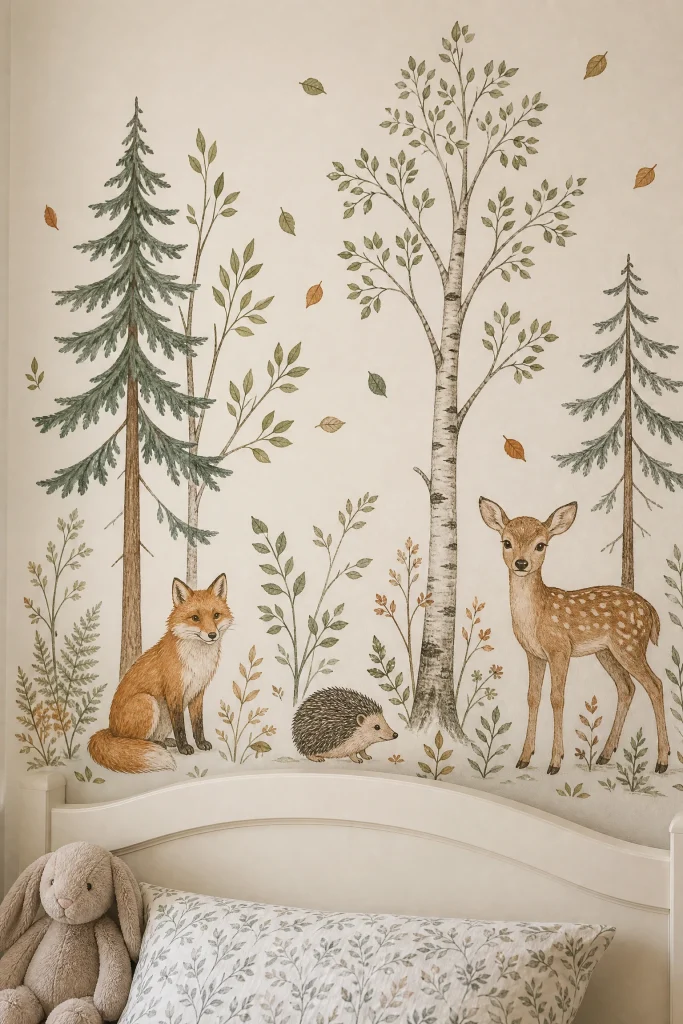
| Nature / Forest | Toddler to tween | Greens, wood, botanical prints | Update art and textiles by season |
| Space / Astronomy | Young child to teen | Dark walls, star lights, planets | Age up by going darker and more scientific |
| Adventure / Explorer | Young child to teen | Maps, neutrals, vintage compasses | Naturally ages well without changes |
21. Add Wallpaper to One Wall as a Visual Anchor
A wallpapered accent wall in a kids bedroom, on the wall behind the bed or the wall the child faces on waking, creates the most complete and immersive room character of any single design decision, and modern peel-and-stick wallpapers make this entirely achievable as a rental-friendly, removable project. A botanical jungle print, a hand-drawn map of the world, an architectural cityscape, a celestial star map, or a soft cloud and sky pattern each creates a distinct room character that influences every other design decision in the room from that point forward.
Reality Check: Peel-and-stick wallpaper quality varies enormously. Brands at the budget end tend to bubble, peel at edges, and leave residue. Companies like Tempaper, Chasing Paper, and Rifle Paper Co. produce genuinely high-quality removable wallpapers that apply flat, stick properly, and remove cleanly when the time comes.
22. Choose a Convertible Cot-to-Bed or Extendable Bed Frame
Beds that convert from cot to toddler bed to full single bed, or bed frames that extend in length as the child grows, are among the smartest furniture investments in a kids bedroom because they eliminate the cost and disruption of replacing the bed entirely at each developmental transition. Several European brands including IKEA, Leander, and Stokke produce beds that begin as cots and convert through four stages from birth to approximately twelve years old, representing a significant overall saving despite their higher initial cost.
Heads Up: Convertible and extendable bed systems require that you keep the conversion parts when you purchase the initial cot. These extension kits are rarely available separately after the fact and are often discontinued when product lines update. Register your purchase and store the conversion hardware immediately.
23. Create a Quiet Corner With a Bean Bag or Floor Cushion
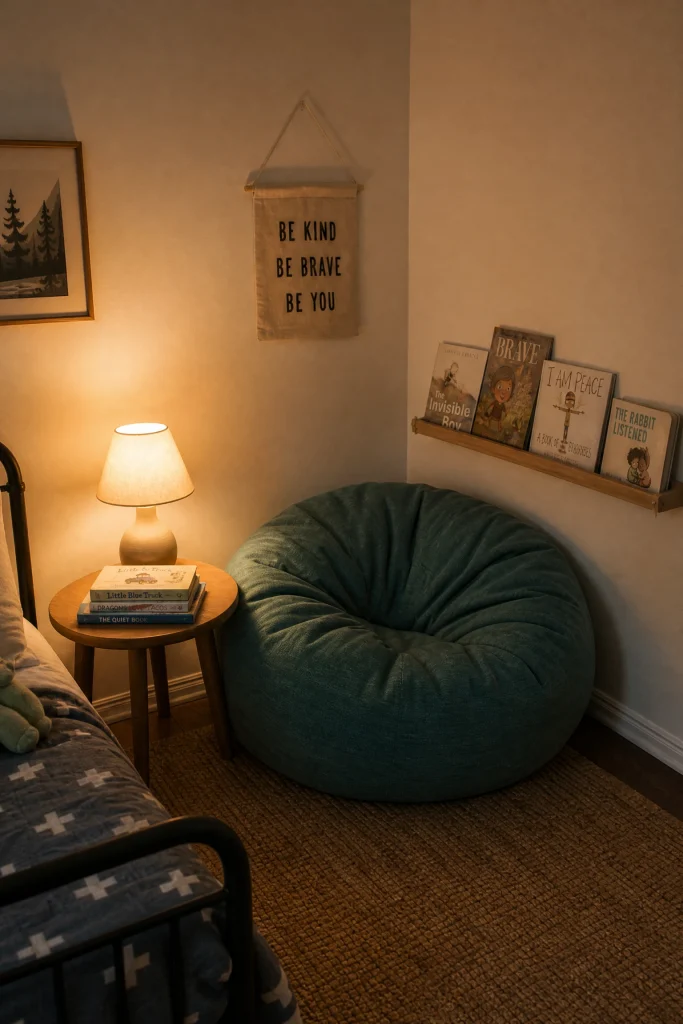
Beyond the bed and the play area, a kids bedroom genuinely benefits from a third zone: a quiet, comfortable floor-level spot that is distinct from both sleeping and structured play, where a child can decompress, listen to music, look at books, or simply be. A large bean bag, a floor cushion, or a low upholstered pouf in a corner with a small lamp and a book basket beside it creates this third zone simply and inexpensively and signals to the child that rest and quiet are as welcome in their space as active play.
Designer Advice: Position the quiet corner away from both the bed and the main play zone so it has physical separation from the other activities in the room. Even 3 feet of distance from the nearest furniture is enough for the zone to feel distinct in a child’s mind.
24. Use Under-Bed Storage for the Overflow Problem

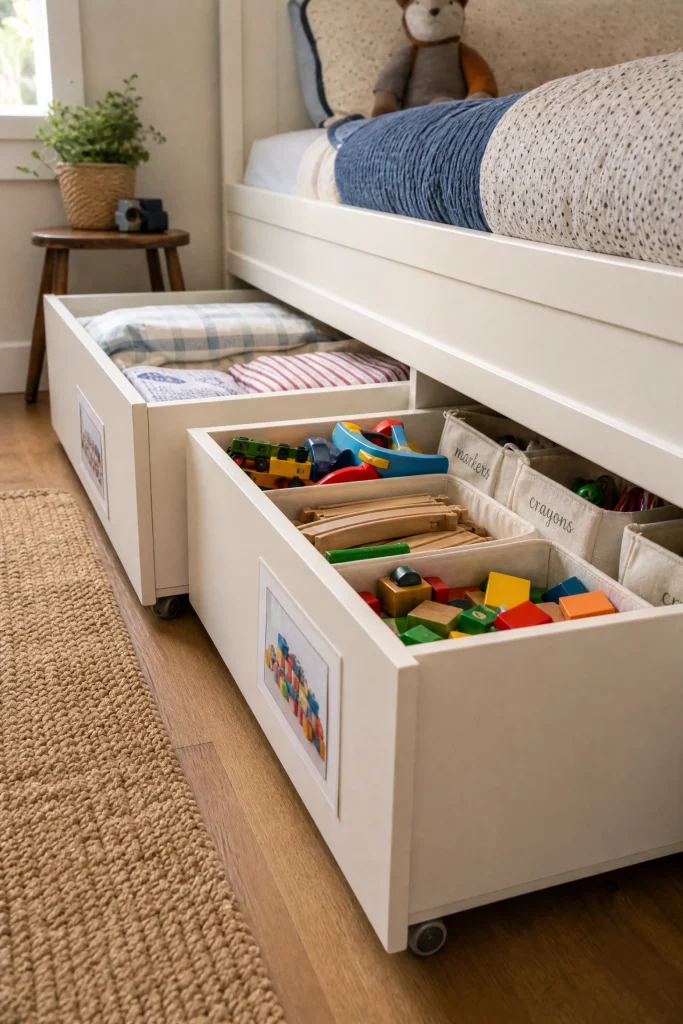
Under-bed storage with rolling drawers or large flat storage boxes solves the single biggest practical challenge in kids bedrooms: the overflow of toys, books, craft supplies, and seasonal items that always exceeds the visible storage available. Bed frames with integrated under-bed drawers are the most elegant solution; rolling cube drawers or flat baskets that slide beneath an existing bed frame are the most affordable retrofit. The under-bed zone in a standard single bed holds approximately the same volume as a full dresser drawer when used properly.
Quick Tip: Label under-bed storage containers on the front with picture labels for young children who cannot yet read. A photograph of the contents taped to the front of each drawer or basket means children can independently tidy their own rooms from a surprisingly young age.
25. Incorporate a Mirror at Child Height for Daily Independence

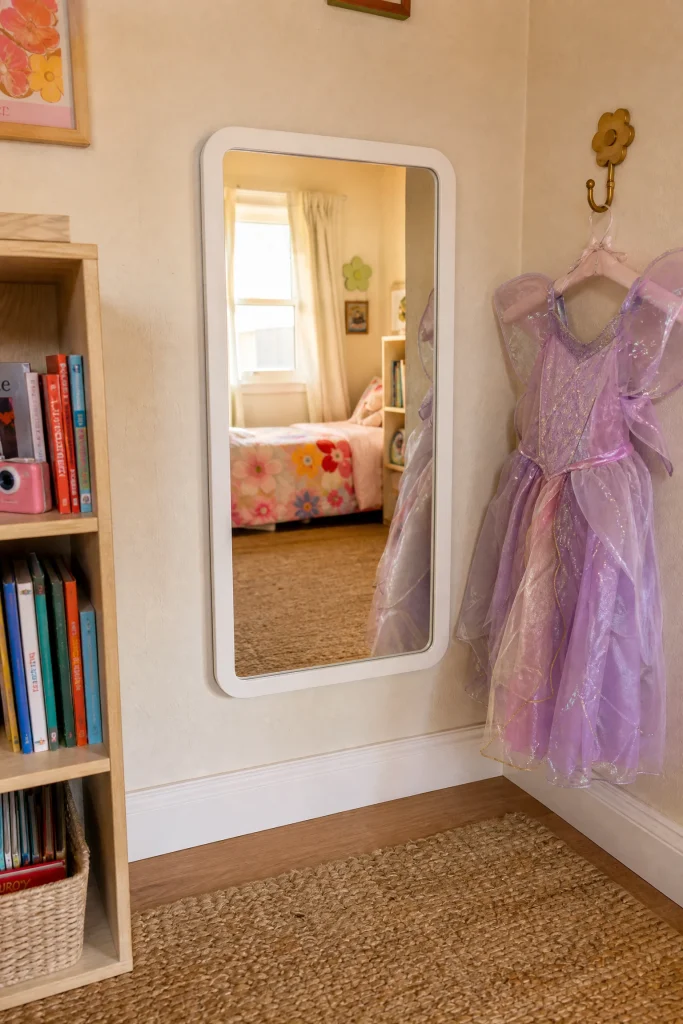
A full-length mirror or a wall-mounted mirror at child height, so the bottom edge is approximately 12 inches from the floor and the top edge at least 48 inches, is one of the most practical and underappreciated additions to a kids bedroom because it gives children the ability to check their own appearance, practice expressions, and engage in imaginative dress-up play without depending on an adult bathroom mirror. For older children and teenagers the same mirror becomes an important tool for self-expression and daily routine independence.
Pro Move: Choose a mirror with a padded, rounded-edge frame in rubber or a soft fabric cover rather than a hard wood or metal frame at floor level in a kids bedroom. A child running in their room who catches a sharp-framed mirror edge is a preventable injury.
26. Design for Nighttime Safety With Low Lighting Transitions

Most kids bedrooms are designed for daytime appearance and daytime function, but the nighttime version of the room, the version a child experiences when they wake in the night, struggle to sleep, or need to navigate to the bathroom, is equally important. A low-level nightlight plugged into a baseboard socket, or a soft-glow smart bulb set to the lowest warm setting on a bedside lamp, means a child who wakes in the night encounters a softly lit room rather than complete darkness, reducing night fears and the need to call for parents.
Reality Check: Position nightlights at baseboard height rather than mid-wall height. A nightlight at baseboard height illuminates the floor path to the door and the bathroom, which is what a child actually needs to navigate at night, while a mid-wall nightlight illuminates nothing useful and creates an uncomfortable mid-height glow.
27. Let the Child Participate in One Decision That Is Genuinely Theirs
The most important thing about a child’s bedroom is that the child feels it genuinely belongs to them, and this sense of ownership comes most powerfully from having made at least one decision about it themselves. Whether that decision is the color of the bedding, the art that goes above their bed, the arrangement of their books, or the specific rug they chose from three options you selected, the act of having genuinely participated in the room’s creation gives a child a connection to the space that no amount of beautifully designed decor can replicate.
Pro Move: Frame the choice as a series of two or three good options rather than an open question. Give a toddler the choice between a blue rug and a green rug rather than asking what color they want. Give an older child the choice between three wallpaper patterns rather than access to every option. The child gets genuine ownership of the decision; you maintain control of the quality of the outcome.