Architectural Palette Composition: Harmonizing Saturated Tones, Earthen Minerals, and Natural Wood Textures
Dining room color schemes establish mood, spatial proportions, and material harmony across intimate meal environments. From rich color-drenched jewel tones and warm earthen terracotta to muted sage greens and sophisticated mushroom greiges, selecting the right palette transforms dining spaces into inviting architectural backdrops. Explore these twenty-eight research-backed color strategies to curate balanced, immersive dining atmospheres.
Drench Dining Walls in Saturated Terracotta Paired with Oat Linen Upholstery
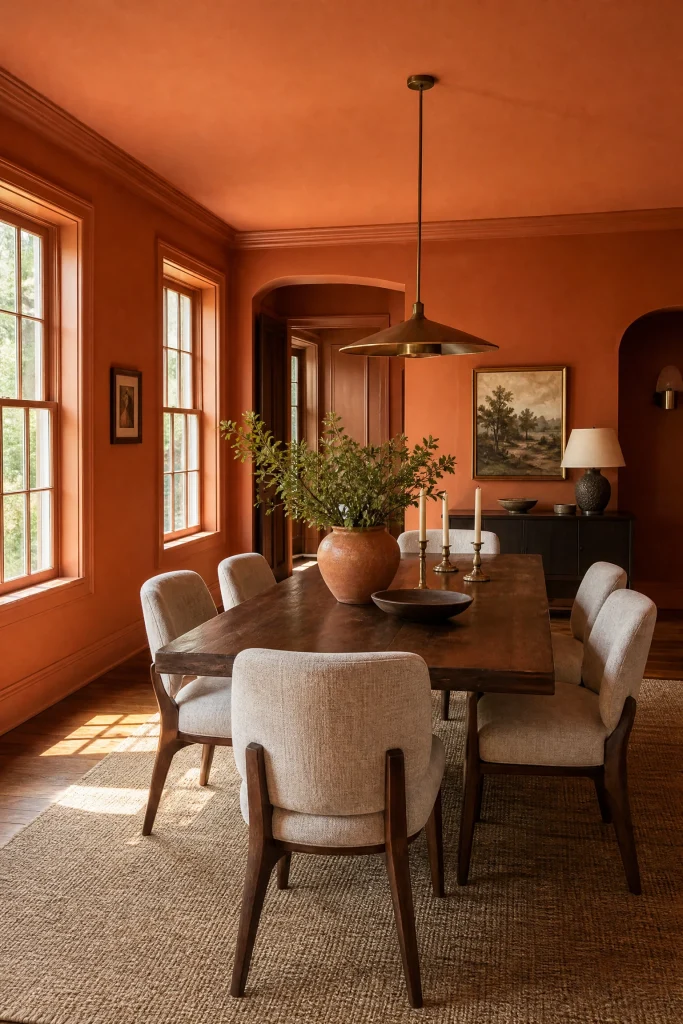
Painting dining room walls and trim in a saturated matte terracotta red-orange creates an enveloping, cocoon-like atmosphere for evening meal gatherings. The earthy warmth of terracotta mimics natural clay pottery, reflecting candlelight into soft amber pools across the table. Pairing this rich wall color with oat-toned linen upholstered dining chairs introduces tactile softness that prevents the deep background hue from visually overpowering the space during
DESIGNER ADVICE: Select matte or flat paint sheens for deep terracotta shades to absorb ambient light and reduce harsh reflections.
Pair Mood-Drenched Emerald Green Walls with Aged Brass Light Fixtures
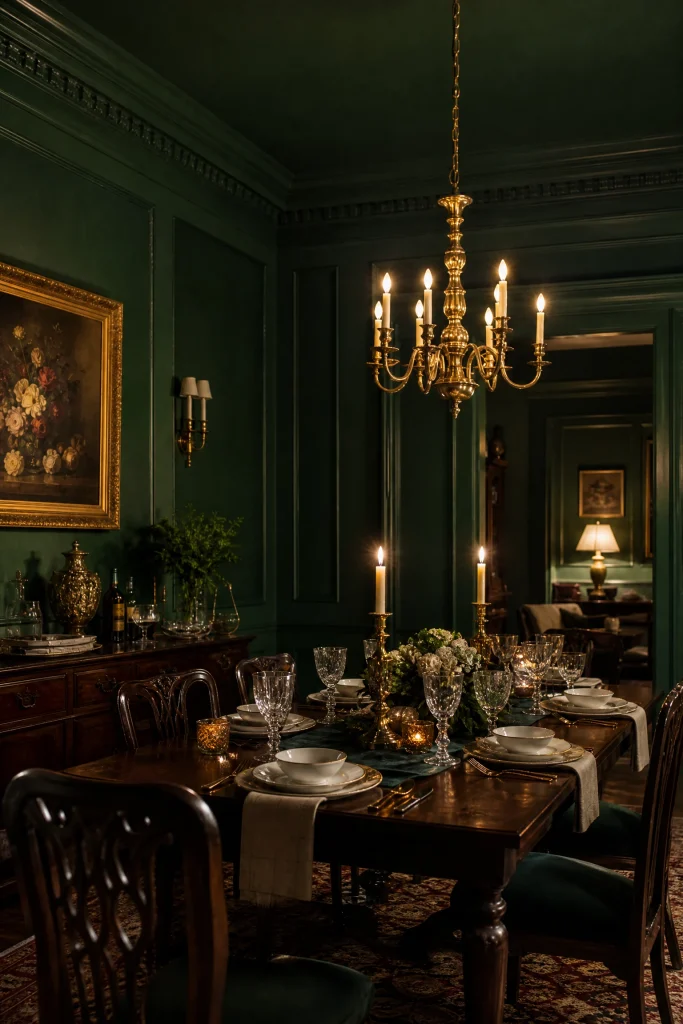
Wrapping dining room surfaces in deep emerald green paint introduces moody architectural drama that elevates formal dinner entertaining. The cool, botanical depth of emerald green walls serves as a striking backcloth for warm metallic accents like aged brass chandeliers and wall sconces. As evening candlelight reflects off brass surfaces against the dark green backdrop, the dining space achieves an intimate, lounge-like sophistication.
STYLE SECRET: Carry emerald green paint onto ceiling mouldings and door casings to create a continuous color-drenched architectural envelope.
Combine Muted Sage Green Walls with Natural Sand Taupe Textiles
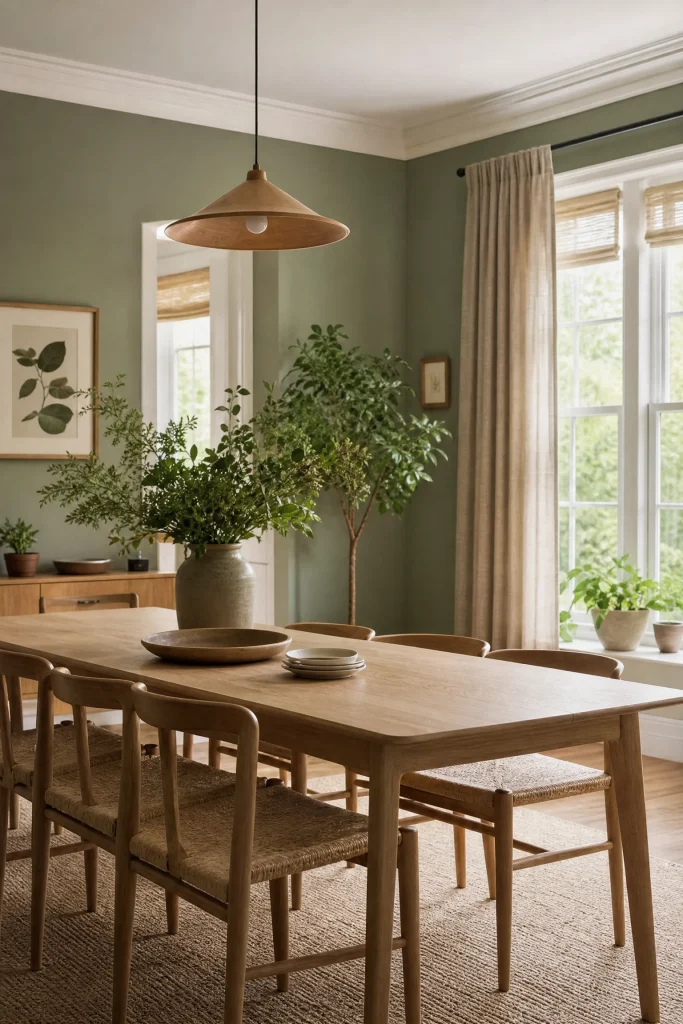
Painting dining room walls in a soft, muted sage green creates a serene botanical foundation that connects indoor dining to garden views outside. Sage green acts as a flexible organic neutral that calms the senses while allowing natural wood furniture to stand out. Pairing sage walls with sand-taupe linen drapes and wool rug textures creates a harmonious tone-on-tone palette suited for relaxed daily meals.
QUICK TIP: Test sage green paint samples under both morning daylight and artificial evening lighting to verify gray undertones.
Balance Charcoal Slate Gray Walls with Warm Honeyed Oak Dining Tables
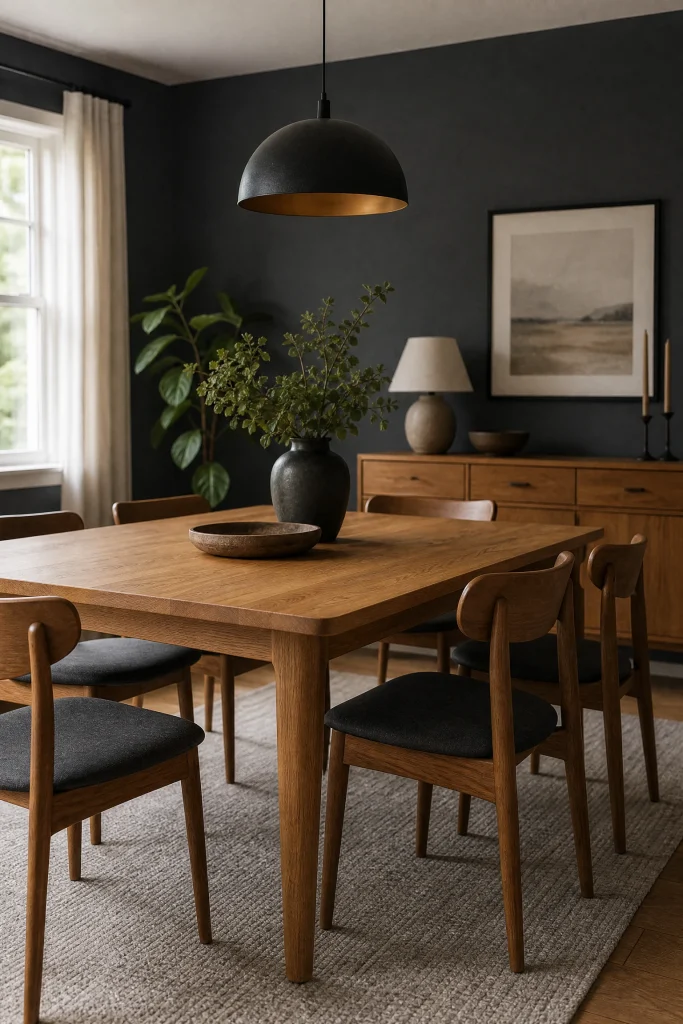
Applying charcoal slate gray paint to dining room walls introduces contemporary urban sophistication while providing intense color contrast against wood furniture. The cool dark depth of slate gray recedes visually, making dining rooms feel cozy without shrinking perceived room boundaries. Pairing dark slate walls with a honeyed oak dining table restores visual warmth, creating a grounded balance between cool mineral tones and natural wood grain.
MAINTENANCE RULE: Wipe charcoal painted walls using microfiber cloths and gentle cleaners to prevent shiny burnish marks on low-sheen matte finishes.
Harmonize Rich Cacao Brown Paint with Soft Pistachio Green Accents
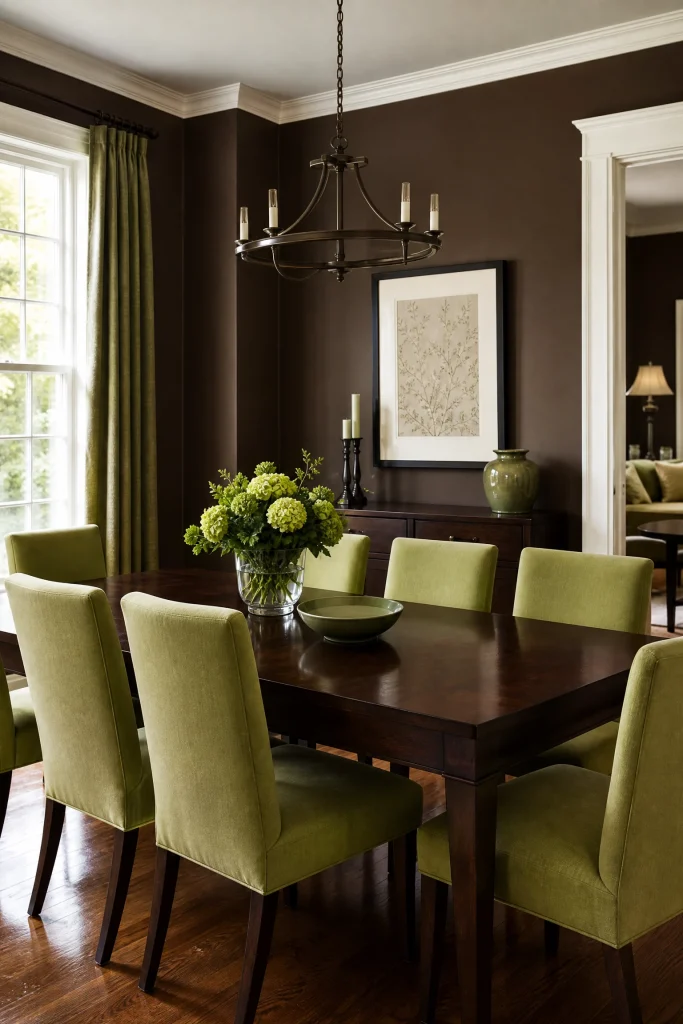
Painting dining space walls in a deep cacao brown establishes a luxurious, chocolate-toned backdrop reminiscent of classic wood-paneled dining parlors. The rich brown hue grounds the room with psychological comfort during winter evening suppers. Introducing soft pistachio green dining chair upholstery or ceramic table accents adds a fresh, modern counterpoint that brightens the dark brown foundation without disrupting overall color balance.
DESIGNER ADVICE: Incorporate bright white ceiling trim when using dark cacao brown wall paint to preserve vertical spatial height visually.
Juxtapose Deep Navy Blue Walls with Warm Amber Wood and Brass Details
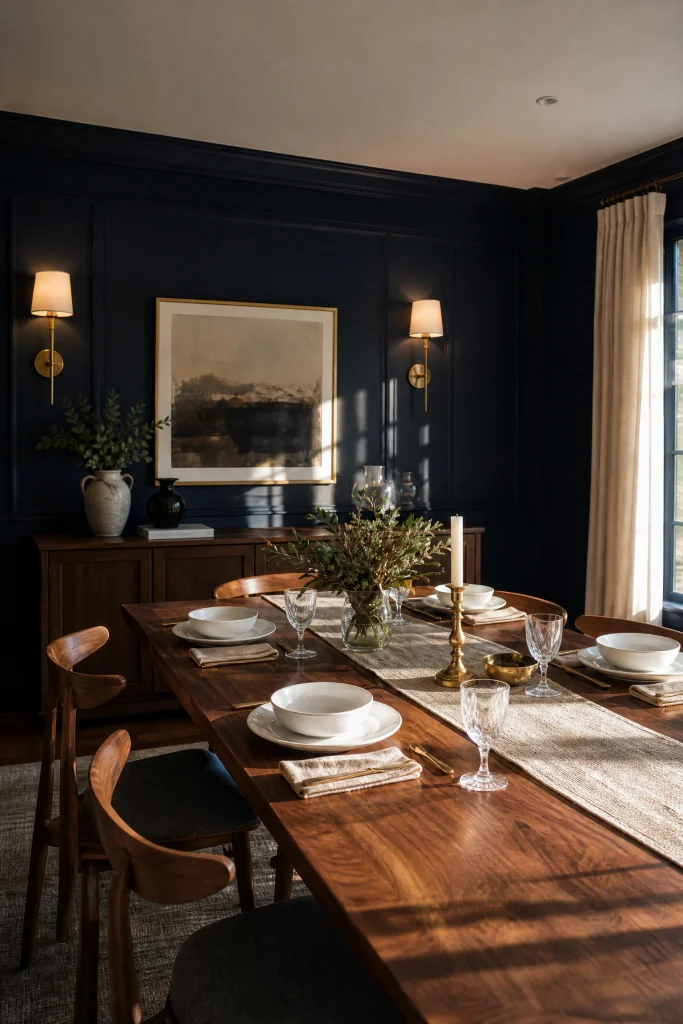
Coating dining walls in deep navy blue creates a classic maritime-inspired backdrop that radiates timeless elegance during formal dinner parties. Navy blue absorbs excess glare in sun-drenched rooms, creating a calm visual anchor. Pairing navy walls with warm amber-toned walnut dining tables and brushed brass sconces adds golden warmth, preventing dark blue surfaces from feeling cold or uninviting.
STYLE SECRET: Use warm 2700K LED light bulbs in sconces and pendant lamps to bring out rich golden undertones in navy blue paint.
Layer Rich Burgundy Wine Paint with Creamy Off-White Architectural Trays
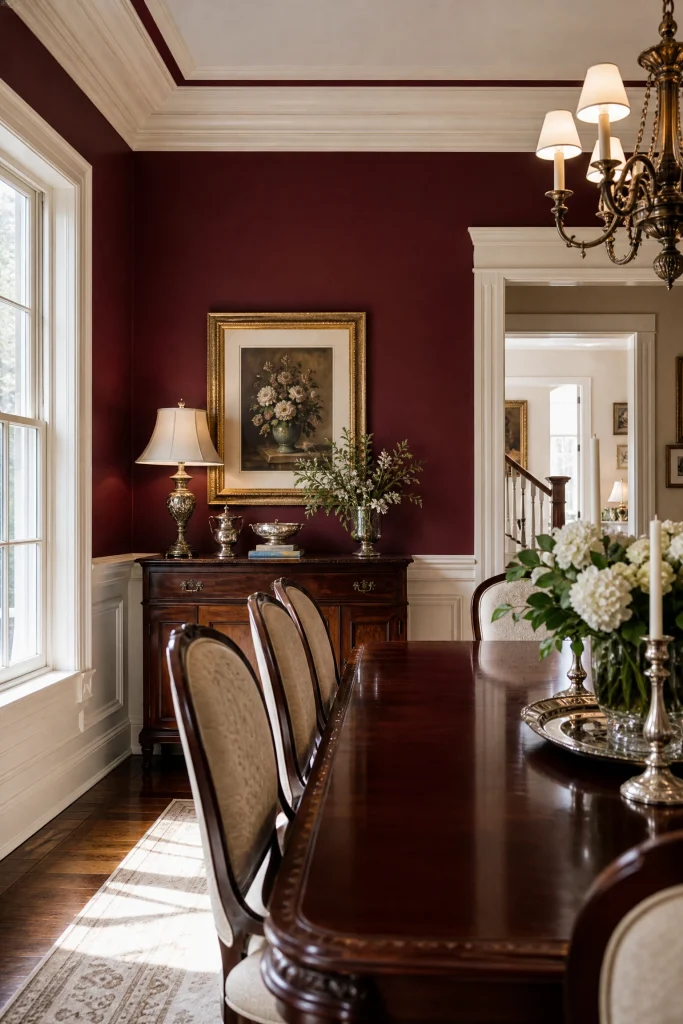
Painting dining room accent walls or wainscoting in rich burgundy wine red introduces opulent, appetite-stimulating color perfect for formal entertaining spaces. Burgundy red embodies traditional hospitality warmth while adding historic depth to traditional homes. Framing burgundy wall panels with creamy off-white architectural trim and ceiling tray mouldings softens the color intensity, establishing a stately, balanced dining environment. for relaxed weekend gatherings.
QUICK TIP: Apply two coats of tinted primer before painting burgundy red to ensure uniform color opacity across large wall surfaces.
Combine Warm Olive Green Walls with Natural Rattan and Cane Furniture
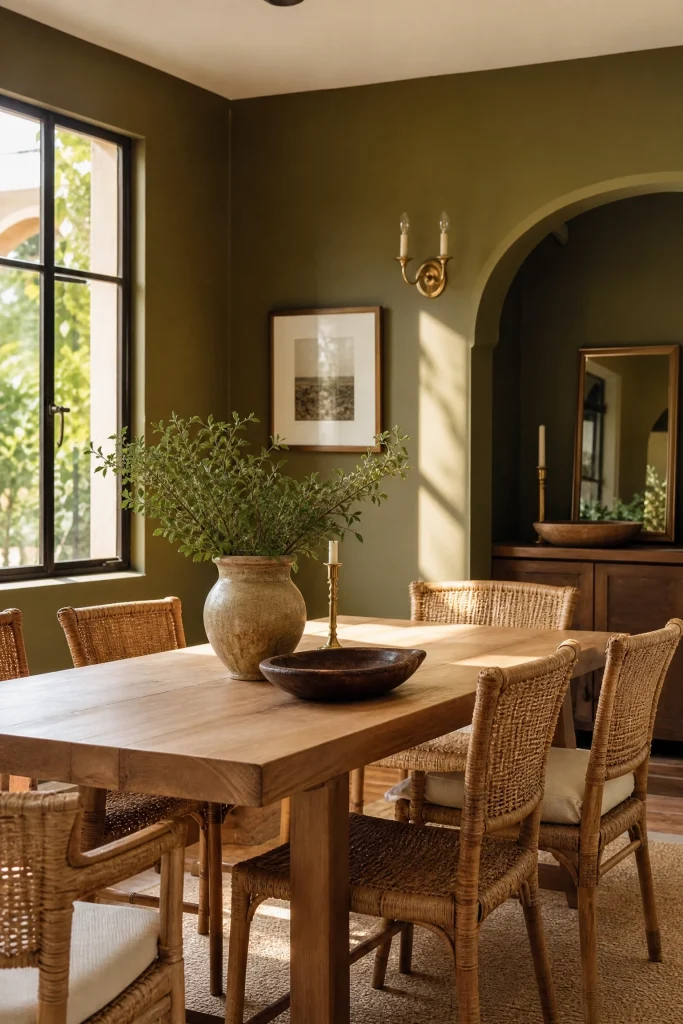
Applying warm olive green paint across dining walls creates a cozy, Mediterranean garden atmosphere that feels grounded and organic. Olive green contains yellow undertones that radiate natural warmth under daytime sun and soft evening lamplight. Pairing olive walls with natural woven rattan dining chairs and cane sideboard doors enhances Mediterranean tactile texture while maintaining an relaxed, approachable home aesthetic.
DESIGNER ADVICE: Pair olive green walls with unlacquered brass flatware and linen napkins to complete a rustic Mediterranean table design.
Pair Saturated Ochre Gold Paint with Honed Travertine Stone Accessories
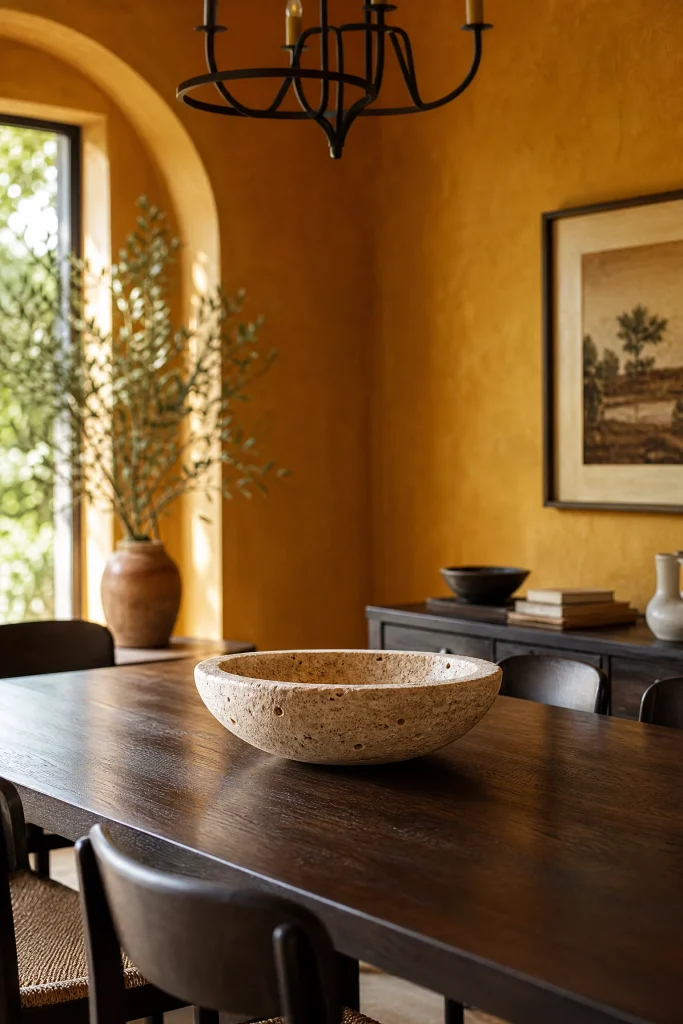
Coating dining walls in a saturated ochre gold hue infuses the space with luminous sun-drenched warmth, even on overcast winter afternoons. Ochre gold acts as a vibrant neutral that energizes dining gatherings while complementing vintage and modern furniture alike. Styling ochre walls alongside honed travertine stone bowls and marble table surfaces tempers the bright yellow-gold hue with cool, sophisticated mineral texture.
STYLE SECRET: Incorporate dark wood or charcoal accent pieces when using ochre gold walls to establish grounding visual weight.
Unify Mushroom Greige Walls with Soft Chalk White Woodwork and Linen
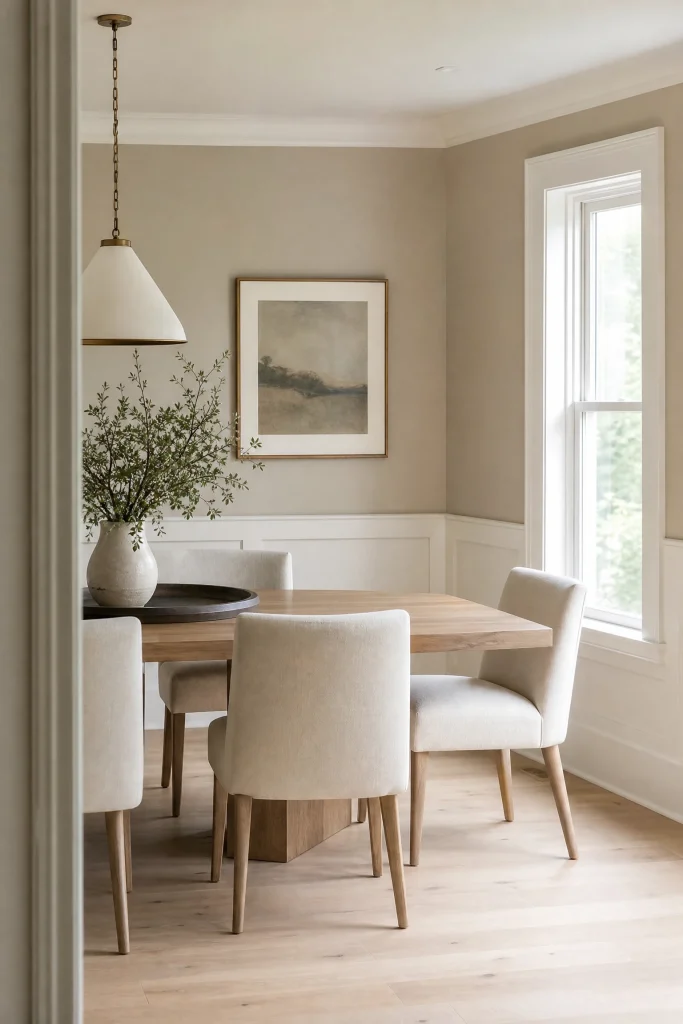
Painting dining room walls in a complex mushroom greige tone delivers a serene, contemporary neutral palette that bridges grey and beige effortlessly. Mushroom greige adapts dynamically to changing natural light throughout the day, shifting from cool stone in morning light to warm taupe at dusk. Pairing greige walls with soft chalk white painted trim and ivory linen seat cushions creates an airy minimalist aesthetic.
QUICK TIP: Select chalk white paint with subtle warm undertones rather than stark pure white to avoid cold harsh trim lines.
Layer Deep Plum Purple Walls with Brushed Bronze Lighting and Hardware
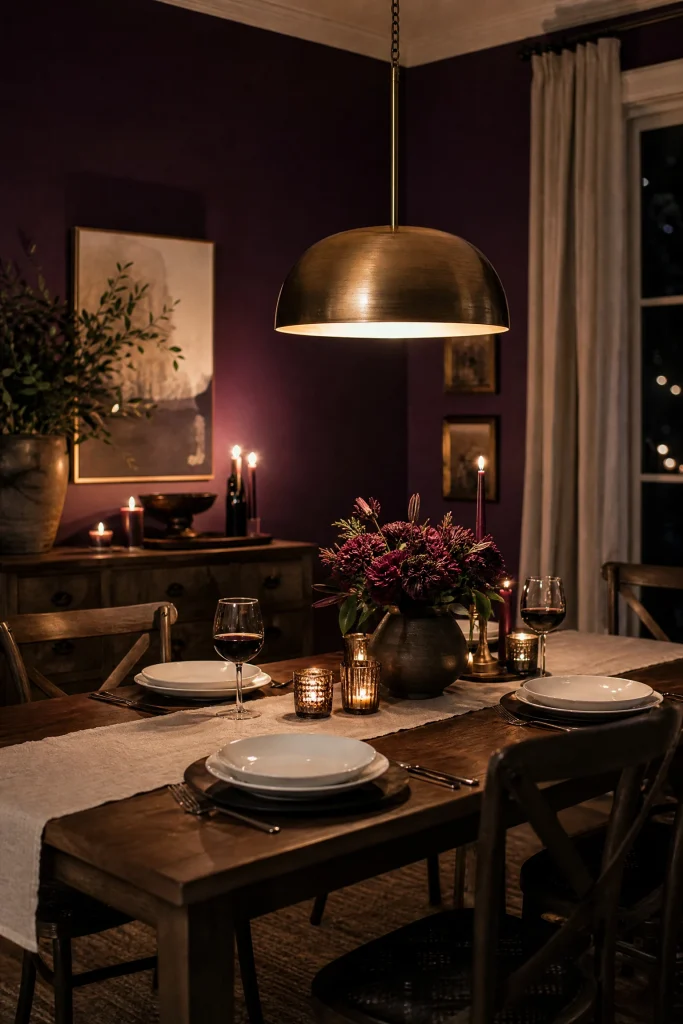
Applying deep plum purple paint to dining room walls creates an unexpected, luxurious backdrop with moody artistic sophistication. Plum contains balanced red and blue undertones that feel intimate under low dinner light while adding creative personality to modern dining spaces. Pairing plum walls with brushed bronze pendant lights and cabinet hardware enhances the palette with warm, metallic elegance.
MAINTENANCE RULE: Use scrubbable eggshell paint finishes in deep plum tones to allow easy cleaning of food splashes without altering sheen.
Contrast Burnt Sienna Walls with Raw Terracotta Clay and Natural Oak
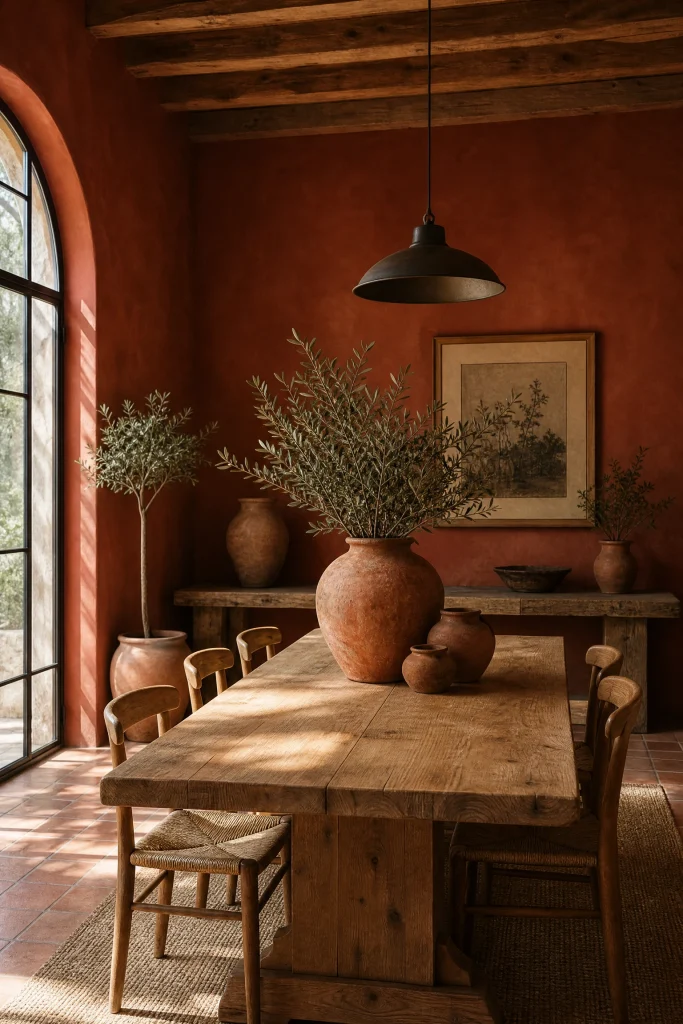
Painting dining walls in burnt sienna introduces an authentic, earth-baked terracotta shade that radiates welcoming rust-red warmth. Burnt sienna stimulates appetites naturally while creating a grounded, artisanal atmosphere for family dining. Coordinating burnt sienna walls with raw terracotta clay vessels, natural oak tables, and unbleached cotton textiles builds a cohesive, nature-inspired material story throughout the space. throughout dining hours.
DESIGNER ADVICE: Balance burnt sienna walls with greenery like potted olive trees to introduce fresh botanical contrast.
Blend Soft Dusty Rose Walls with Matte Black Iron Furniture Accents
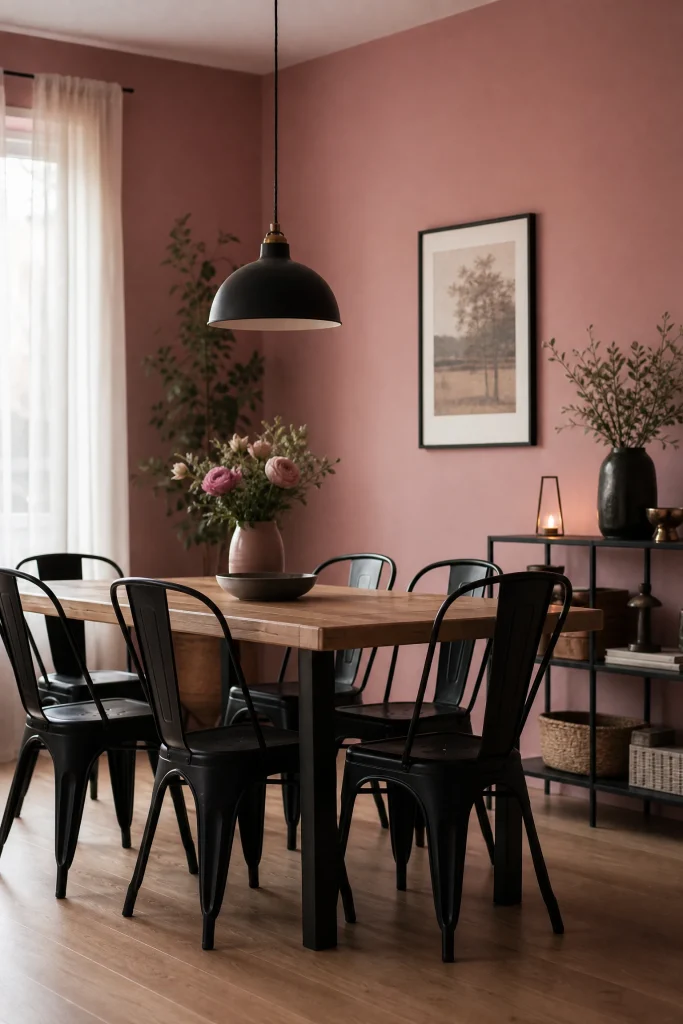
Coating dining room walls in soft dusty rose pink creates a gentle, romantic setting that flatters skin tones and casts a subtle warm glow across dinner tables. Dusty rose moves away from sugary pinks by incorporating muted grey undertones that feel mature and sophisticated. Adding matte black iron dining chairs and slim black light fixtures introduces crisp graphic structure that grounds the soft rose background.
STYLE SECRET: Incorporate black picture frames or black iron mirror borders to reinforce graphic black lines against dusty rose walls.
Pair Midnight Indigo Walls with Brushed Gold Sconces and Marble Tables
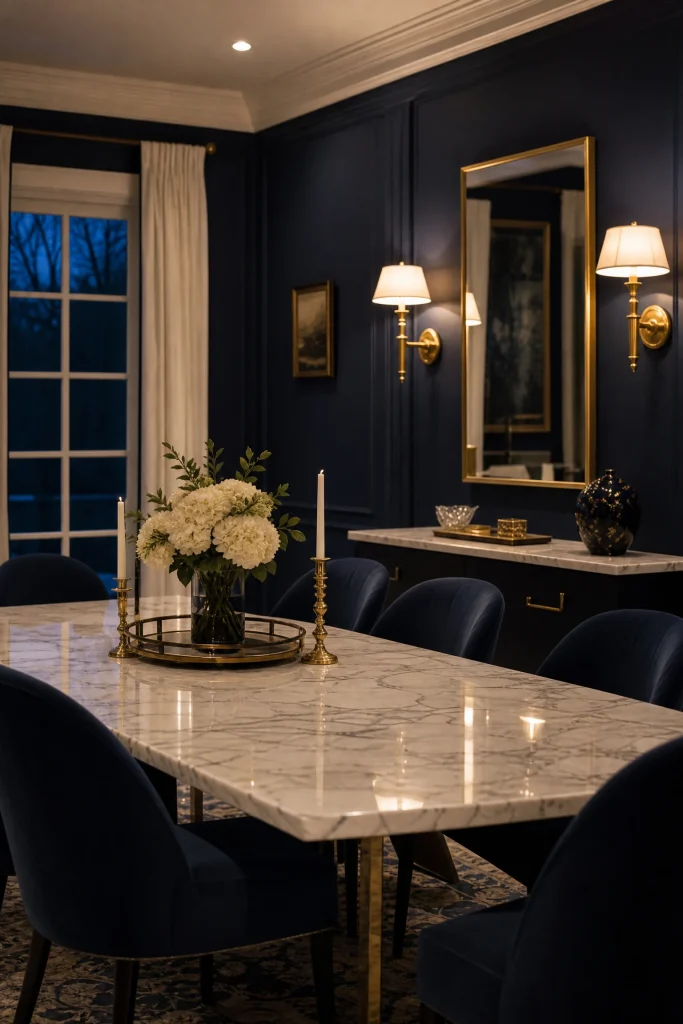
Painting dining walls in midnight indigo blue delivers dramatic evening elegance reminiscent of a starry night sky. The near-black depth of midnight indigo creates intense spatial intimacy, making dining tables feel like illuminated islands in formal entertaining rooms. Pairing indigo walls with white Carrara marble tables and brushed gold sconces produces striking material contrast that dazzles during dinner parties.
QUICK TIP: Install dimmer switches on all light fixtures in midnight indigo rooms to control atmospheric mood precisely.
Combine Warm Chestnut Brown Walls with Soft Oat Wool Rug Textures
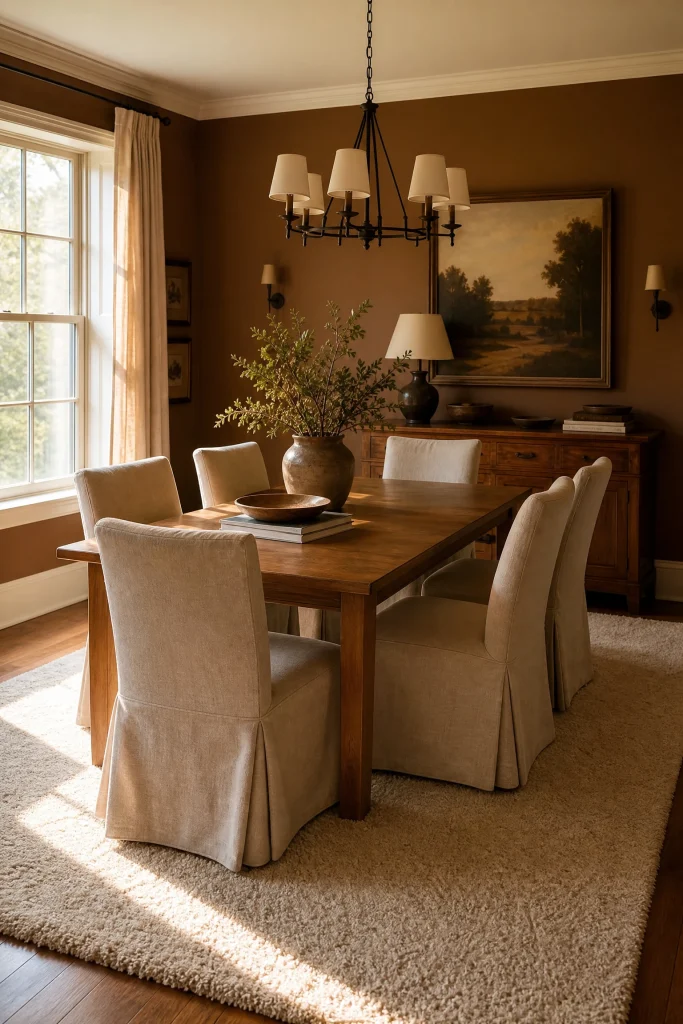
Coating dining room walls in warm chestnut brown paint introduces rich, cozy wood-like warmth that cocoon dinner guests in relaxed comfort. Chestnut brown contains warm red-yellow undertones that feel deeply inviting during autumn and winter family gatherings. Pairing chestnut walls with an oat-toned wool area rug and cream linen dining chair slipcovers softens the dark wood palette with tactile, casual elegance.
DESIGNER ADVICE: Layer woven wool and linen textiles generously in chestnut brown rooms to maintain softness and avoid a heavy look.
Juxtapose Clay Terracotta Walls with Smoked Oak Wood Dining Sets
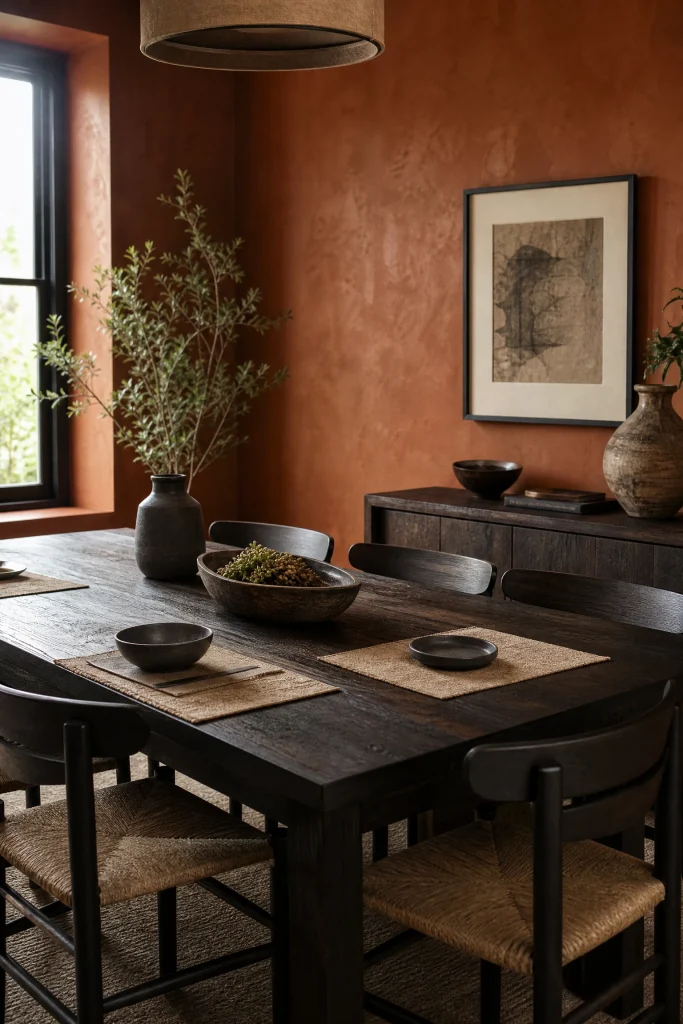
Painting dining room walls in a matte clay terracotta hue delivers rich earthen color with a modern, muted edge. The subtle brown-orange tone of clay terracotta grounds the space with natural Mediterranean character while serving as an organic backdrop. Pairing clay walls with a smoked oak dining set introduces dark, moody wood grain contrast that elevates casual clay paint into sophisticated architectural design.
STYLE SECRET: Choose smoked or fumed oak finishes over painted black wood to retain visible timber grain warmth alongside clay walls.
Brighten Soft Butter Yellow Walls with Crisp White Linen Table Settings
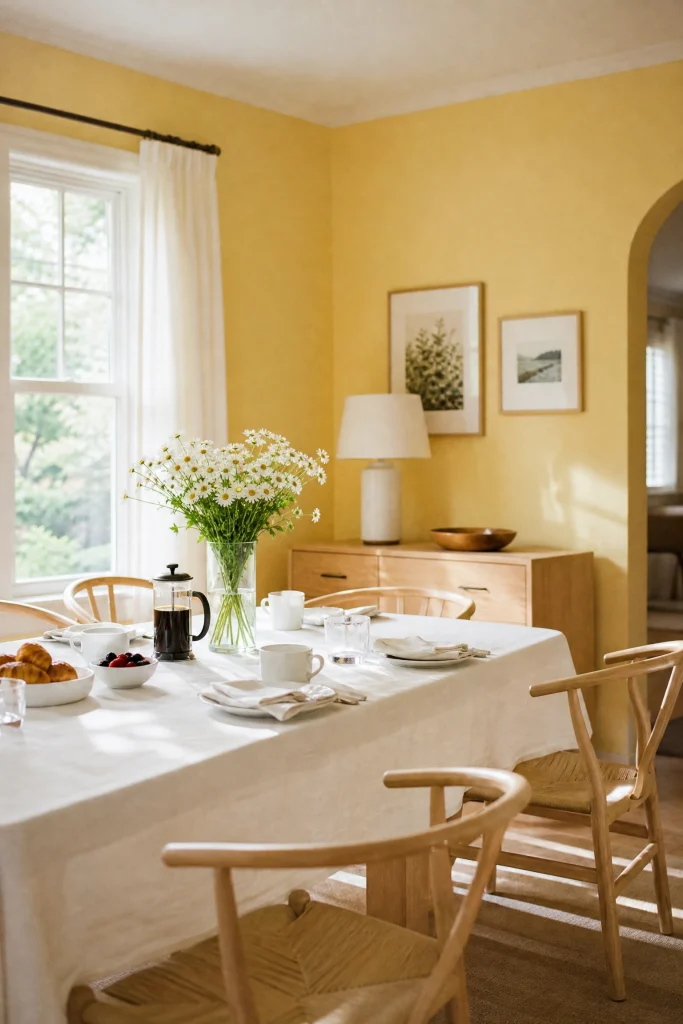
Coating dining walls in a soft butter yellow paint infuses the space with cheerful morning sunlight, creating an uplifting environment for breakfast and lunch gatherings. Butter yellow offers gentle warmth without the overwhelming intensity of primary yellows, keeping dining spaces feeling open and breezy. Crisp white linen tablecloths, white ceramic dishware, and light ash wood chairs complete a fresh, timeless country-inspired palette.
QUICK TIP: Select pale, cream-based butter yellow shades to prevent walls from appearing overly bright under direct artificial light.
Layer Forest Moss Green Walls with Raw Walnut Grain Table Surfaces
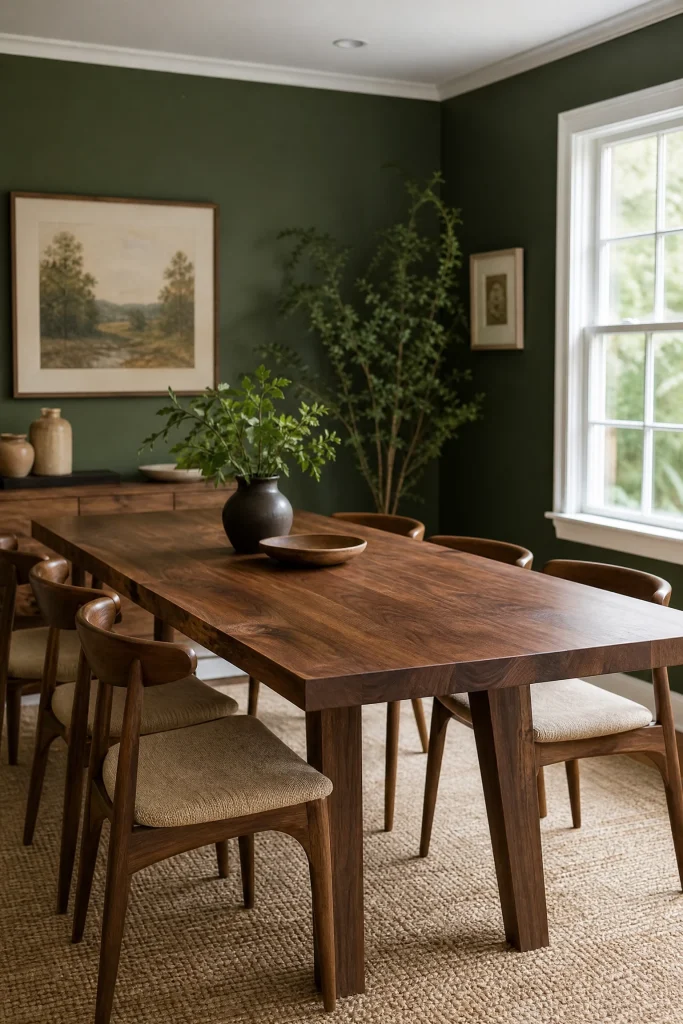
Painting dining walls in deep forest moss green brings rich botanical depth and organic tranquillity into modern dining rooms. The dark, nature-inspired green hue absorbs harsh glare while grounding the room with forest-like calm during family meals. Pairing moss green walls with a raw walnut dining table showcases dark chocolate wood grain against rich green surfaces, establishing a timeless natural aesthetic.
MAINTENANCE RULE: Clean forest green walls using soft damp cloths to prevent water spot marks on saturated matte paint surfaces.
Harmonize Warm Taupe Walls with Textured Bouclé Off-White Upholstery
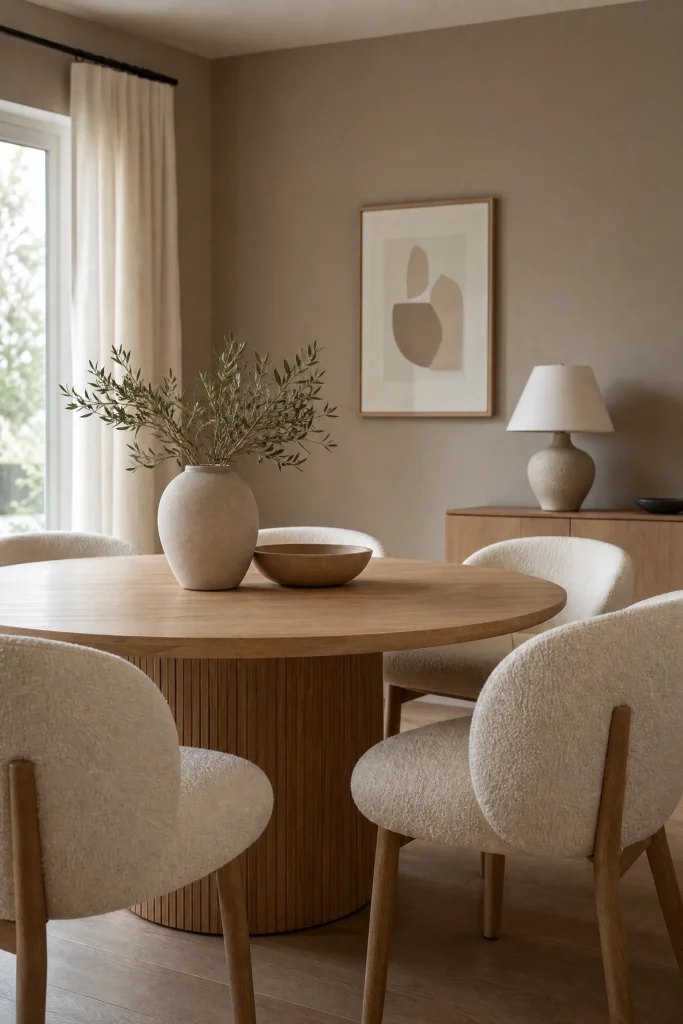
Applying warm taupe paint across dining room walls creates a sophisticated neutral envelope that feels warmer than grey and more modern than tan. Taupe provides an elegant, low-contrast backdrop that allows architectural lighting and furniture silhouettes to take center stage. Pairing taupe walls with textured off-white bouclé upholstered dining chairs adds tactile luxury that elevates minimalist dining spaces.
DESIGNER ADVICE: Incorporate brushed brass accent lighting to highlight the nubby texture of bouclé upholstery against taupe walls.
Pair Deep Oxblood Red Walls with Dark Espresso Timber Furniture
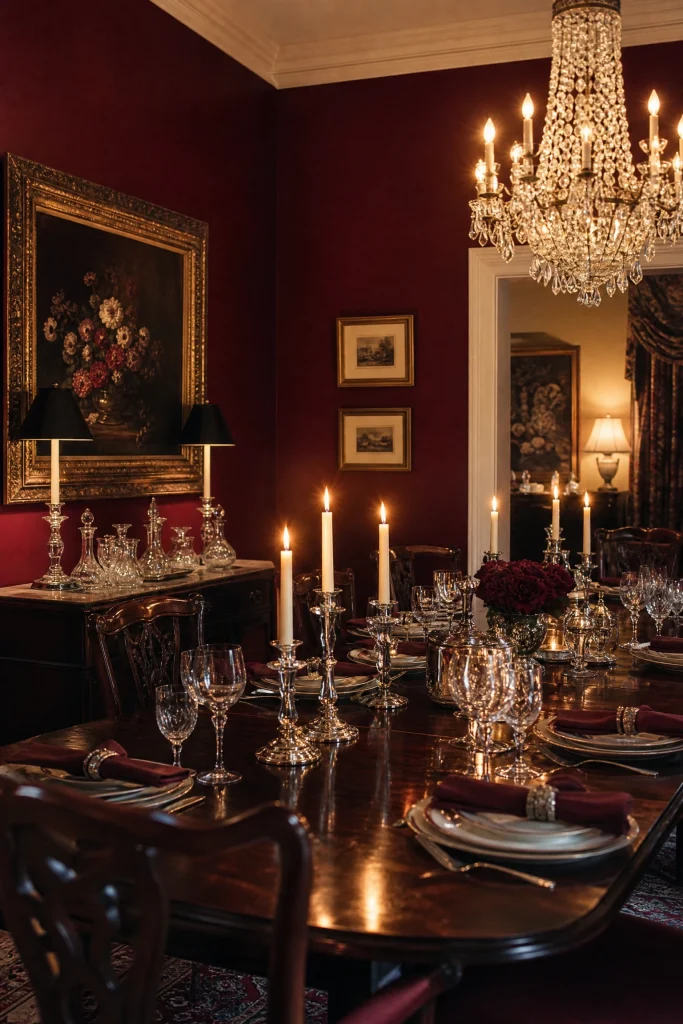
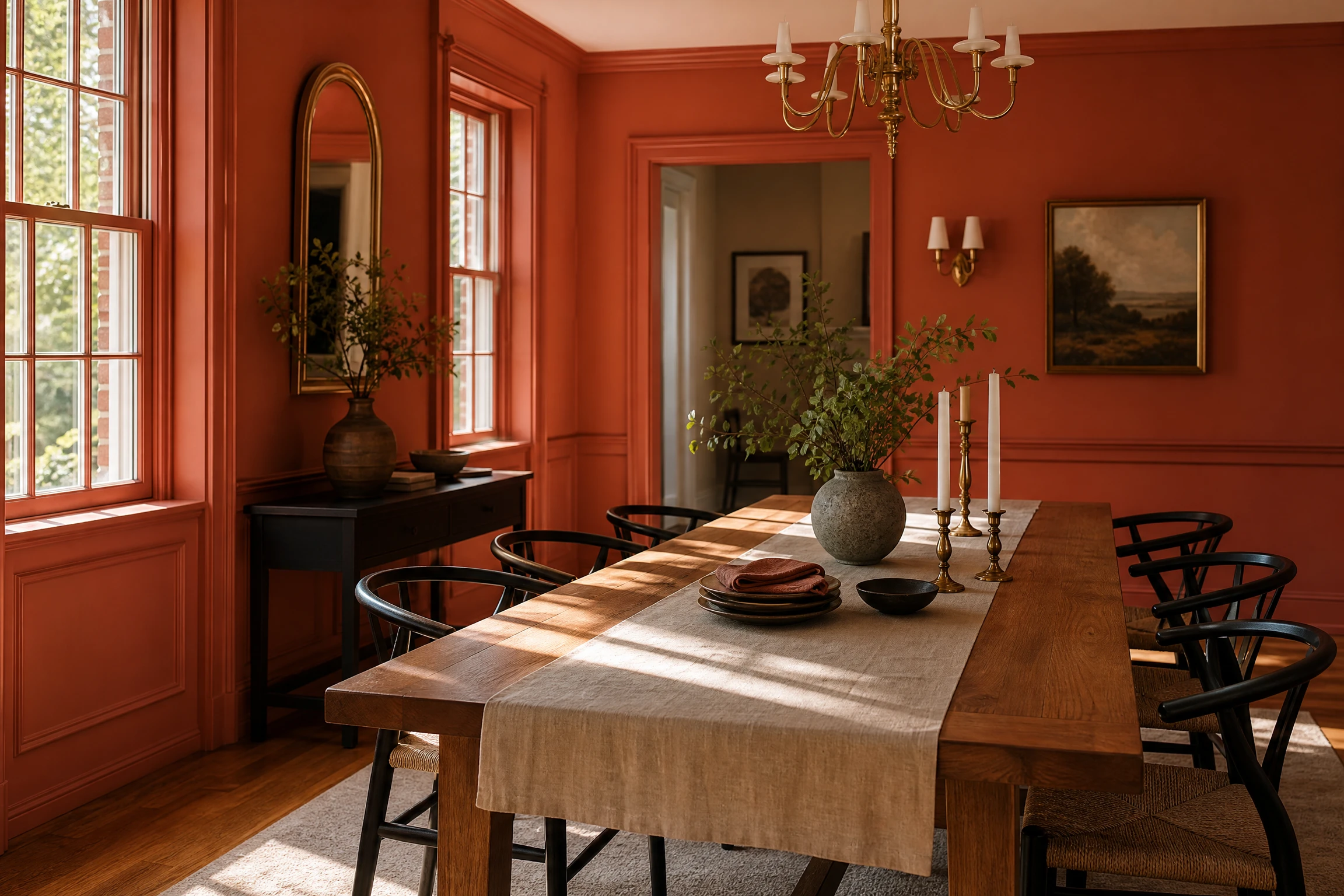
Painting dining walls in deep oxblood red delivers dramatic, moody warmth with historic grandeur suitable for evening dinner entertaining. The dark, wine-infused red hue creates an intimate atmosphere that enhances candlelight and encourages long post-dinner conversations. Pairing oxblood walls with dark espresso timber tables and chairs anchors the room with solemn, formal weight and luxurious depth. in well-appointed dining rooms.
STYLE SECRET: Incorporate crystal glassware and silver candleholders to reflect bright sparkle against dark oxblood red walls.
Softened Bisque Ivory Walls with Light Ash Wood Dining Sets
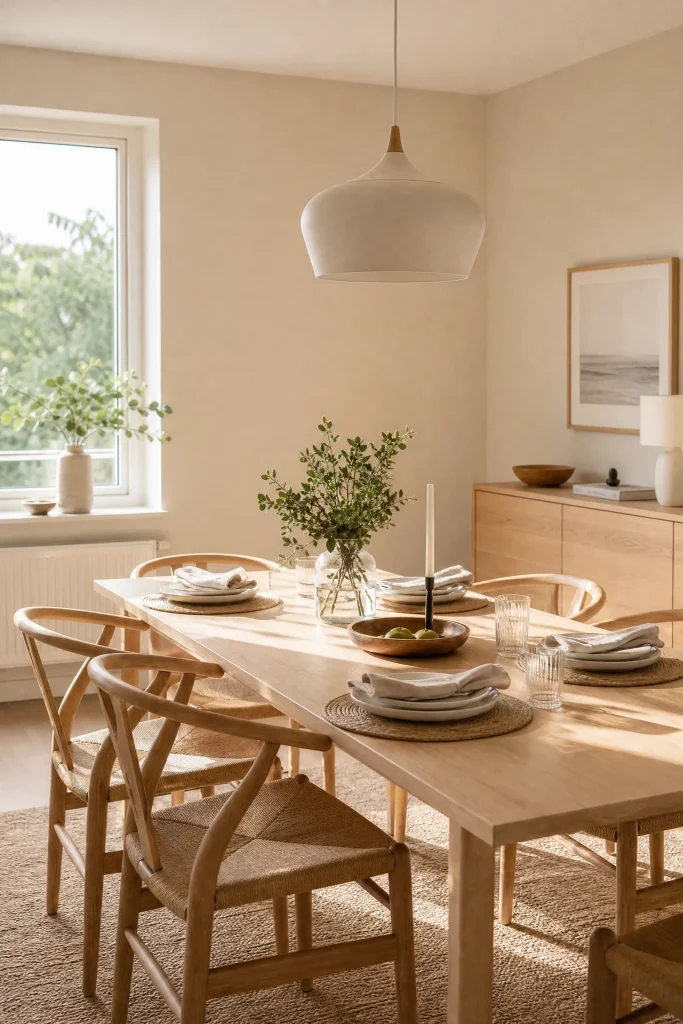
Coating dining walls in a softened bisque ivory paint creates a warm, luminous foundation that feels airier than traditional beige while remaining cozy. Bisque ivory reflects natural daylight gently, brightening small dining areas without the cold sterility of stark white paint. Pairing bisque walls with light ash wood dining tables and blonde Scandinavian furniture keeps the color scheme light, clean, and organic.
QUICK TIP: Use matte or velvet sheen paint for bisque ivory walls to create a soft, chalky texture under daylight.
Combine Soft Mineral Blue Walls with Pale Birch and Linen Accents
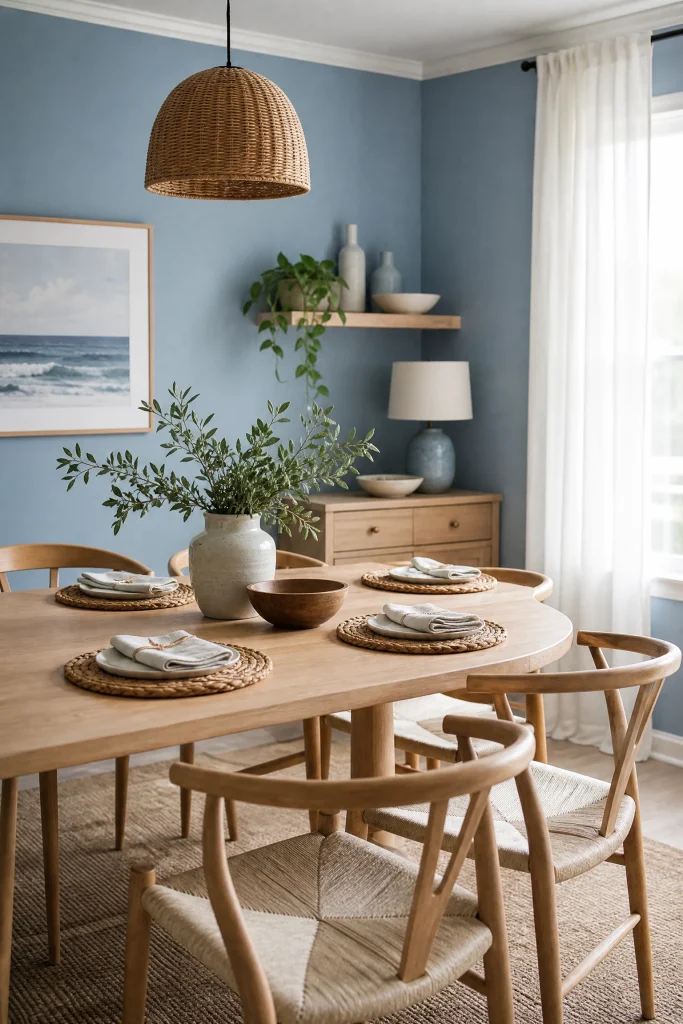
Painting dining room walls in a soft mineral blue introduces a calming, coastal-inspired backdrop with subtle grey-green undertones. Mineral blue recedes visually to expand compact dining rooms while casting a tranquil atmosphere across meal gatherings. Pairing mineral blue walls with pale birch wood furniture and unbleached linen seat cushions creates a light, Scandinavian coastal look that feels fresh year-round.
DESIGNER ADVICE: Add warm woven jute or rattan accessories to keep mineral blue rooms from feeling overly cool.
Layer Rich Espresso Brown Walls with Warm Caramel Leather Chairs
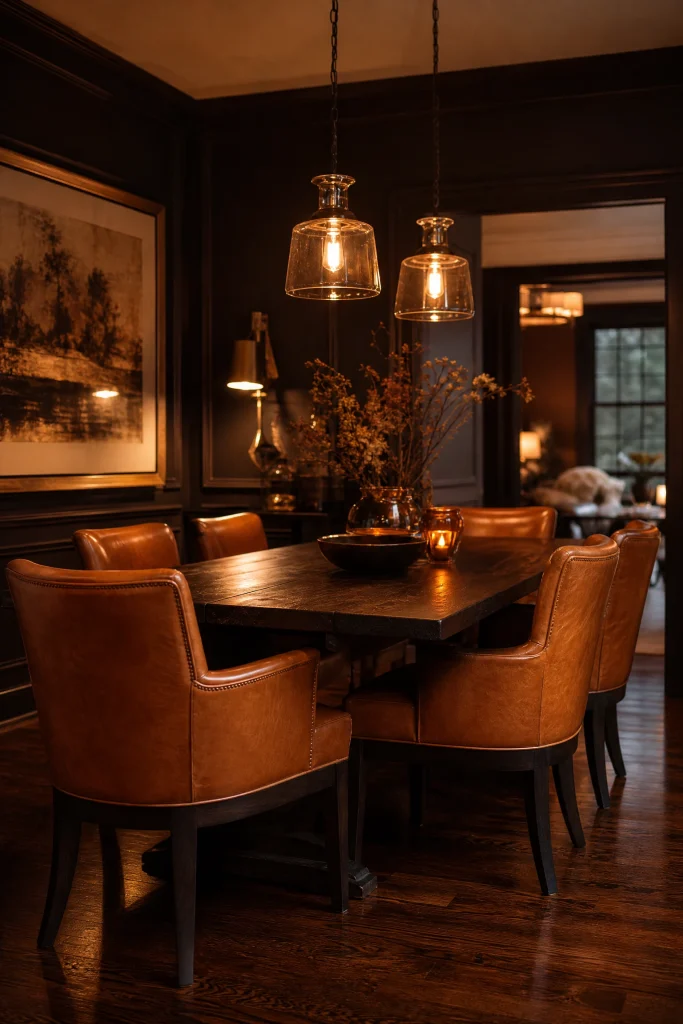
Coating dining room walls in rich espresso brown paint establishes a dark, cocooning ambiance reminiscent of private club dining rooms. The deep roasted-coffee hue absorbs room boundaries, focusing all visual attention onto the dining table and guests. Pairing espresso walls with warm caramel leather dining chairs introduces rich amber leather tones that glow under warm evening pendant lighting.
STYLE SECRET: Use supple aniline leather for dining chairs so natural grain and patina enhance the rich espresso background over time.
Contrast Dusty Sage Green Walls with Honed White Carrara Marble
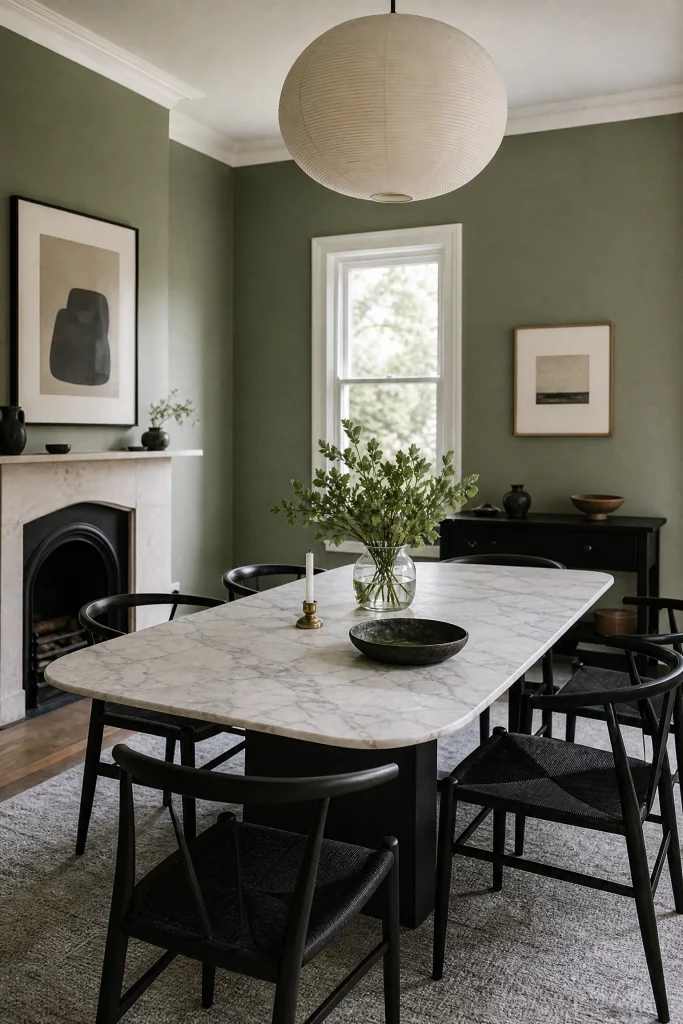
Painting dining walls in a dusty sage green hue provides an elegant, herbal neutral background that bridges modern and traditional styles effortlessly. Dusty sage contains subtle grey undertones that maintain sophistication under artificial evening lighting. Pairing dusty sage walls with a honed white Carrara marble dining table creates refined material contrast, blending cool mineral marble with organic botanical wall color.
QUICK TIP: Choose honed marble surfaces over polished marble to reduce glare under overhead dining chandeliers.
Pair Deep Spruce Green Walls with Aged Copper Light Fixtures
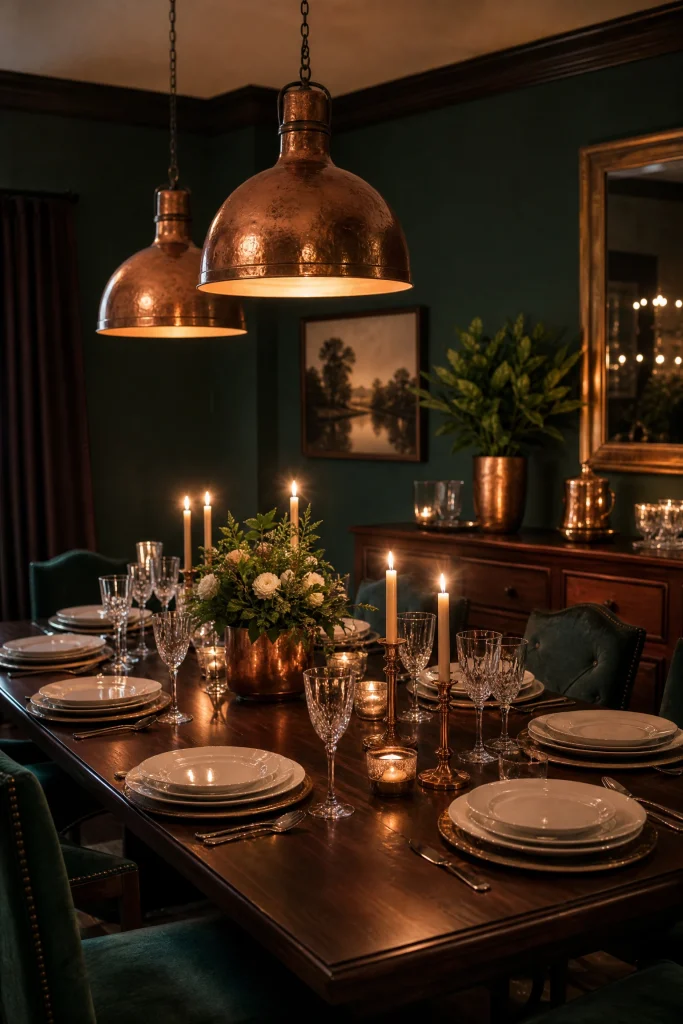
Coating dining room walls in deep spruce green delivers rich forest intensity with a cool, aristocratic character suitable for formal spaces. Spruce green provides a dramatic dark backdrop that makes table centerpieces and white dinnerware stand out vividly. Pairing spruce green walls with aged copper pendant lights introduces warm reddish-orange metallic contrast that glows beautifully during dinner parties.
MAINTENANCE RULE: Wipe aged copper light fixtures with dry flannel cloths to maintain patina without stripping protective metal finishes.
Blend Warm Terracotta Sienna Walls with Woven Jute Fiber Floor Rugs
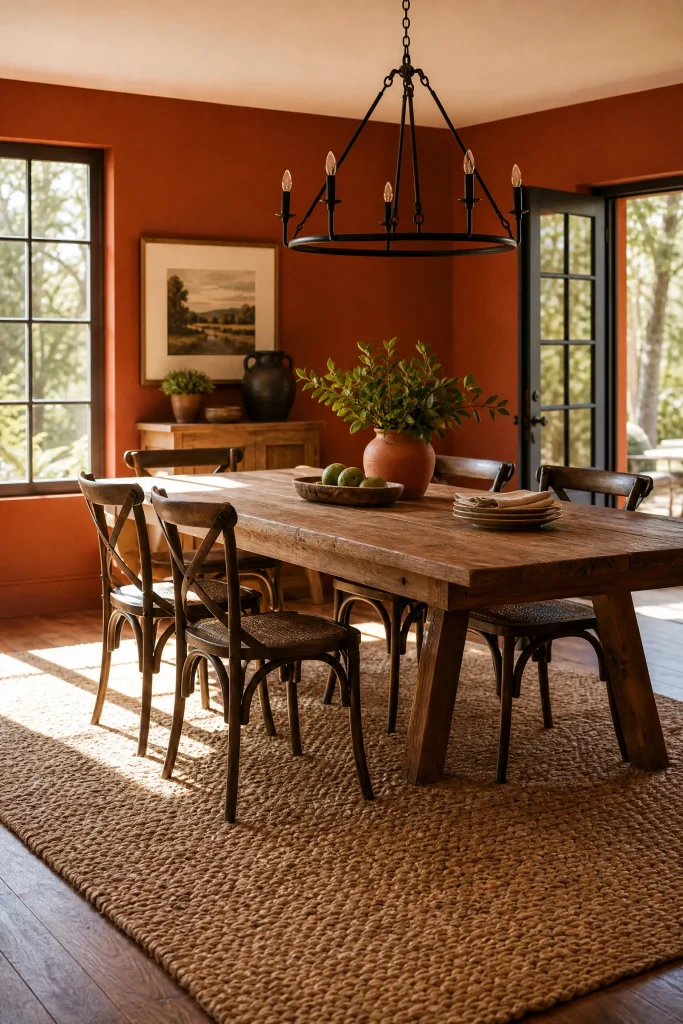
Painting dining walls in a warm terracotta sienna shade infuses the space with sun-baked Mediterranean warmth and rustic artisanal character. Terracotta sienna acts as an inviting color anchor that makes meal gatherings feel informal and welcoming. Pairing terracotta walls with a thick woven jute fiber area rug enhances organic earth textures underfoot, completing a harmonious nature-inspired dining room foundation.
DESIGNER ADVICE: Keep window treatments simple and sheer in terracotta rooms to allow natural sunlight to illuminate warm wall tones fully.
Unify Soft Pumice Gray Walls with Honeyed Teak Wood Furniture
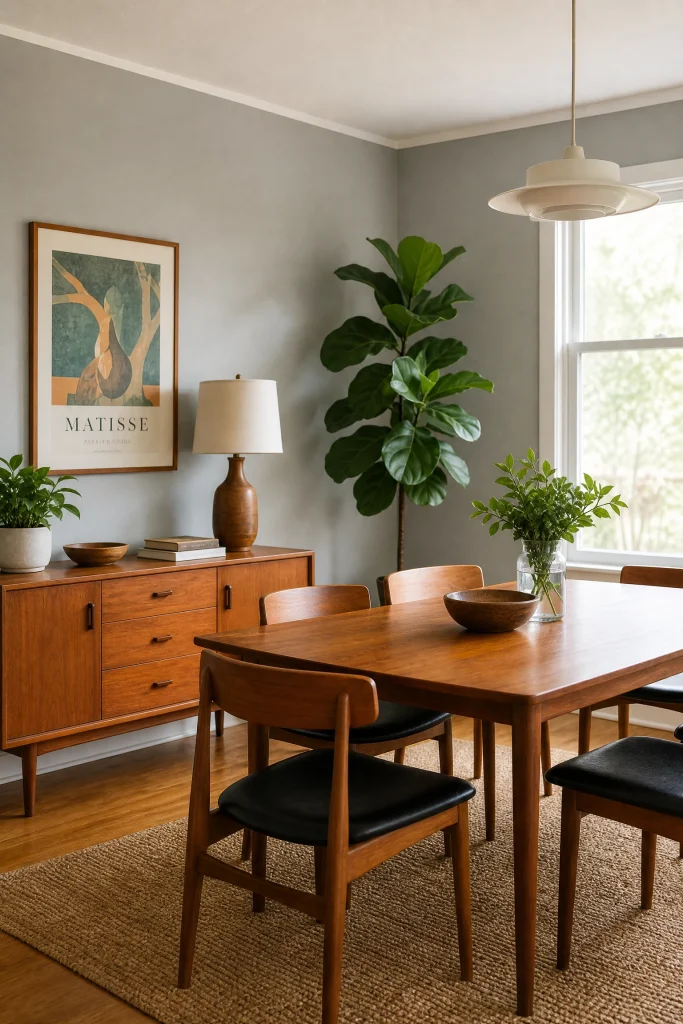
Applying soft pumice gray paint across dining walls establishes a clean, modern mineral backdrop that feels light and balanced. Pumice gray contains subtle warm sand undertones, avoiding the cold blue tone of traditional cement grays. Pairing pumice walls with honeyed teak wood dining tables and chairs introduces rich golden timber warmth that enlivens the quiet grey background effortlessly.
QUICK TIP: Incorporate green foliage plants like fiddle-leaf figs to add vibrant natural color spots against pumice gray walls.
Drench Dining Walls in Saturated Ochre Yellow with Raw Linen Textures
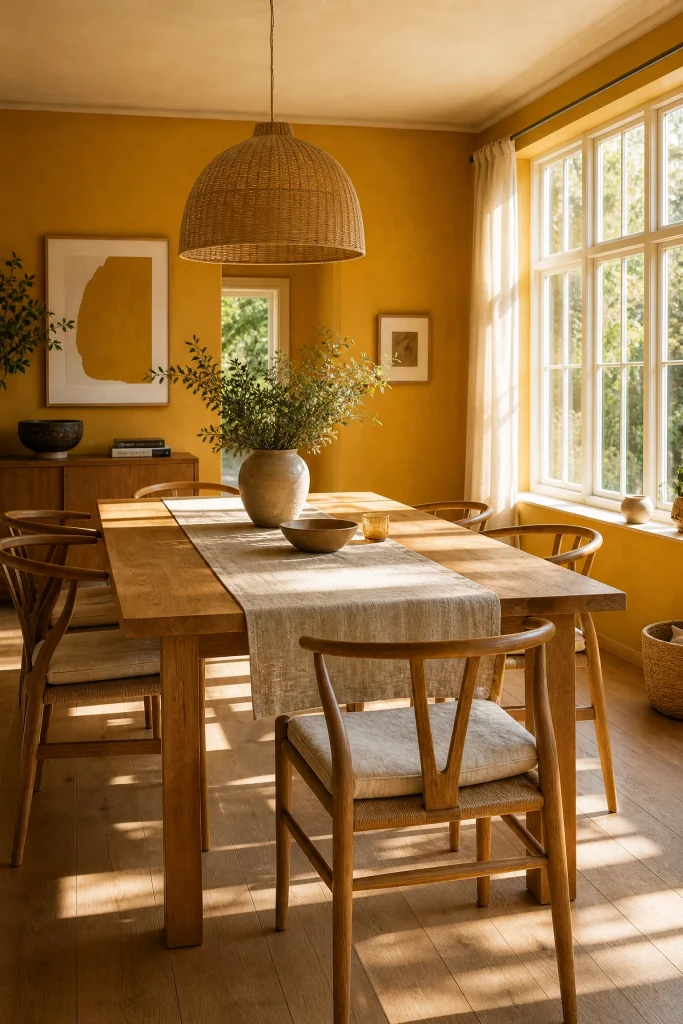
Painting dining room walls and trim in a saturated ochre yellow creates an energizing, cheerful environment for family dining gatherings. Saturated ochre yellow captures natural light dynamically, filling the space with radiant warmth throughout the day. Pairing ochre walls with raw unbleached linen seat cushions and natural oak furniture grounds the vibrant wall color with tactile, organic calm.
STYLE SECRET: Use unbleached linen with natural flax flecks to add subtle organic texture alongside saturated ochre paint.
Conclusion
Dining room color schemes establish the emotional and visual foundation for shared meals, formal gatherings, and daily family dining routines. From rich color-drenched terracotta and deep emerald green to serene sage and warm mushroom greige, selecting complementary paint tones and material pairings creates memorable architectural spaces. These twenty-eight research-backed color strategies ensure your dining room remains a harmonious, inviting backdrop for years of cherished gatherings.