Flooring Ideas for Renters That Start With Your Feet
Stand on your floor in bare feet for ten seconds. Cold, hard, loud, slippery, or just plain ugly, your feet already know what is wrong with it.
This article does not start with a shop list. It starts with that ten second test, because the fix for a cold floor is not the fix for a slippery one.
Find your complaint below, then steal the ideas in that chapter. Every one of them comes up clean when you move out, and none of them needs a new floor.
Which Floor Fix Is Yours?
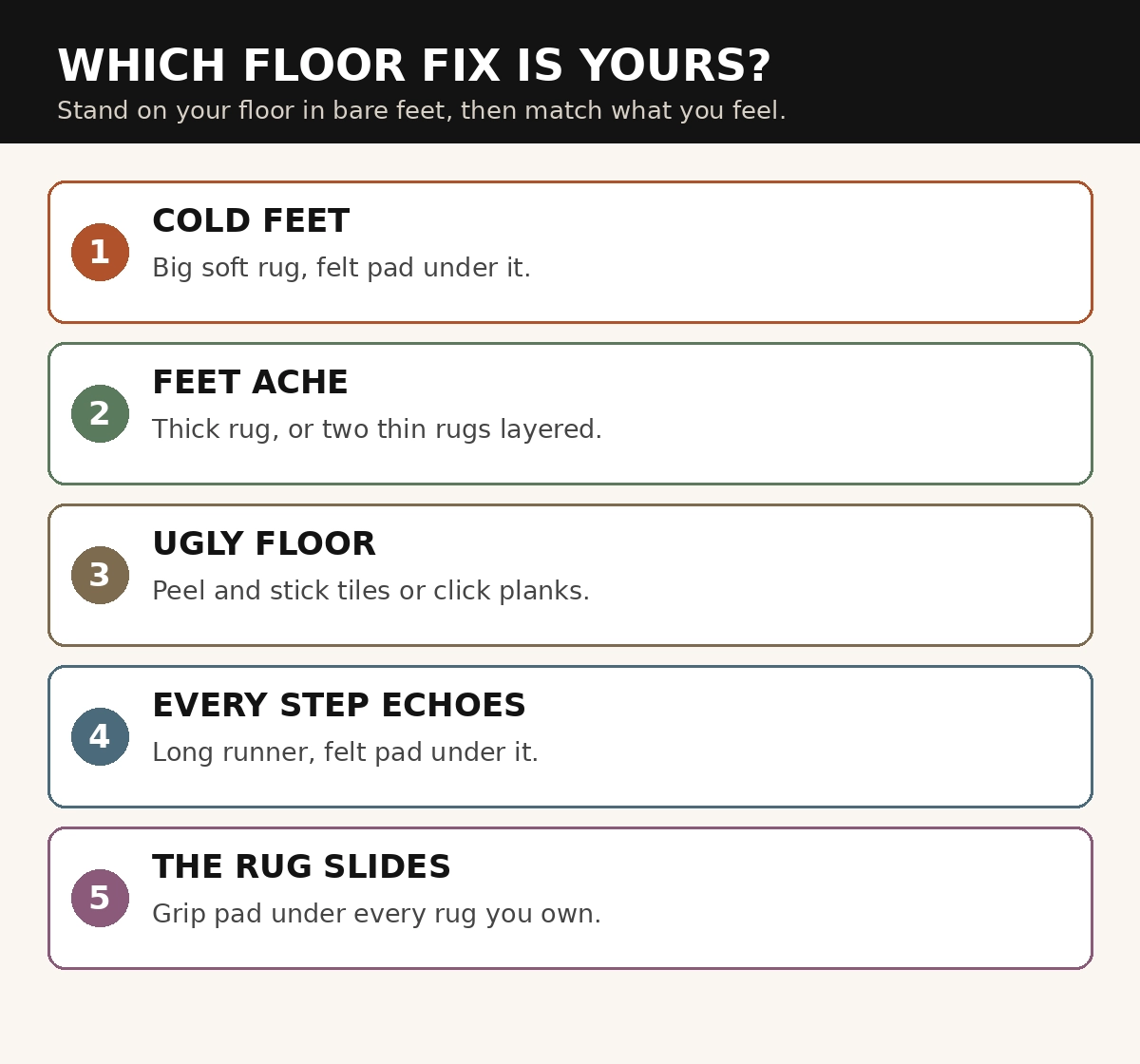
1. Cold Underfoot
You know it is this one if your feet flinch the second they touch the floor in the morning.
A big soft rug under the bed
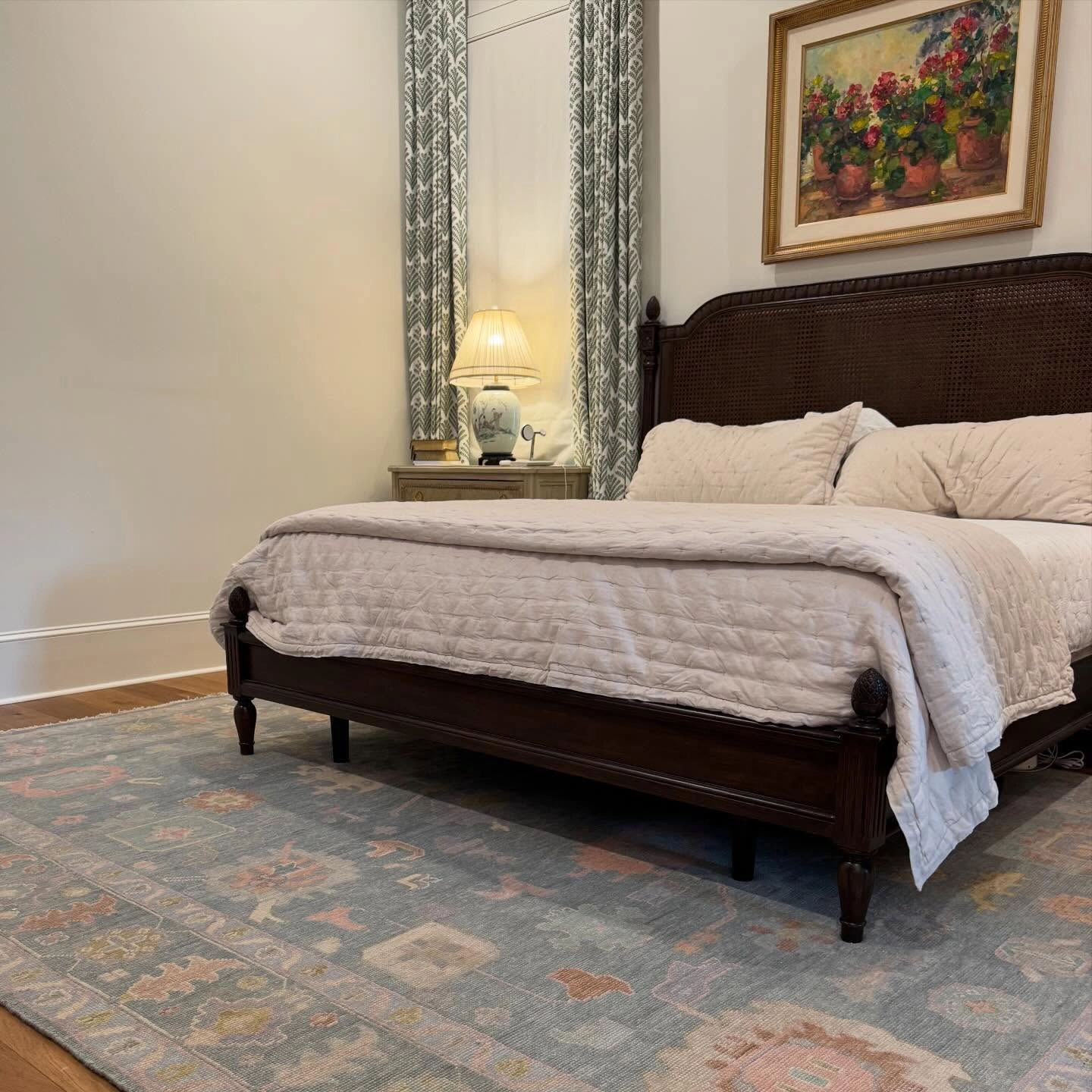
Photo: @elizabethjaneoushak on Instagram
The first step of the morning should land on something soft, not cold wood. A big rug beside the bed fixes that in five minutes, and it should reach past both sides of the bed so both feet land on it. Pick a low pile rug so the bedroom door still clears it, and a washable one if you can find it, because bedroom rugs catch dust fast. Our guide to bedroom ideas for renters has more ways to warm a rented bedroom without a single nail.
Quick Tip: Measure from the bed to the door first, so the rug never blocks the swing.
A thick rug on cold stone
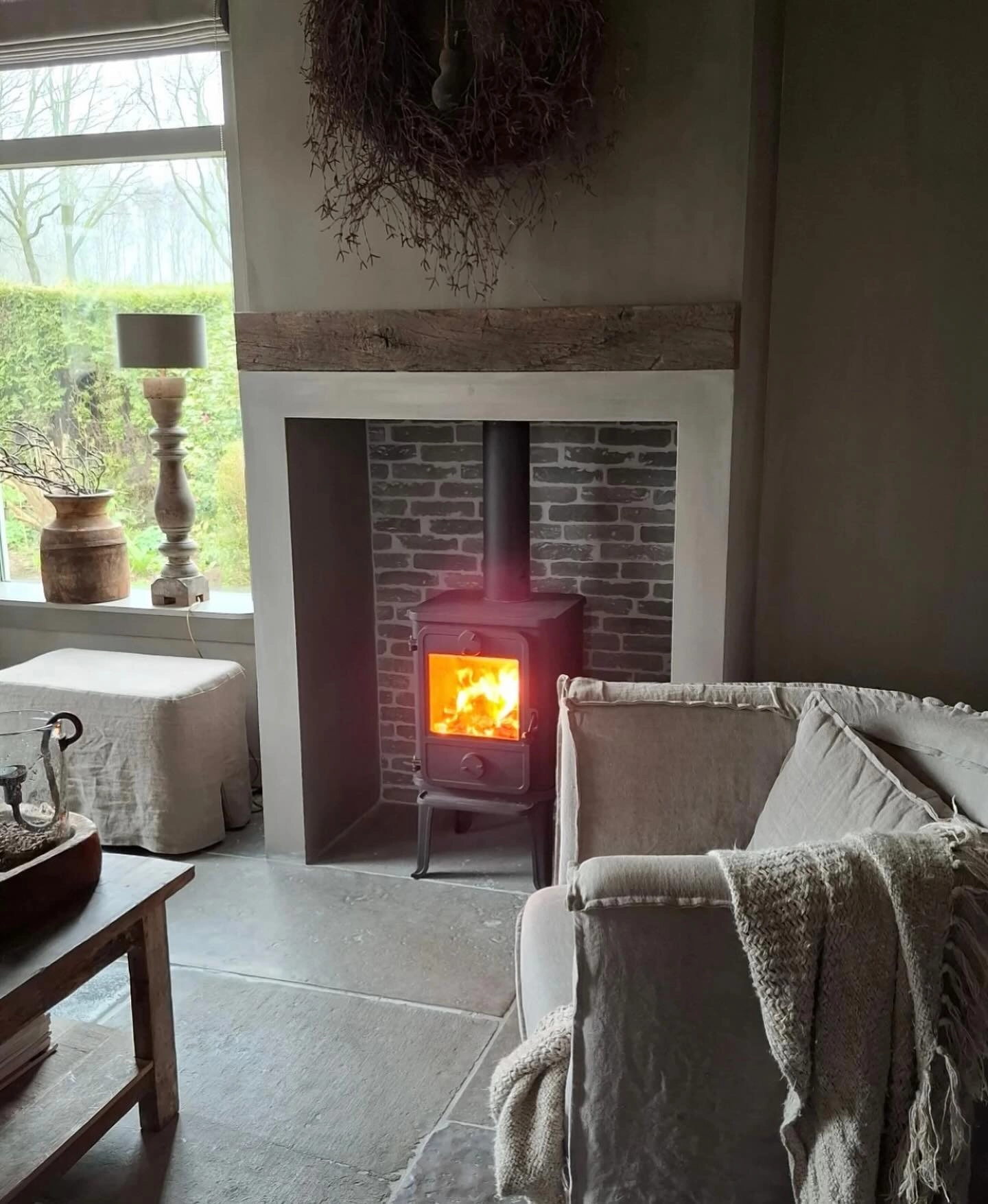
Photo: @raw_stones on Instagram
Stone floors stay cold all day, even in summer, and a thick rug is the fastest fix. Put the rug where your feet rest, not under the whole sofa, because the warm spot is what matters. Wool or thick cotton holds warmth best, and a felt pad underneath adds one more layer between your feet and the stone. Keep the rug a little smaller than the room, so the stone still shows at the edges and the room keeps its calm look.
Good to Know: A rug pad under a rug on stone also stops it sliding on the smooth surface.
A big pale rug that warms the whole room
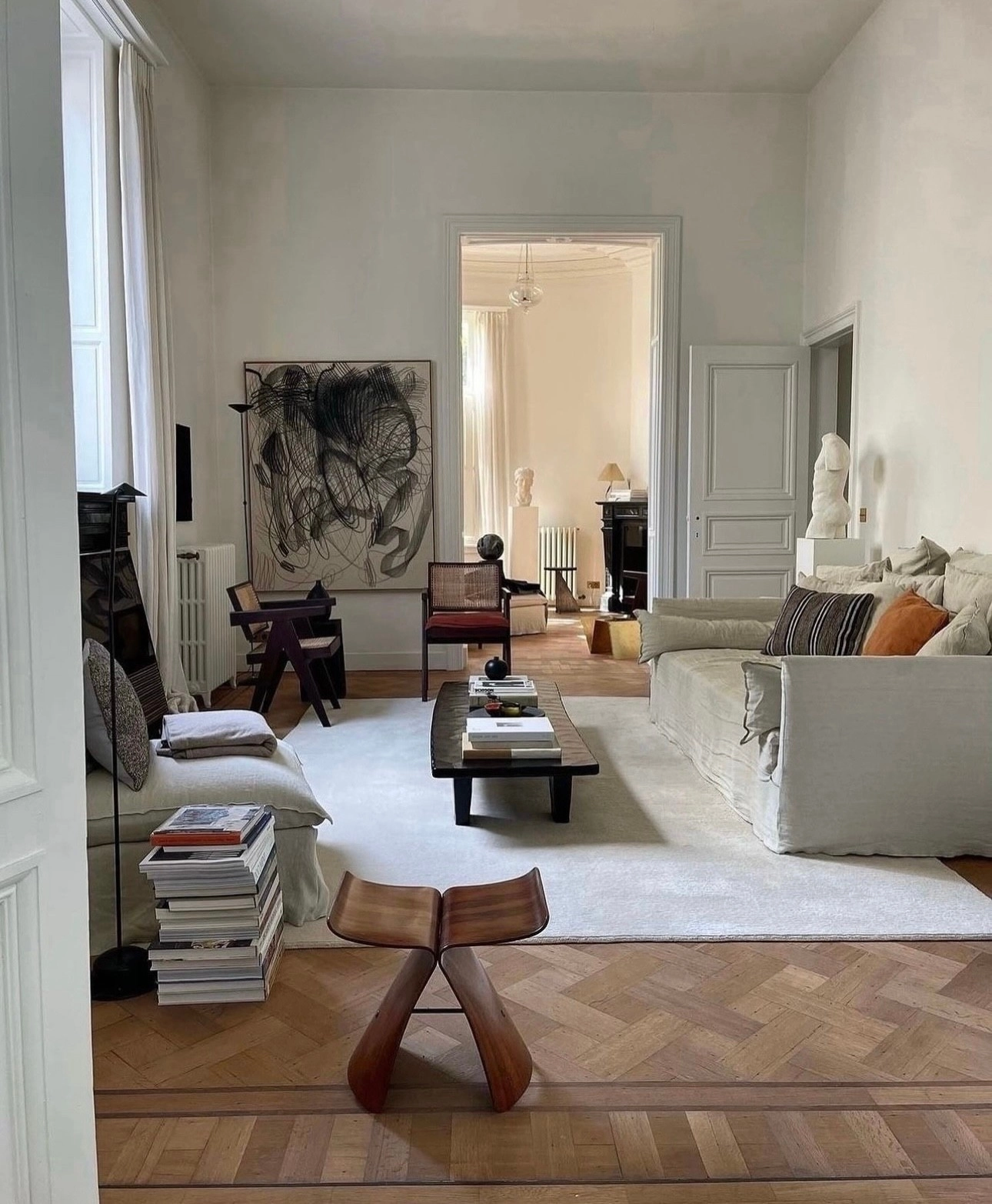
Photo: @altforliving on Instagram
One big rug beats three small ones when the whole room feels cold. It should reach under the front legs of the sofa and past the coffee table, so your feet never touch bare floor in the seating area. A pale color keeps the room bright while the thick pile keeps your feet warm. Pick a flat weave if you have chairs that move a lot, because thick pile makes chairs hard to pull out.
Try This: Lay the rug down before you buy it, if the shop lets you, and walk on it in bare feet.
Dark wood that feels warm, not cold
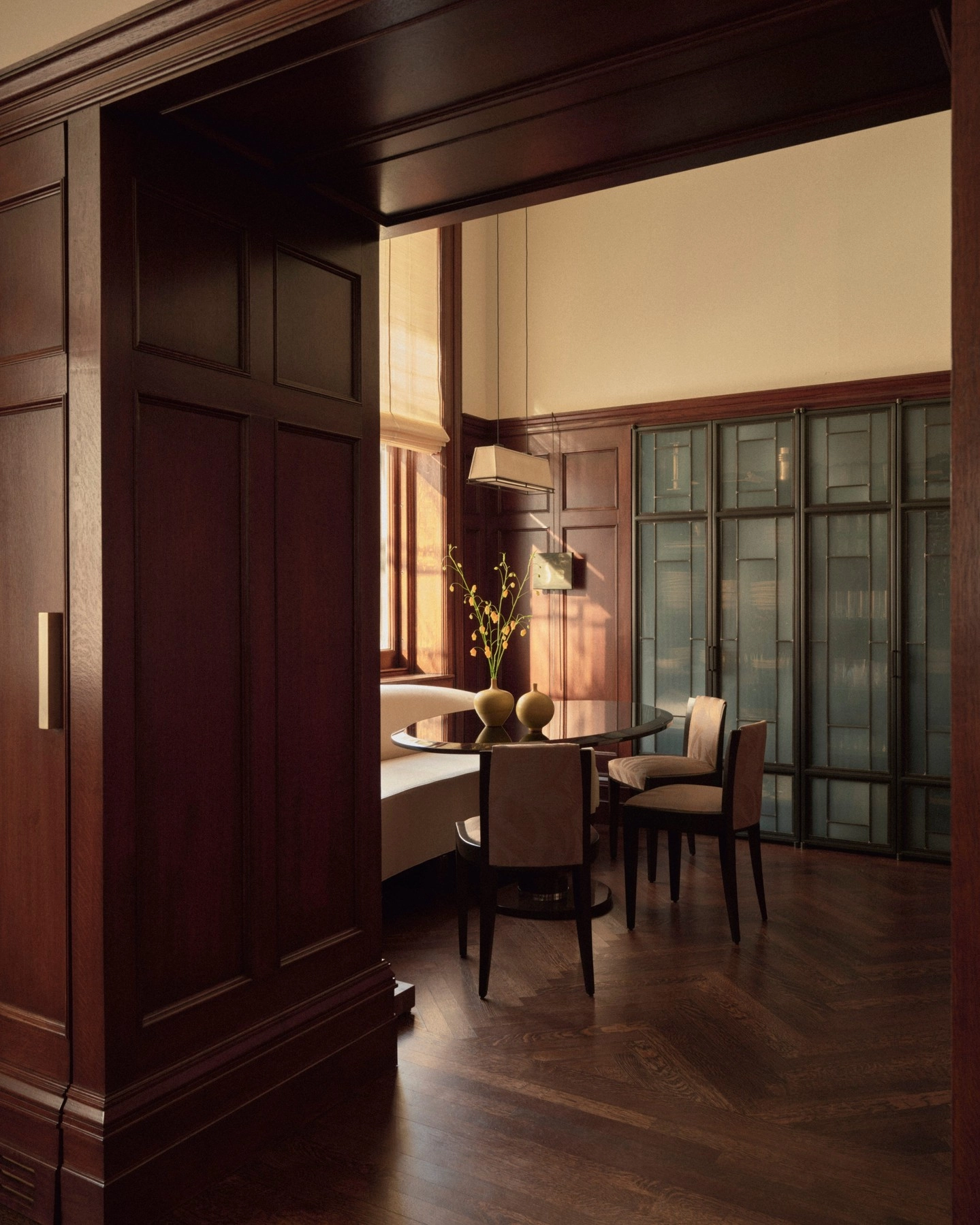
Photo: @vogueliving on Instagram
Dark wood-look planks make a room feel warmer than pale tile ever will. Click-lock planks snap together and float over the old floor with no glue, so the old floor stays safe underneath. Dark tones hide marks and dust better than pale ones, which helps in a dining room. Buy a few extra planks for cuts at the edges, and keep the spares in a cupboard for the next flat.
Save Money: Cover one room first, not the whole flat, and see if you love it before you buy more.
A small red rug on cold stone
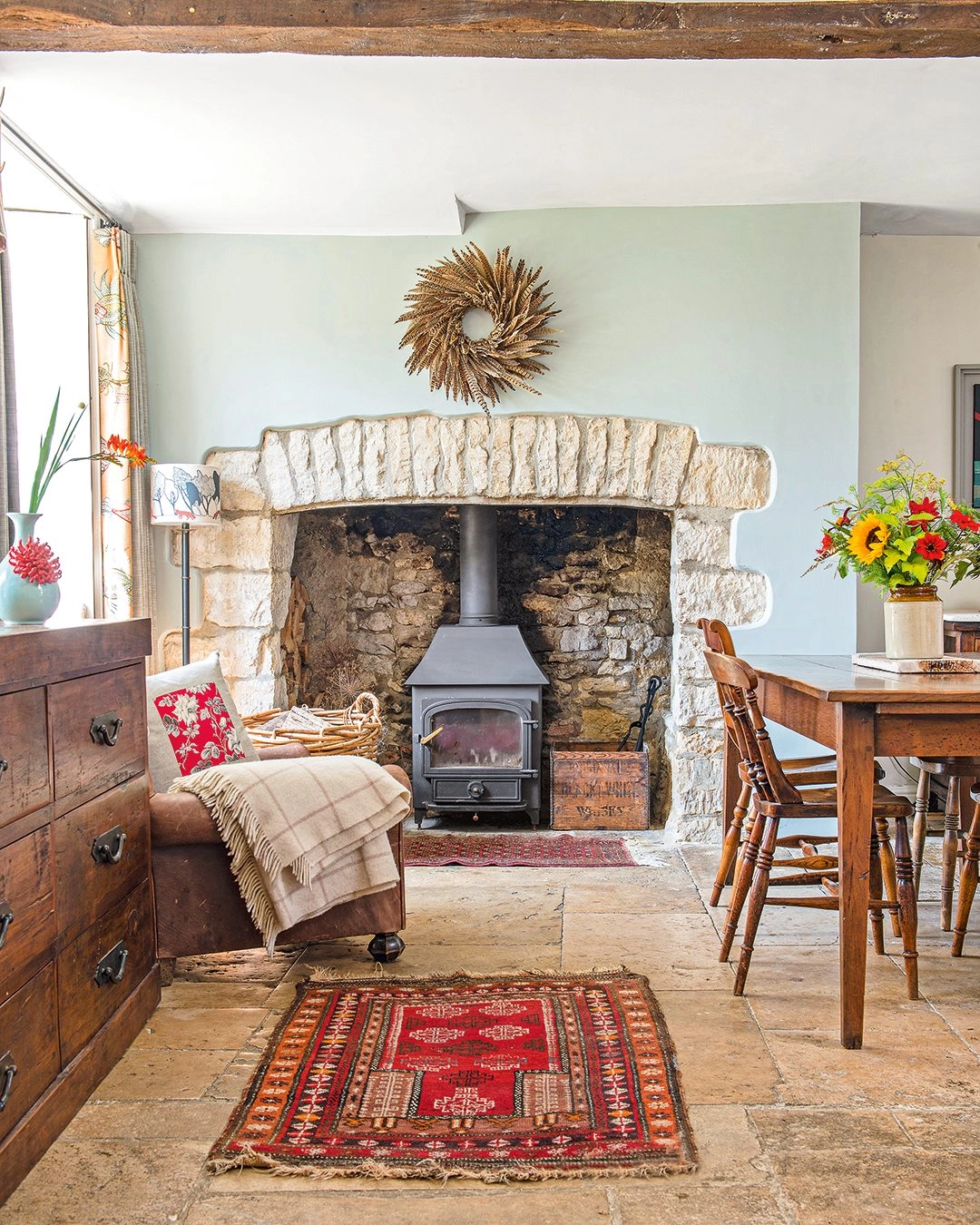
Photo: @period_living on Instagram
A small rug is enough when the cold spot is one place, not the whole room. Put it where you stand, by the stove or the sink, and let the rest of the stone floor stay bare. A strong pattern hides crumbs and ash, which is handy near a fire. Pick a rug you can shake outside and wash in a machine, because a small rug by a stove gets dirty fast.
Small Win: A small rug costs little, fits in a washing machine, and warms the exact spot you stand.
A soft rug in the room you use most
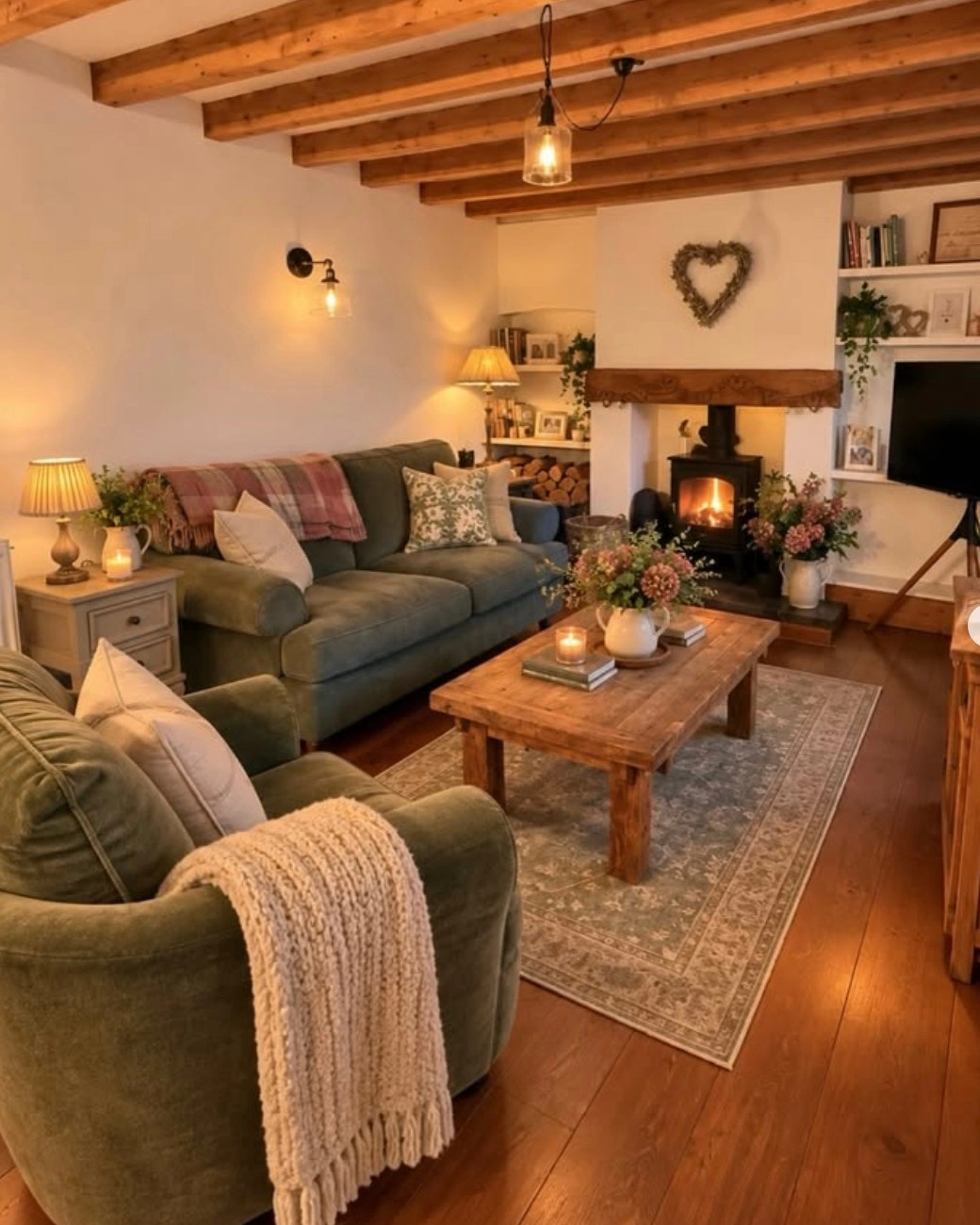
Photo: @heugahinteriorsltd on Instagram
Warm the room you sit in every night first, and leave the rest for later. A soft rug under the coffee table is where bare feet land when you sit down with a cup of tea. Layer a thin felt pad under it for extra warmth, and pick a muted pattern that hides crumbs between cleans. This is the cheapest warm floor you can buy, and it moves with you when you leave.
Heads Up: A rug that is too small looks like a mat. Go one size bigger than you think you need.
Start with this one: A big rug beside the bed, because it is the cheapest warm floor you can buy.
2. Hard Underfoot
You know it is this one if your feet ache by the end of the day, even though you never left the house.
A jute rug over patterned wood
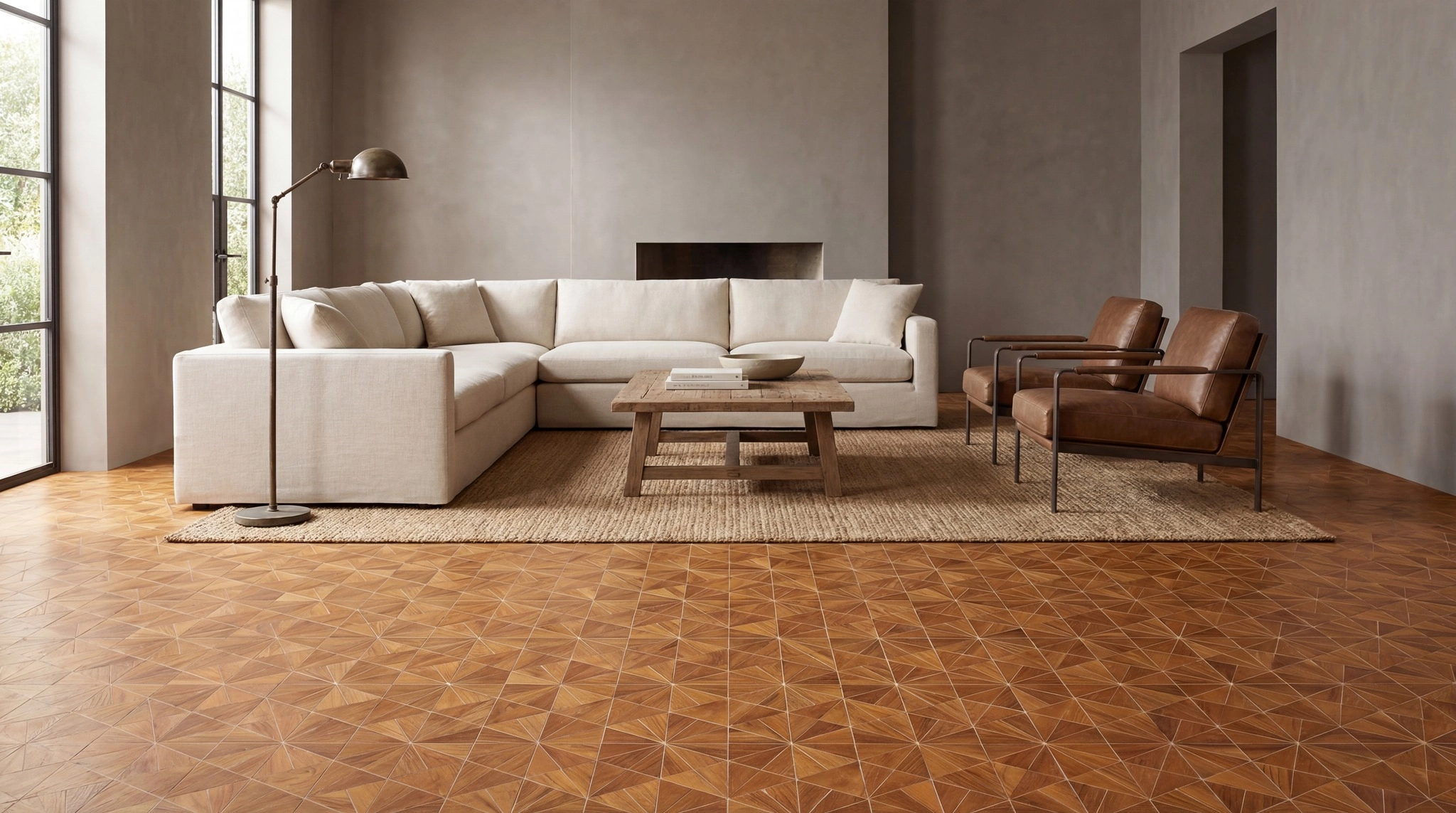
Photo: @indoteakdesign on Instagram
Hard wood hurts bare feet after a long day, and jute is firm but kinder than bare wood. This patterned wood floor looks rich, and a flat jute rug softens it without hiding the pattern at the edges. Use a felt pad under the jute so it feels softer and stays put, because jute slides on smooth wood. Keep the rug clear of the door swing, and shake it outside once a week.
Renter Note: Jute is tough and cheap, but it sheds a little at first, so vacuum it twice in week one.
One rug big enough to cover the room
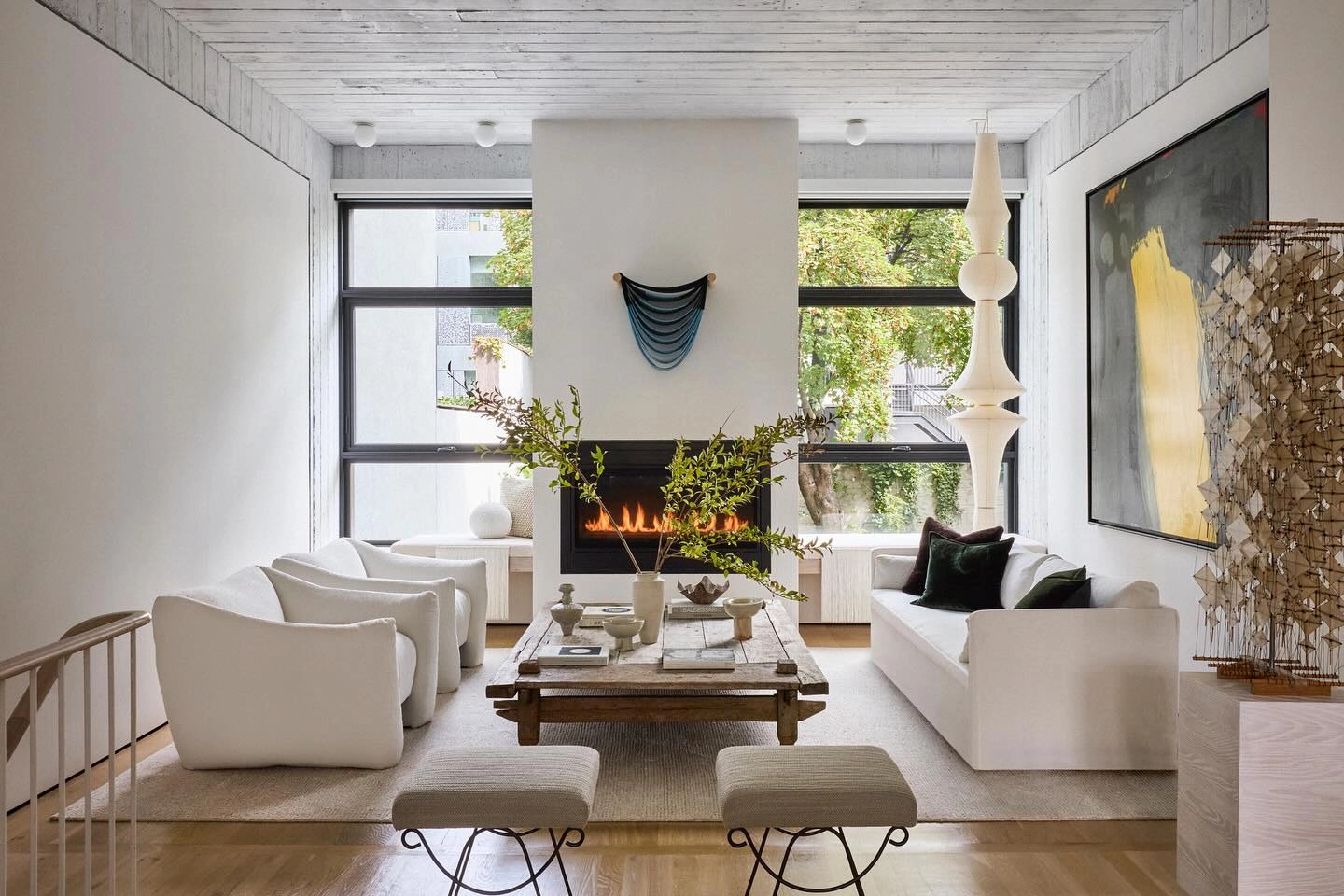
Photo: @changoandco on Instagram
A rug that covers most of the floor turns hard wood into a soft room. Leave a small border of wood showing at the edges, so the room still looks wide and the rug looks placed, not dumped. Low pile is easy to clean and chairs slide on it without a fight. A light color keeps a bright room feeling open, while the pile does the soft work under your feet.
Quick Tip: An eight by ten rug fits most living rooms. Measure your sofa first, then buy the rug.
A bold color rug on pale wood
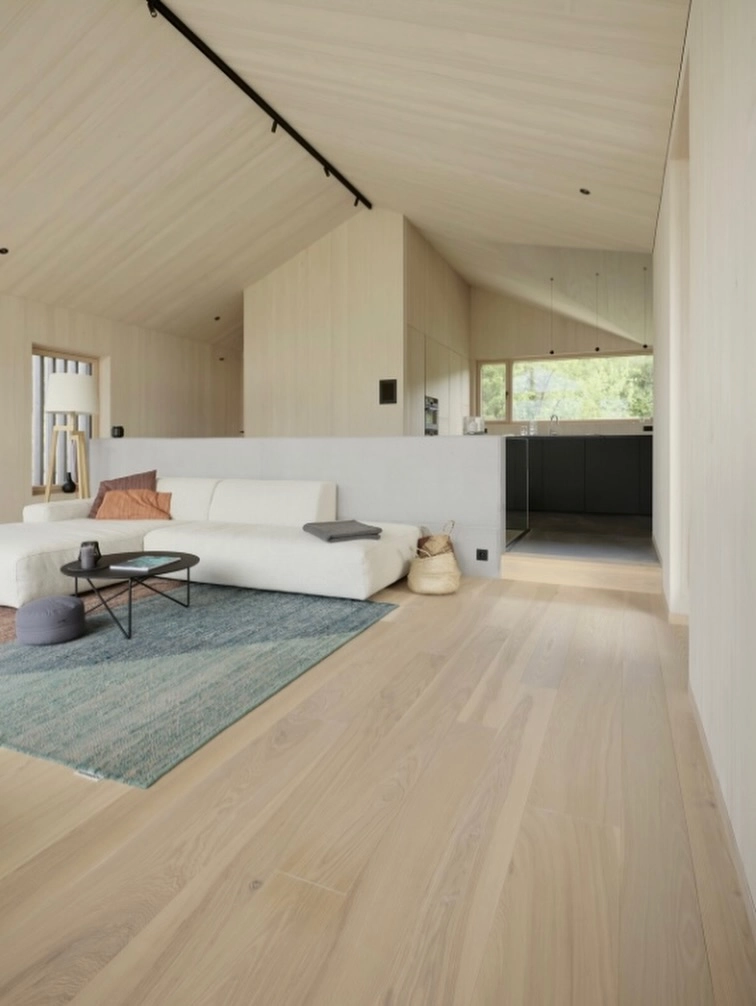
Photo: @pisosmafi on Instagram
A rug in a strong color does two jobs at once. It softens the floor and it sets the color of the whole room, so the rest of the room can stay calm. Pale wood underneath keeps a bold rug from feeling heavy, and the light floor makes the color pop. Pick a color you already have in a cushion or a throw, so the rug looks planned and not random.
Watch Out: A bold rug shows dust fast. Vacuum it twice a week or the color goes dull.
A thick striped rug for tired feet
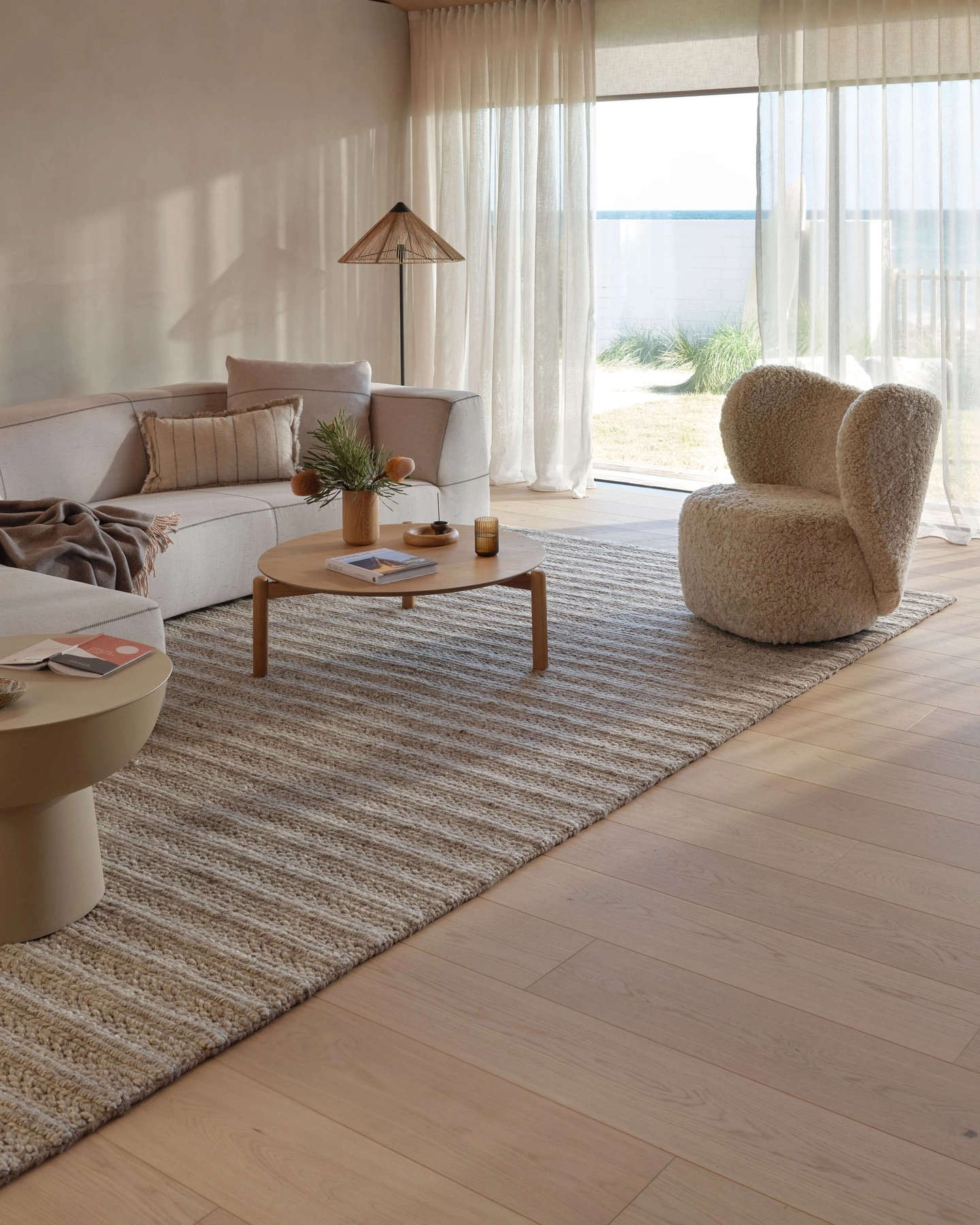
Photo: @carpetcourtau on Instagram
Thick stripes hide wear and feel soft underfoot, which is what tired feet need most. The stripes also hide crumbs between cleans, so the rug looks tidy even when it is not. A rug with a thick pile is the cheapest way to make a hard floor feel kind, and it costs far less than new flooring. Keep it out of the path to the kitchen, or it will wear thin in one line.
Before You Buy: Press your hand into the pile in the shop. If it springs back, it will last.
A small rug in the middle, wood all around
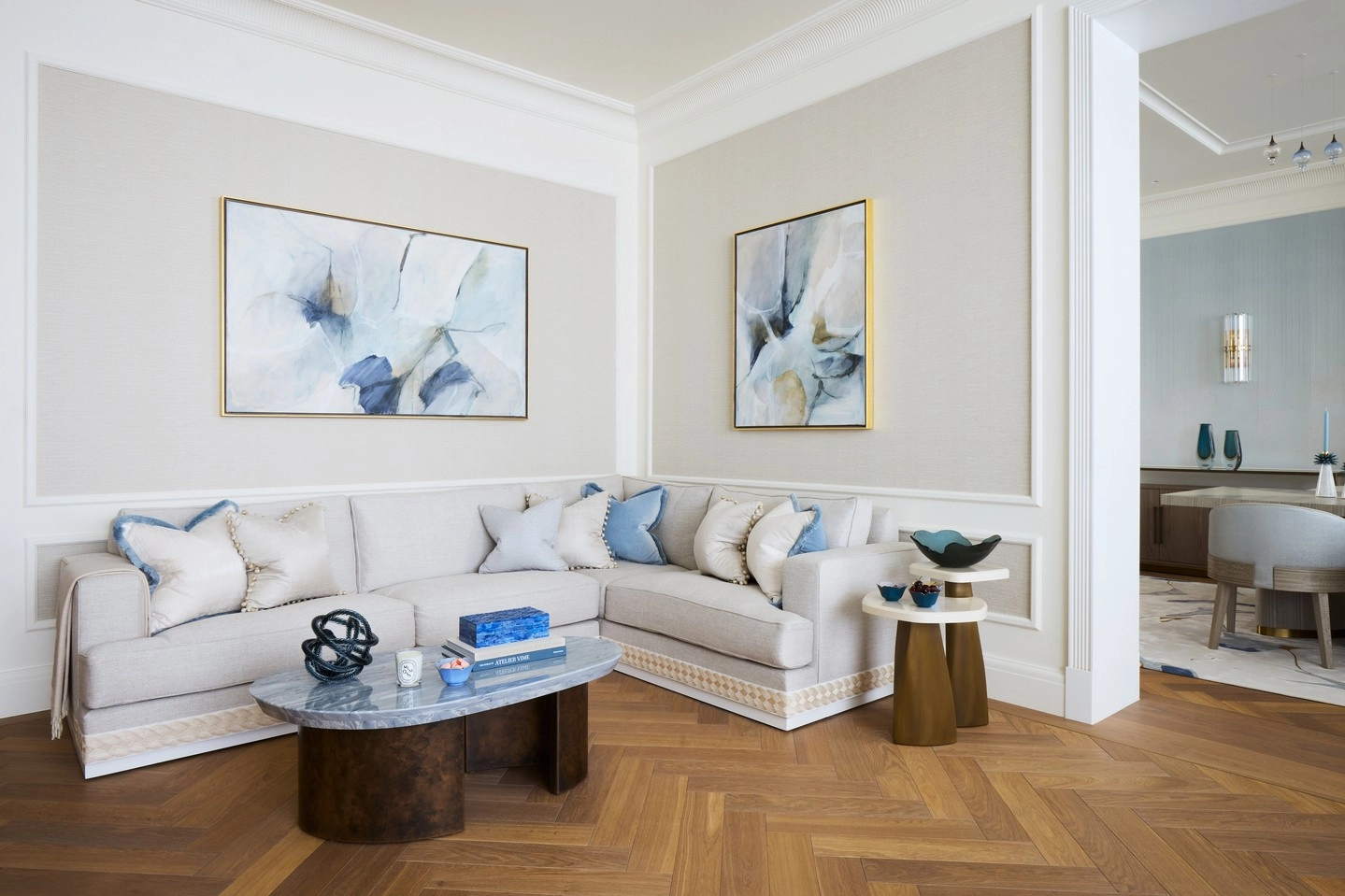
Photo: @katharinepooleyltd on Instagram
You do not need to cover the whole floor to fix a hard one. A rug just under the sofa and the coffee table softens where you sit, and the wood showing around the edges makes the room look bigger. This is the best move for a small living room, because a wall to wall rug would swallow it. Pick a rug that reaches under the front legs of the sofa so it never slides forward.
Small Win: A rug that only covers the seating area costs half as much as a room-size one.
Two rugs layered for extra softness

Photo: @artisanbloomshomedecor on Instagram
Two thin rugs stacked feel softer than one thick one, and they cost less too. Put the bigger flat rug down first, then a smaller soft one on top, turned at a slight angle so the layers show. If the top one slides, a grip pad between the layers fixes it in seconds. This trick also lets you mix a cheap base rug with one pretty rug you found in the shop and love.
Move-Out Note: Two rugs roll up small and fit in a car, so they travel to the next flat with you.
Start with this one: One rug big enough to cover the room, because it softens the most floor for the least money.
3. Ugly to Look At
You know it is this one if you catch yourself looking at the walls instead of the floor, because the floor is the worst part of the room.
Checkerboard peel and stick tiles in the kitchen
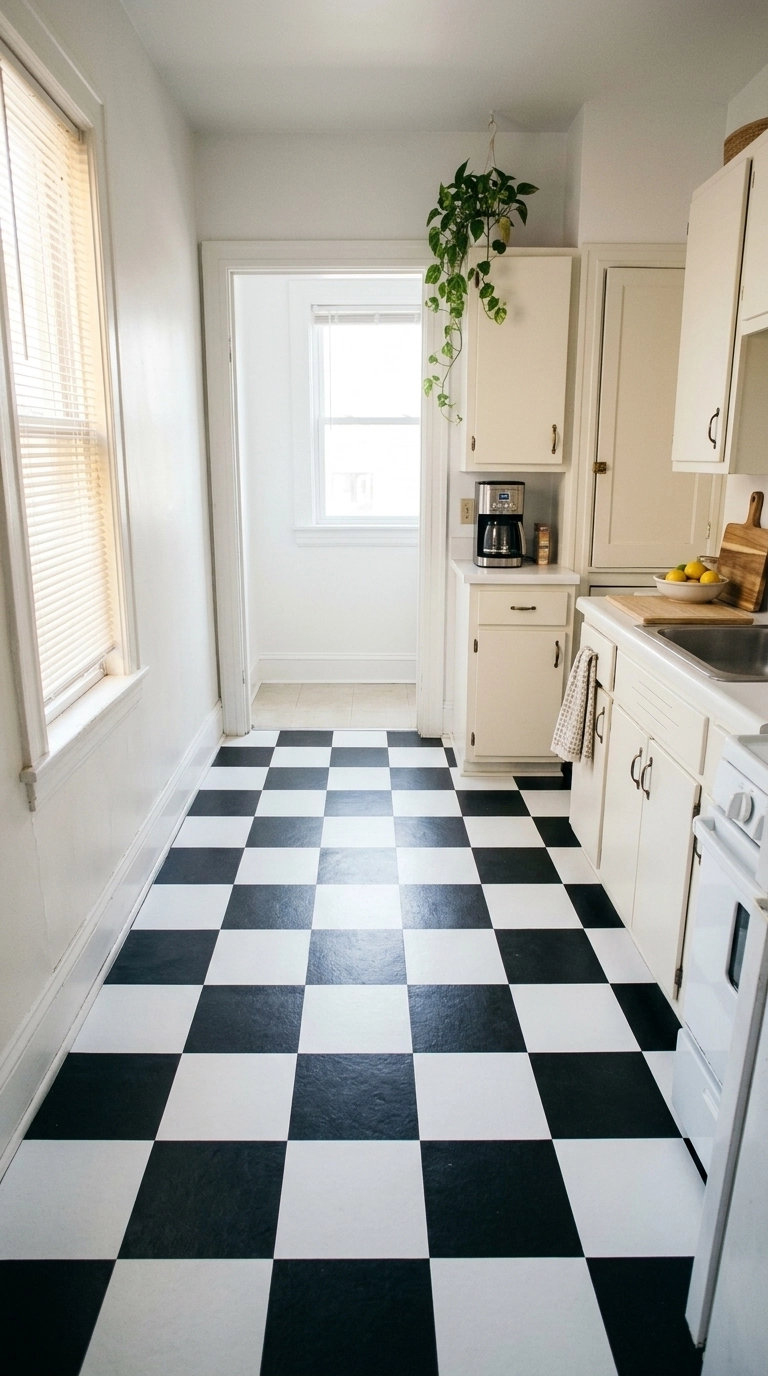
Photo: @decor.shows on Instagram
Old kitchen floors are often the ugliest in a rental, and peel and stick tiles cover them in one afternoon. Clean the floor first with a strong cleaner, or the tiles will lift at the edges within weeks. Test one tile in a hidden spot for a week before you do the whole floor. Our guide to kitchen ideas for renters has more renter-safe moves for a small kitchen, if this one makes you want more.
Heads Up: Never lay peel and stick tiles over grout lines or grease. Both will lift the tiles.
Checkerboard tiles down the hall
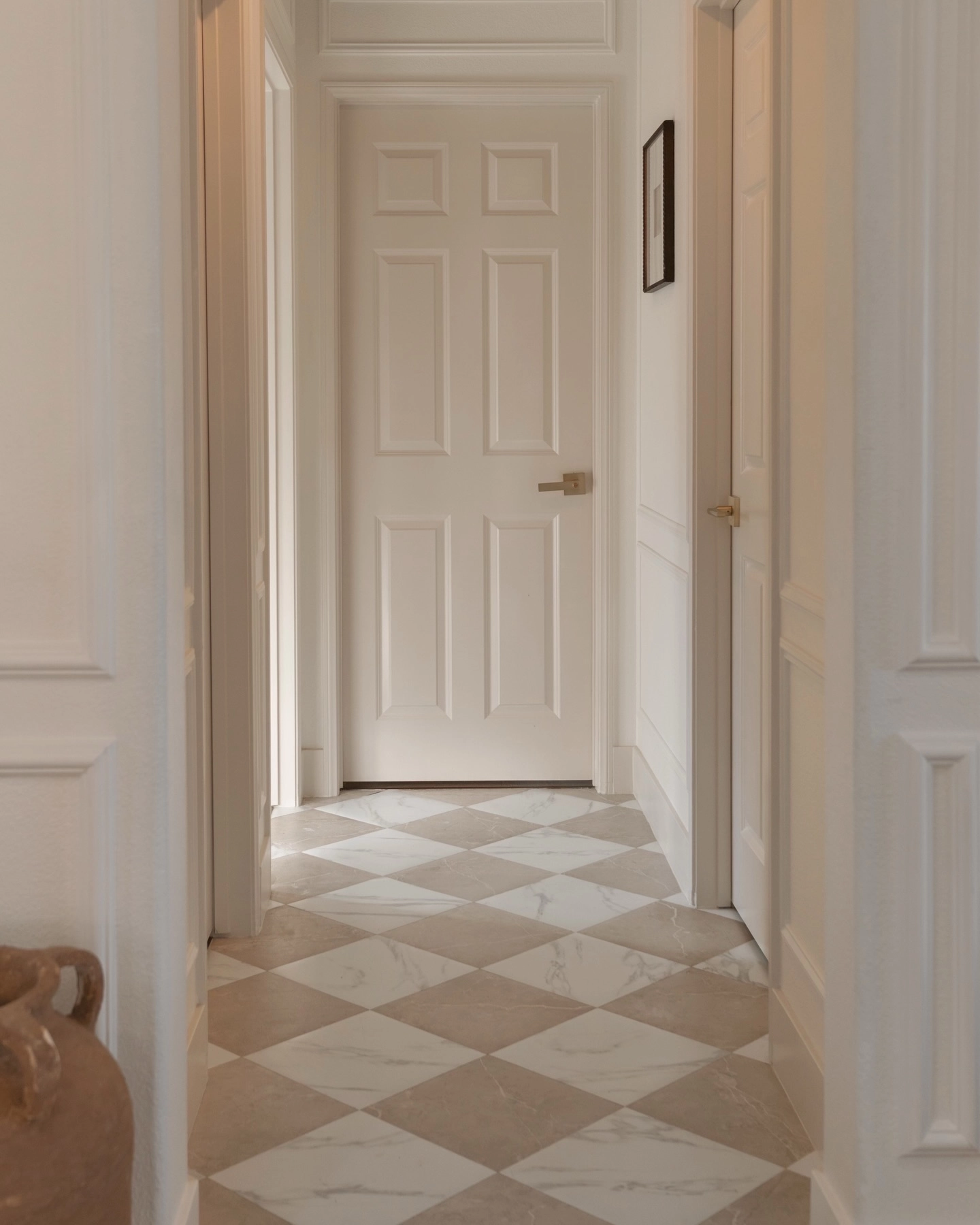
Photo: @evaacatherine on Instagram
A hall is small, so it is the cheapest place to try peel and stick tiles. The checkerboard pattern hides dirt and scuffs, which is what a hall needs most. Measure twice and start at the door, so the pattern lines up where people look first. A hall floor takes hard wear, so pick thick vinyl tiles, not the thinnest ones in the shop. Sweep and mop the hall first, or dust under the tiles will lift them.
Try This: Buy one box, lay it in the hall, and live with it for a month before you do the kitchen.
Herringbone look click planks
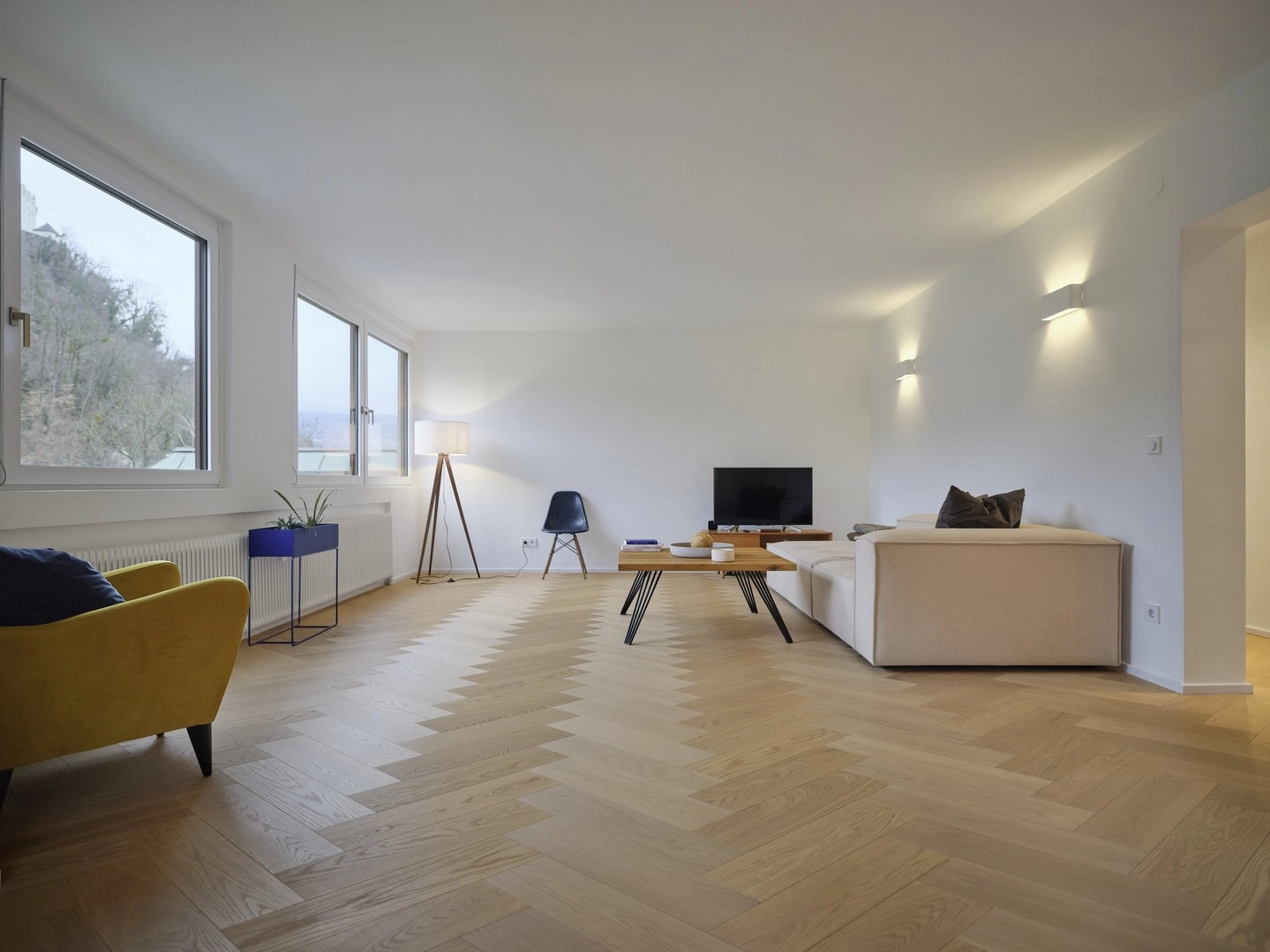
Photo: @mafi.walkonart on Instagram
Click-lock planks snap together and float over the old floor with no glue, so the old floor stays safe underneath. The herringbone look costs the same as straight planks but looks far richer, and it makes a plain rental feel planned. Leave a small gap at the walls so the floor can move a little with the seasons. You need only a knife and a straight edge to cut them.
Save Money: Herringbone uses more cuts, so buy ten percent extra, not five.
Chevron look planks for a plain floor
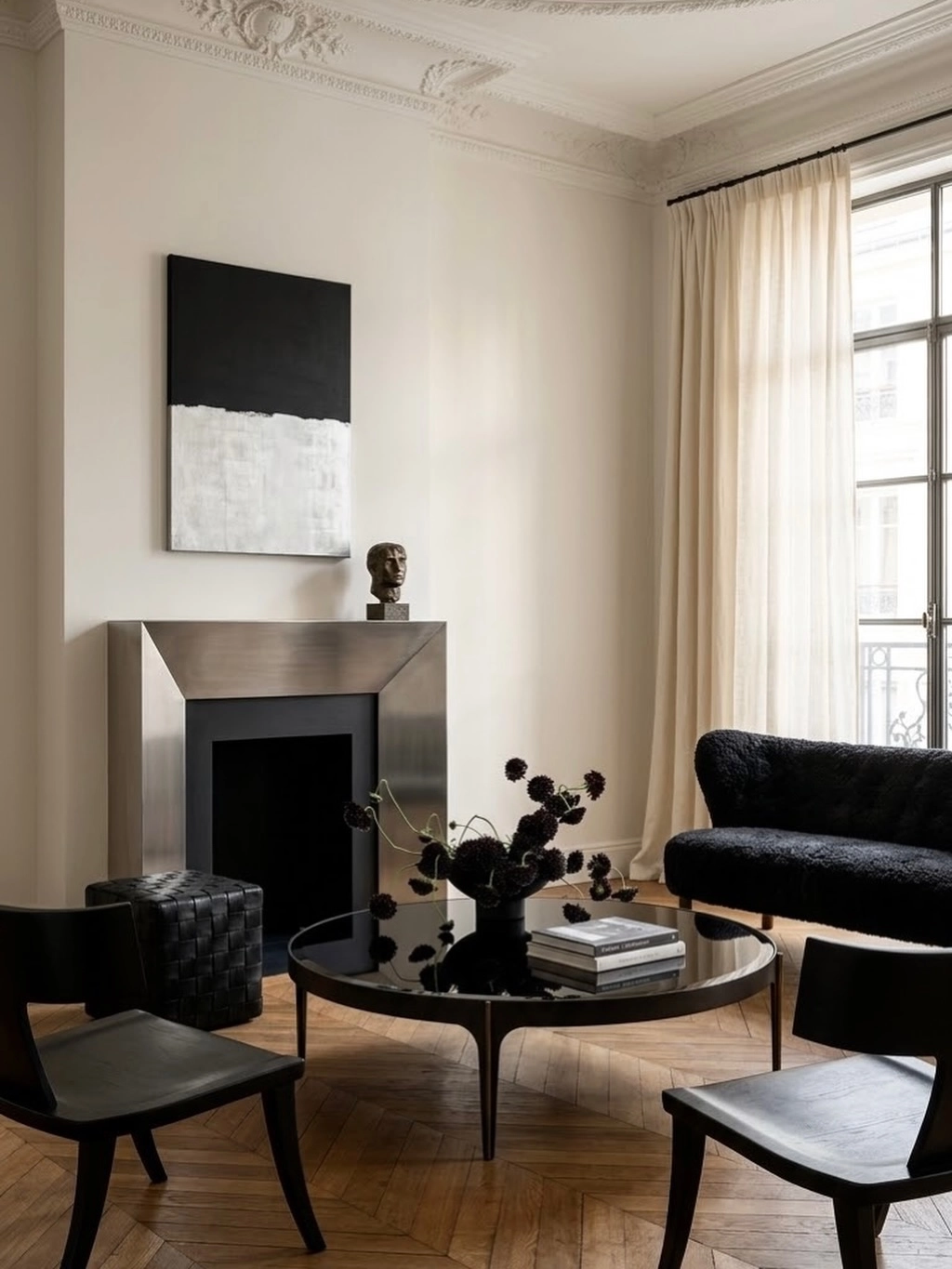
Photo: @ryansaghian on Instagram
Chevron planks point the eye across the room and make a plain rental feel finished. Dark tones hide marks and dust better than pale ones, which helps in a room that gets a lot of feet. The pattern does the work, so keep the furniture calm and let the floor be the star. If one plank gets marked, you can lift it and swap it without touching the rest of the floor.
Good to Know: Chevron and herringbone look alike, but chevron planks meet at a sharp point, not a step.
A pale rug that lifts a dark floor
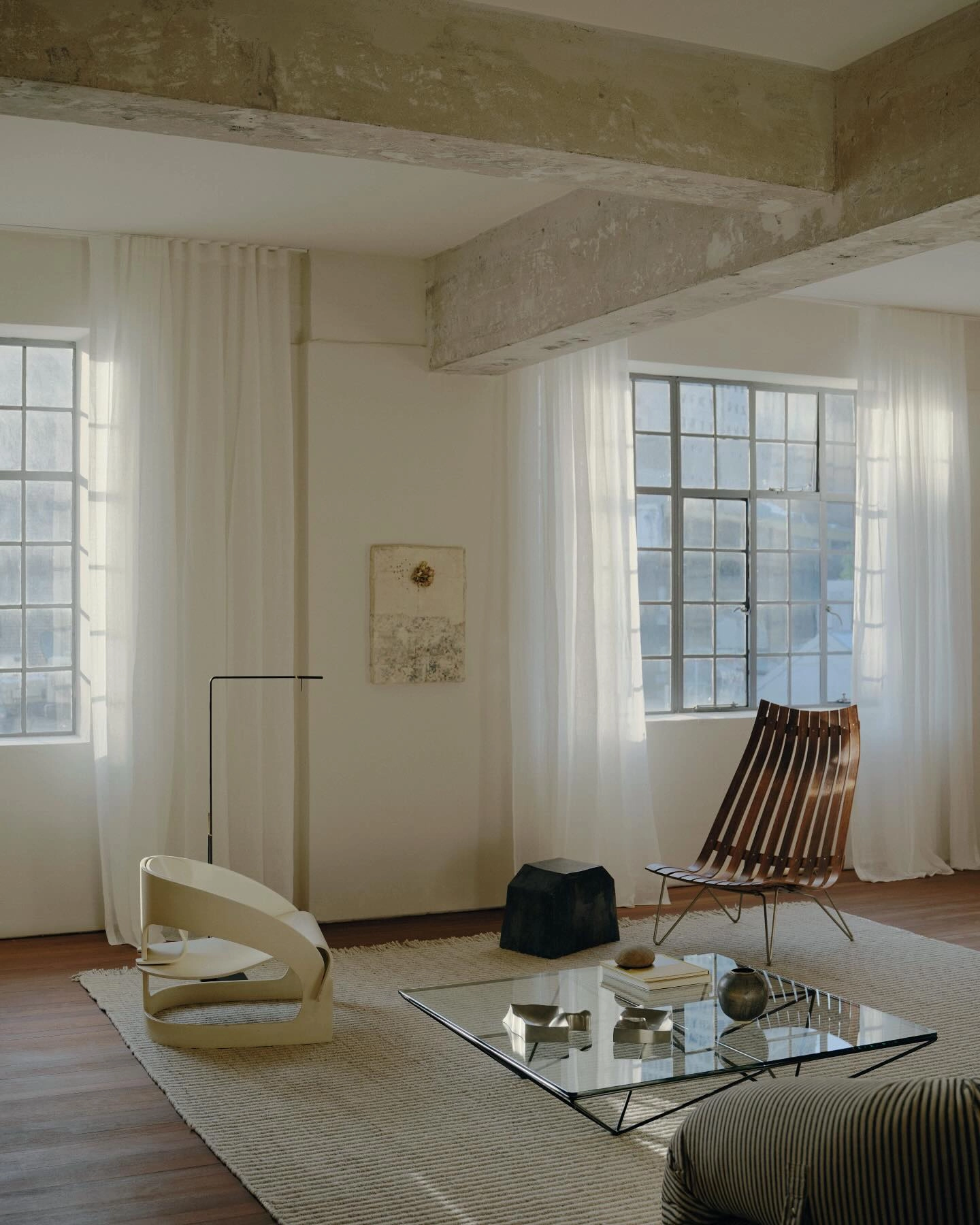
Photo: @vogueliving on Instagram
A dark floor can make a room feel small, and one pale rug in the middle lifts the whole room. Pick a flat weave so the rug does not fight the chairs, and let the dark wood show at the edges like a frame. The pale center makes the room feel wider, and the rug softens the floor at the same time. This is the fastest fix in this article, and it takes ten minutes.
Quick Tip: A rug that is too small will look lost on a dark floor. Go big or skip it.
Wide rustic planks for a worn floor
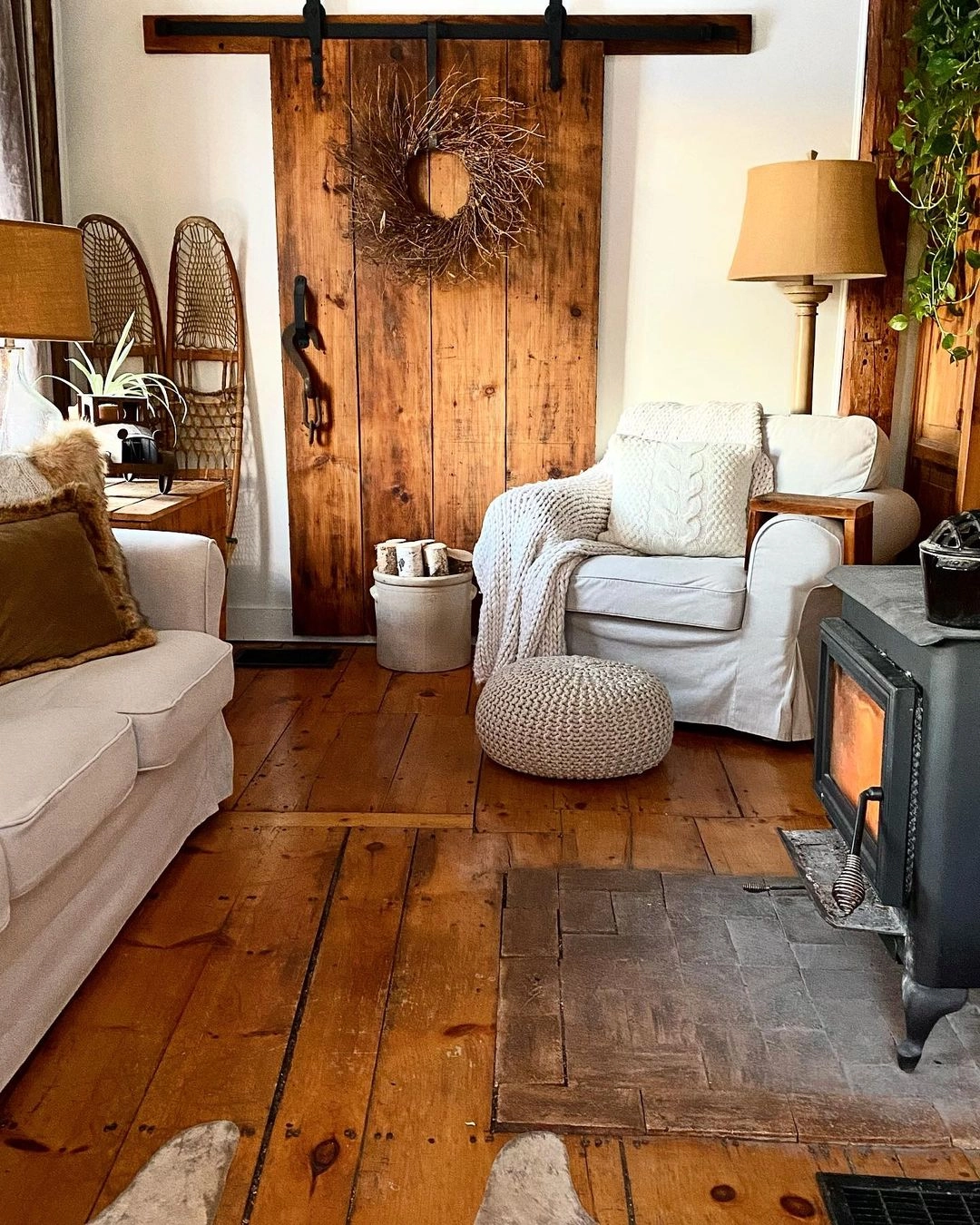
Photo: @farmhouseismystyle on Instagram
Wide planks with clear wood grain hide scratches better than smooth floors. The rustic look suits a worn rental, because small marks just blend into the grain instead of standing out. A matte finish shows less dust than a shiny one, and it grips bare feet better too. Lay the planks across the short side of the room, so the room feels wider than it is. Keep a spare plank or two, in case one gets a deep scratch.
Before You Buy: Hold a plank up to your old floor in daylight. Some wood tones clash with yellow tile.
Myth: Peel and Stick Tiles Always Ruin the Floor
Myth: Peel and stick tiles always leave glue on the floor and cost you your deposit.
Fact: Tiles made for renters peel up clean if you warm them with a hair dryer first and pull slowly. The risk is old tiles on a floor that was never cleaned, so test one tile in a hidden spot and keep the box until move-out day.
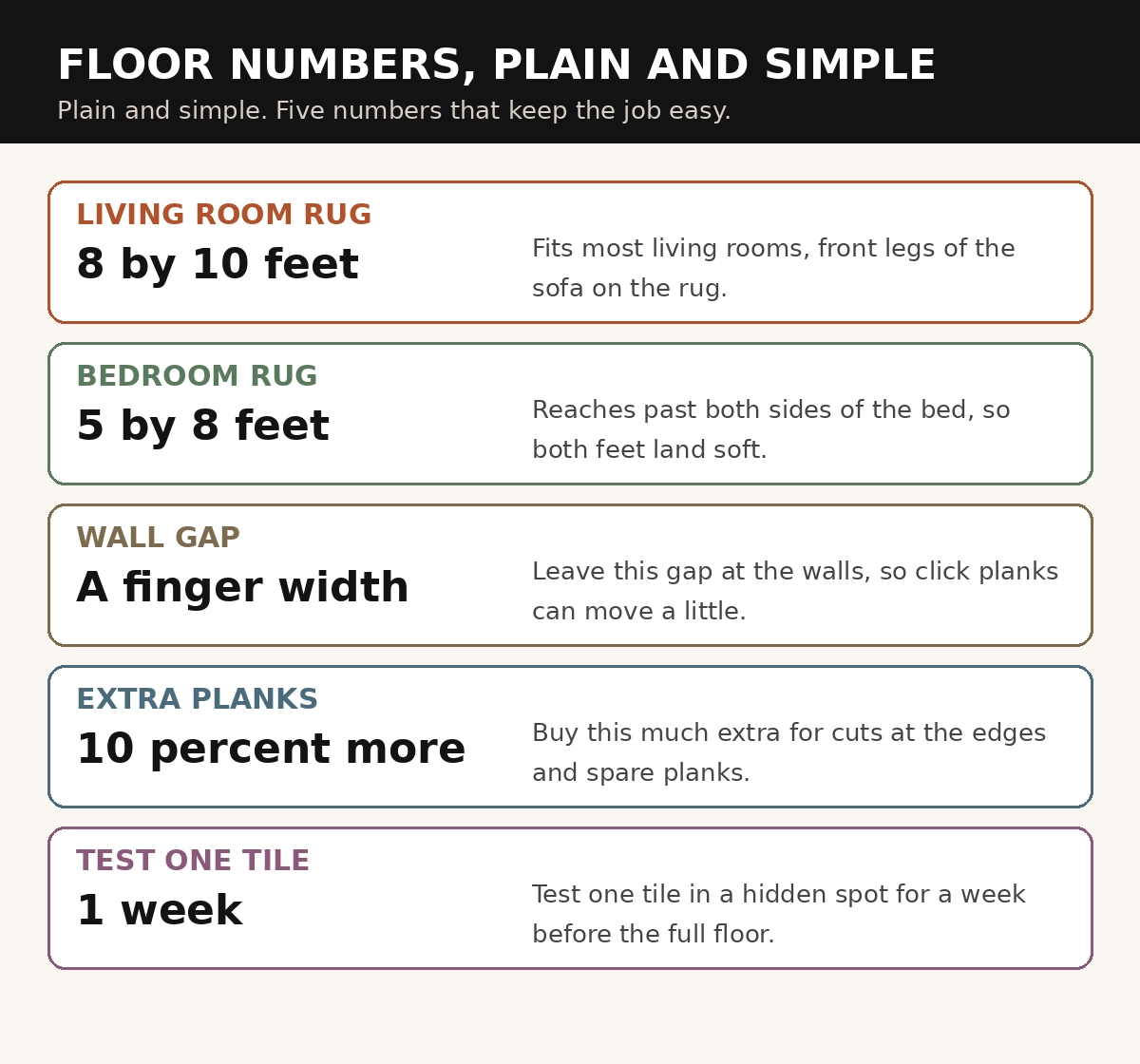
Floor Numbers, Plain and Simple
Start with this one: Peel and stick tiles in the smallest room, because a hall or a kitchen is the cheapest place to learn.
4. Loud With Every Step
You know it is this one if you can hear every step from the next room, and the people below can hear them too.
A long runner that quiets the room
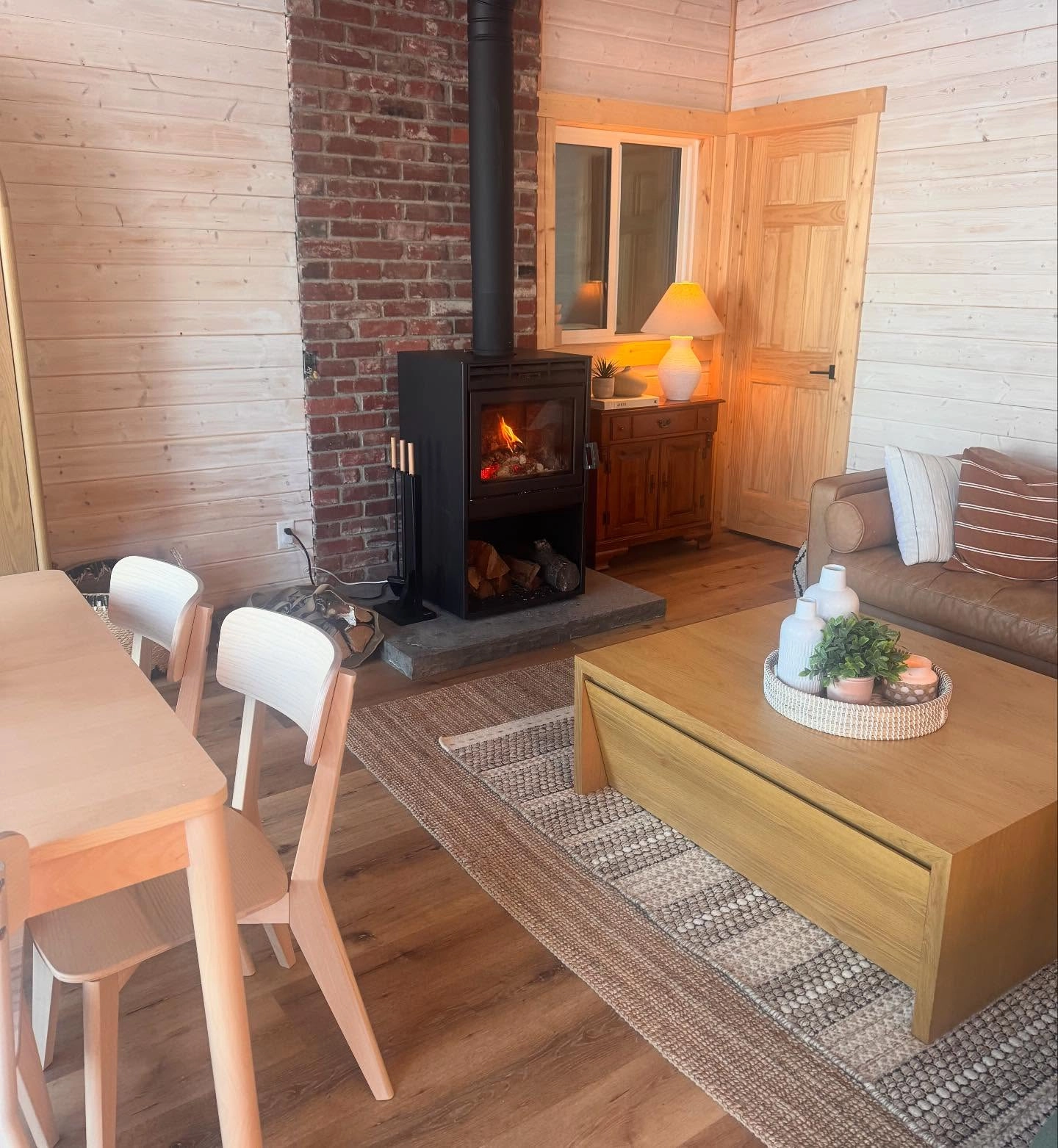
Photo: @knotty_pine_cabins on Instagram
Bare wood carries every step to the room below, and a long runner down the middle of the room soaks up the sound. Pick a thick weave and a felt pad under it for the quietest result, and let the runner reach from the sofa to the far wall. A runner also marks a path through the room, so feet stop wandering onto the bare wood at the edges, and your neighbors below will thank you for it.
Watch Out: A thin runner on bare wood slides. A felt pad underneath is not optional here.
A rug that quiets the dining chairs
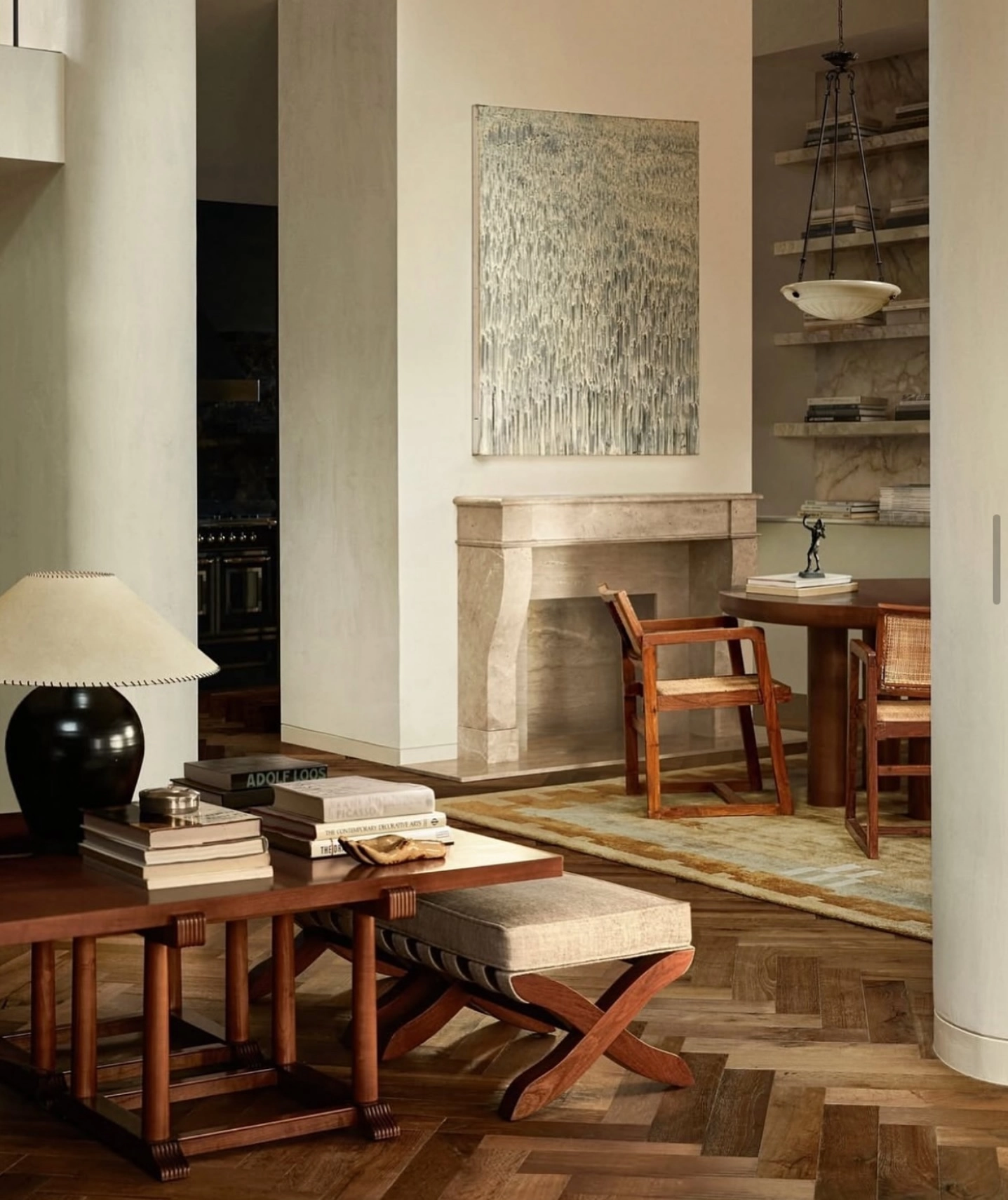
Photo: @moncxiii on Instagram
Dining chairs scrape on hard floors at every meal, and a rug under the table hushes the scrape and catches the crumbs. Pick a flat rug big enough for the chairs to stay on it when you pull them out, or the legs will catch on the rug edge. A low pile rug cleans fast after meals, and a dark pattern hides the food that drops. Felt pads on the chair feet help even more.
Renter Note: A rug under a dining table takes spills, so pick one you can wash or wipe clean.
Soft layers that hush a bare wood floor
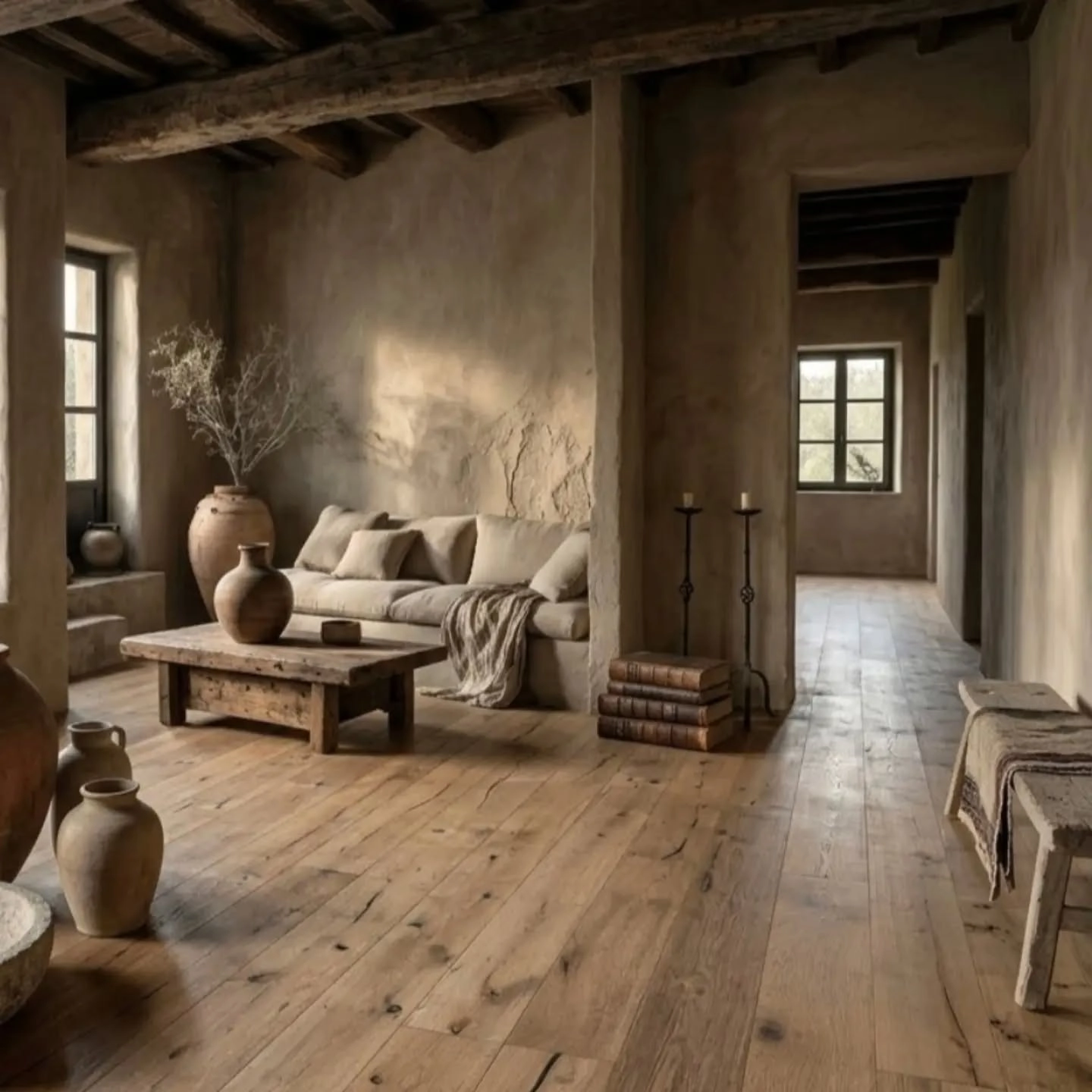
Photo: @woodandstones.nl on Instagram
A bare wood floor echoes because nothing in the room softens the sound. A rug, a fabric sofa, and curtains together calm a room more than any one piece can. Start with the rug, because it does the most work for the least money. Then add a soft throw on the sofa and a curtain at the window, and the echo fades a little more with each layer. Walk the room and listen after each layer goes in.
Move-Out Note: Soft layers are all yours to take with you, and the echo stays behind in the empty flat.
A jute rug that quiets a big room

Photo: @cozyhomedecorbyseasons on Instagram
Big rooms echo most, and a jute rug is a cheap way to calm one. Jute is tough, so it holds up under a coffee table and chairs without wearing thin. A pad underneath adds quiet and stops the rug sliding on the wood floor. Pick a rug that fills the seating area, not just the space under the table, or the echo will just move to the bare edges.
Heads Up: Jute feels rough on bare feet at first. It softens after a few weeks of walking on it.
A thick rug that hushes a dark room
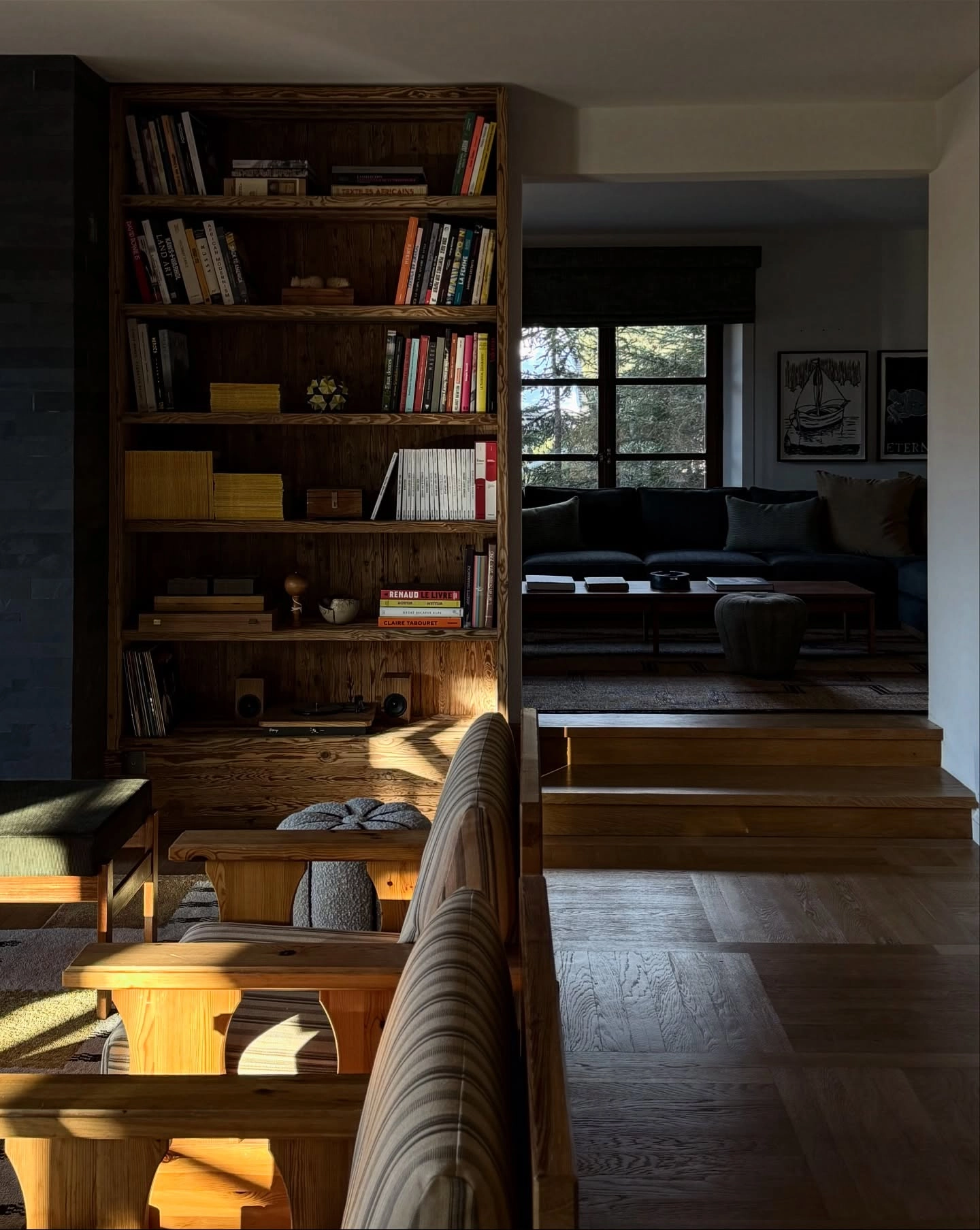
Photo: @studiomellone on Instagram
Dark rooms feel louder when the floor is bare and hard, because every sound bounces off the wood. A thick rug under the main seats softens steps and voices at once, and it warms the room too. Dark patterns hide the dust that shows on dark floors, so pick a rug with a busy pattern. Keep the rug clear of the door, or it will bunch up where people walk in.
Try This: Clap once in the bare room, then clap again after the rug goes down. You will hear the change.
Start with this one: A long runner down the middle of the room, because it quiets the most steps for the least money.
5. Slips and Slides
You know it is this one if the rug creeps across the room, the chairs slide, or your feet slip on a shiny floor.
A rug that gives paws a grip
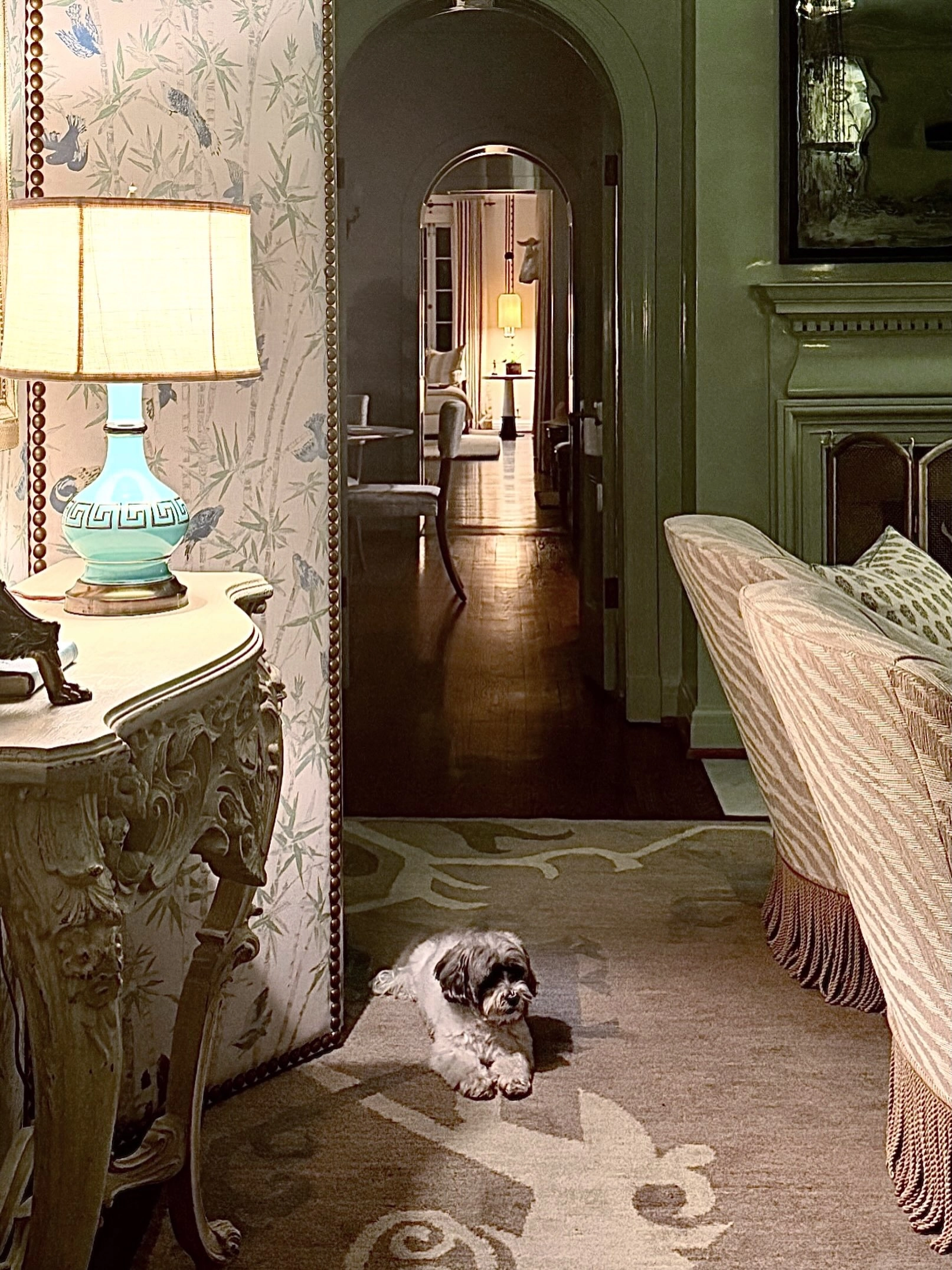
Photo: @barrydarrdixon on Instagram
Dogs slip on smooth wood floors, and it hurts their legs over time. A rug with a grip pad gives them a safe path through the room, from the door to their bed. Pick a washable rug, because paws bring in mud, and pick a dark pattern, because mud shows fast on pale rugs. Our guide to living room ideas for renters has more ways to make a rented living room feel like home, for you and for your dog.
Good to Know: Put the rug where your dog runs, not where you sit. The path matters more than the look.
Wide planks with a matte non slip finish
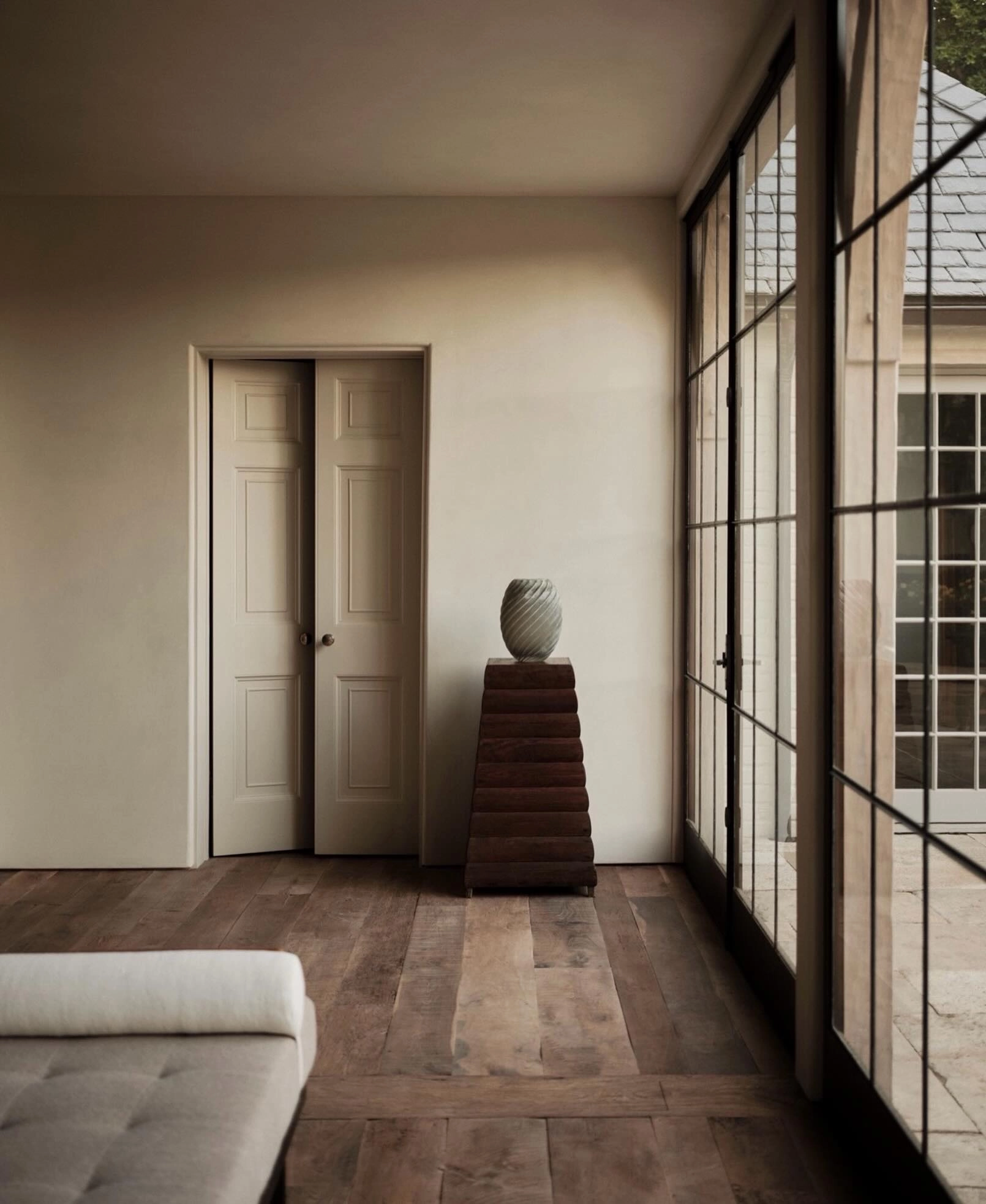
Photo: @clementsdesign on Instagram
Shiny floors look good in photos and slip in real life. Matte wood-look planks grip bare feet far better, and they show fewer marks too. If your floor is already shiny, a rug with a grip pad is the quick fix, and it costs far less than new planks. When you shop for planks, run your hand across the sample in the shop. If your palm slides easy, your feet will too.
Save Money: A grip pad under the rug you already own costs less than one new plank.
A flat rug that stays put by the doors
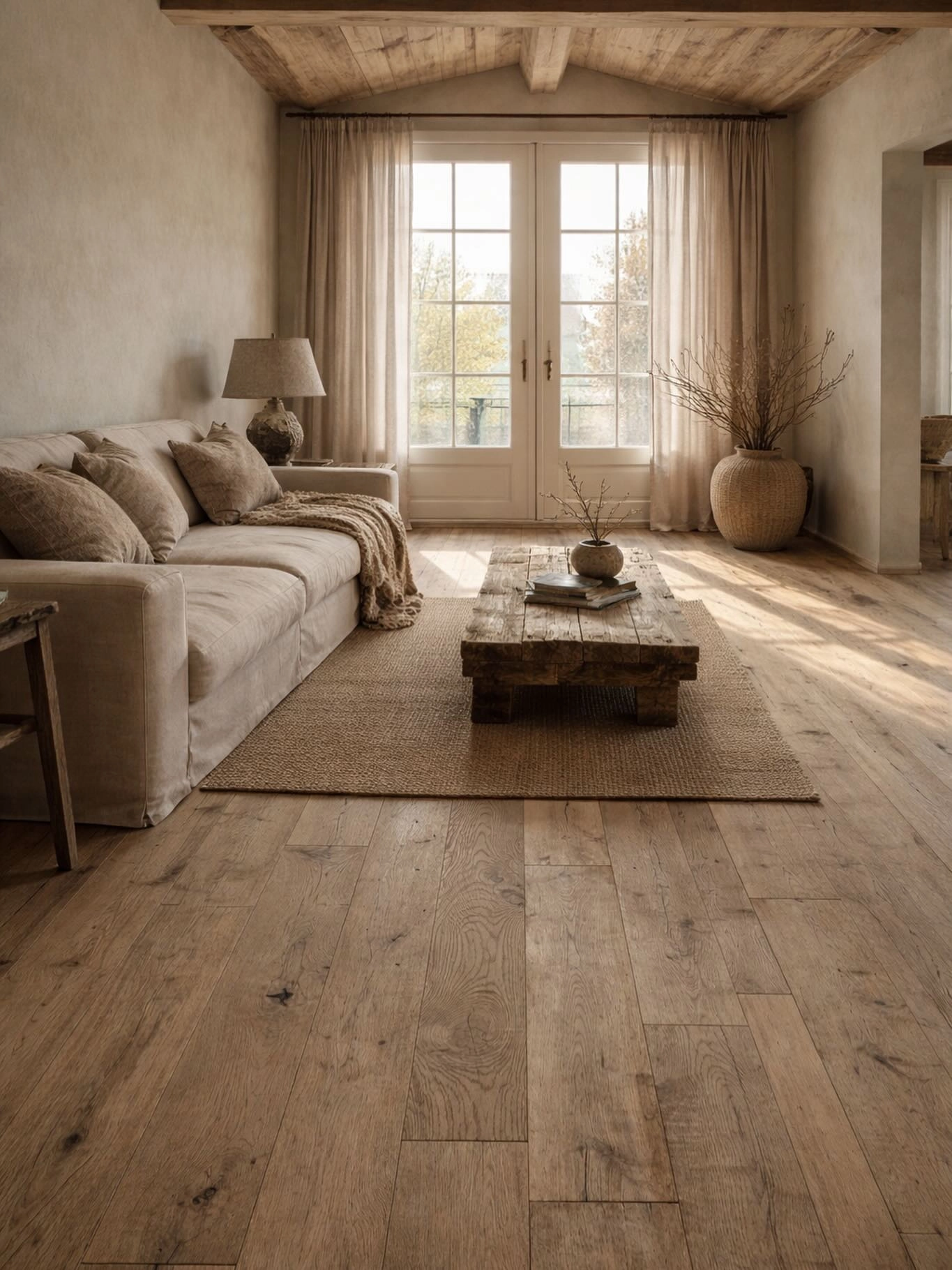
Photo: @officialwoodandstones on Instagram
The spot by the door gets the most feet and the most sliding, so it needs a flat rug that stays put. A grip pad underneath keeps it flat and stops the corners curling up, which is where toes catch. Keep the rug thin so the door still swings over it, and pick a tough weave that can take wet shoes. Shake it outside once a week and it will last for years.
Renter Note: A rug by the door is the first thing guests see, so pick one you like looking at.
A rug under the dining chairs so they do not slide
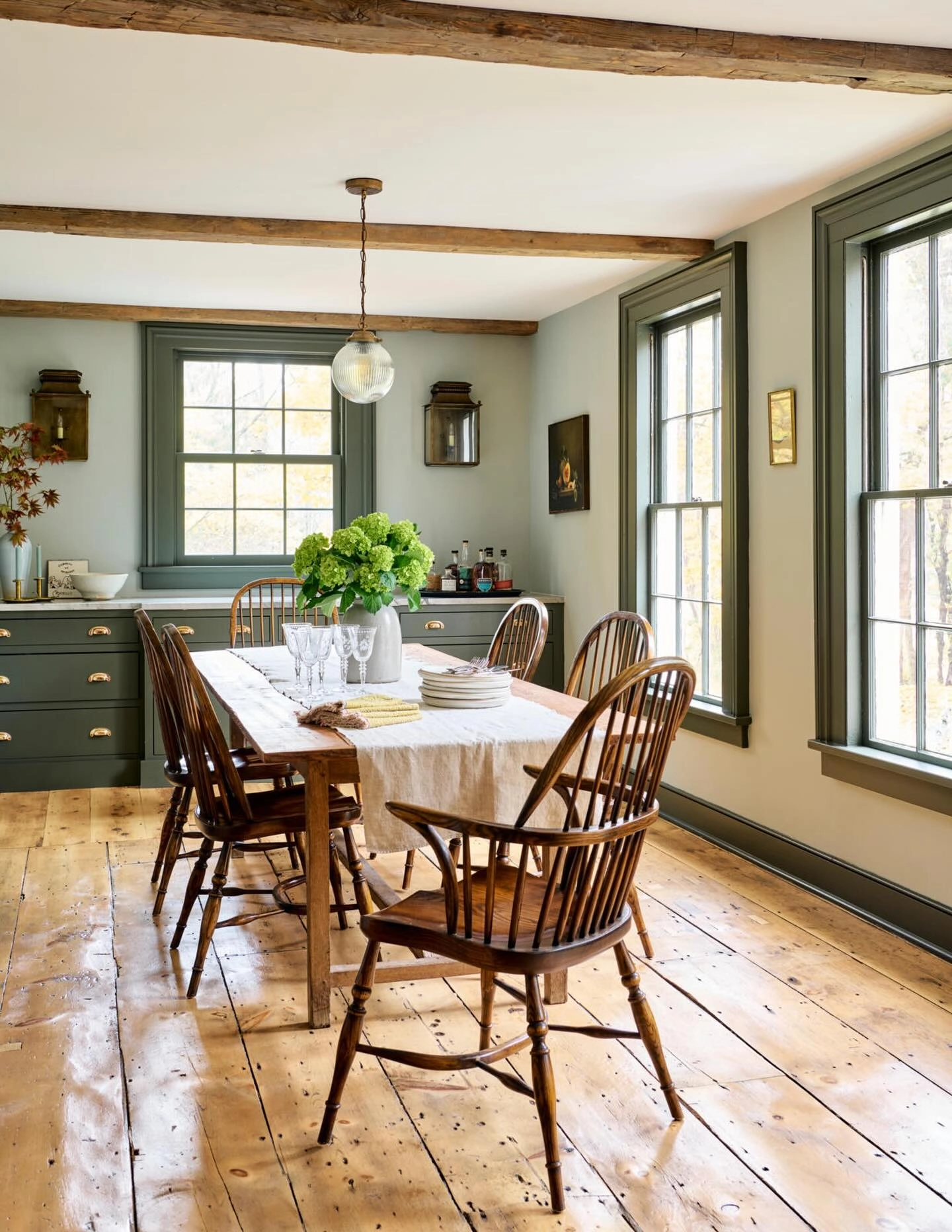
Photo: @countryhomemagazine on Instagram
Chairs slide on smooth pine floors and scratch them as they go, which is the kind of mark a landlord notices. A rug under the table stops the slide and guards the floor at the same time. Felt pads on the chair feet add one more layer of care, and they cost almost nothing. Pick a rug the chairs stay on when you pull them out, or the legs will catch on the edge.
Small Win: Felt pads on four chair feet cost less than a coffee, and they save the floor underneath.
A patterned rug with a grip pad under it
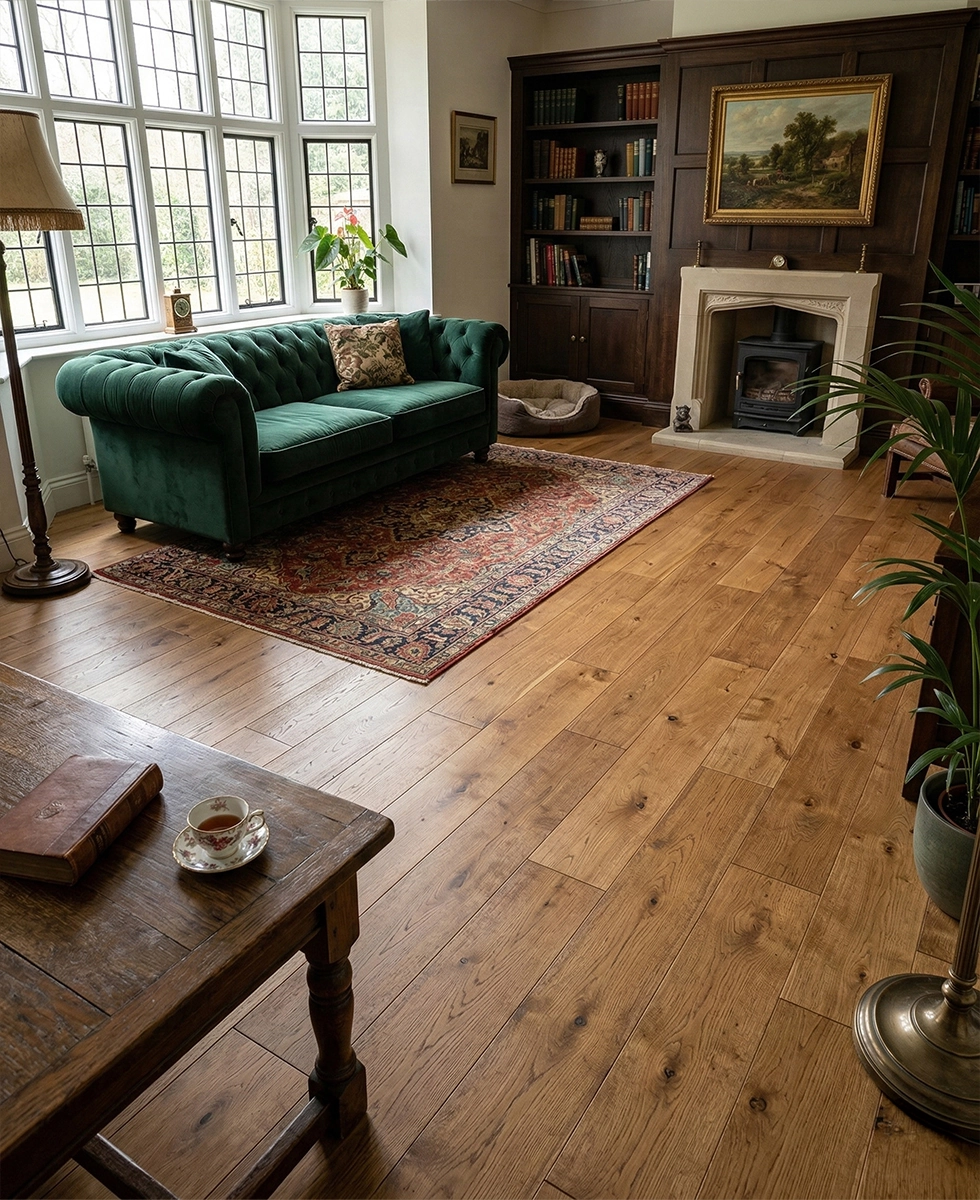
Photo: @eden.clay on Instagram
A patterned rug hides a tired wood floor, and a grip pad keeps it from creeping across the room. Check the pad every few months, because dust under it kills the grip, and wash the pad when you wash the rug. The pattern hides crumbs and pet hair between cleans, so the room looks tidy with less work. This is the simplest idea in this whole article, and it works in any room.
Watch Out: A rug with no pad on a smooth floor will creep an inch a day. You will chase it forever.
Start with this one: A grip pad under the rug you already own, because it costs the least and fixes the slide today.
Do and Do Not for Renter Floors
- Do: Test every sticker and tile on a hidden spot first.
- Do: Take photos of the floor before you cover it.
- Do: Keep a grip pad under every rug.
- Do: Ask your landlord in writing before you lay click planks.
- Do not: Glue anything to a floor you do not own.
- Do not: Lay peel and stick tiles over grout lines or grease.
- Do not: Run cords under rugs, where they can get hot.
- Do not: Cover a damp or lifting floor. Tell your landlord first.
Your Feet Already Know
Your feet told you the answer before you read a word of this article. Cold, hard, ugly, loud, or slippery, pick the chapter that matches and start with the first move in it.
One rug, one runner, or one small box of tiles is enough to change how a room feels underfoot. The rest can wait until you know the first fix works.
When move-out day comes, roll it up, lift it off, and take it with you. The floor underneath will look just like it did on the day you moved in, and your deposit stays where it belongs.